A conversation is happening among a lot of IT and OT teams right now.
It usually starts during an audit, a security review, or when someone takes a closer look at what's actually running in the environment. And then it clicks:
The serial servers connecting critical systems are … old.
Not broken. Not failing. Just old.
And that's where things shift.
Because the equipment they connect to is still doing its job perfectly. Serial devices tend to last. But the infrastructure around them — especially the serial servers — wasn't built for the world we're operating in today.
So the real question becomes:
Is this part of my network still secure? And will it hold up under scrutiny?
The Gap Isn't Functionality — It's Expectations
Here's the tricky part: legacy serial servers still work exactly as they were designed to.
They connect devices. They move data. They've often been doing it reliably for years.
But what's changed isn't the job — it's the expectations about how that job is done.
Security frameworks like IEC 62443 and NERC CIP have raised the bar. Internal IT policies have, too.
Take something like secure boot. It's now a baseline requirement in many environments because it ensures only trusted firmware can run on a device. But it's not something you can layer on later — it has to be built into the hardware.
And that's where older platforms start to fall behind.
Not sure how your current devices stack up? Run a quick internal check before your next audit.

The Part that Causes the Most Friction Day to Day
Security tends to trigger the conversation — but management is where the pain shows up.
Most teams already know what this looks like. You log into devices one at a time. You check firmware manually. You make changes individually. There's no single place to see what's going on across your environment. So these systems become background noise — until something breaks.
If you don't have a single, central view of your serial devices today, that's a good place to start when modernizing. Visibility and control at scale are the dividing line between legacy and modern infrastructure.
The Risk Most People Don't Plan For
There's another layer to this that doesn't always come up in audits: time.
A lot of these devices have been running continuously for years. And while they're built to last, they're not immune to failure — including issues like memory write degradation, which can cause data loss without obvious warning signs.
When failures happen, it's rarely gradual. A connection drops. A system stops responding. A process loses data.
Fixing minor issues helps teams realize how disruptive a full failure would be — and shifts them from reactive to proactive.
What Modernization Actually Means
Modernizing serial infrastructure doesn't mean tearing everything out. It means updating the layer that connects everything together.
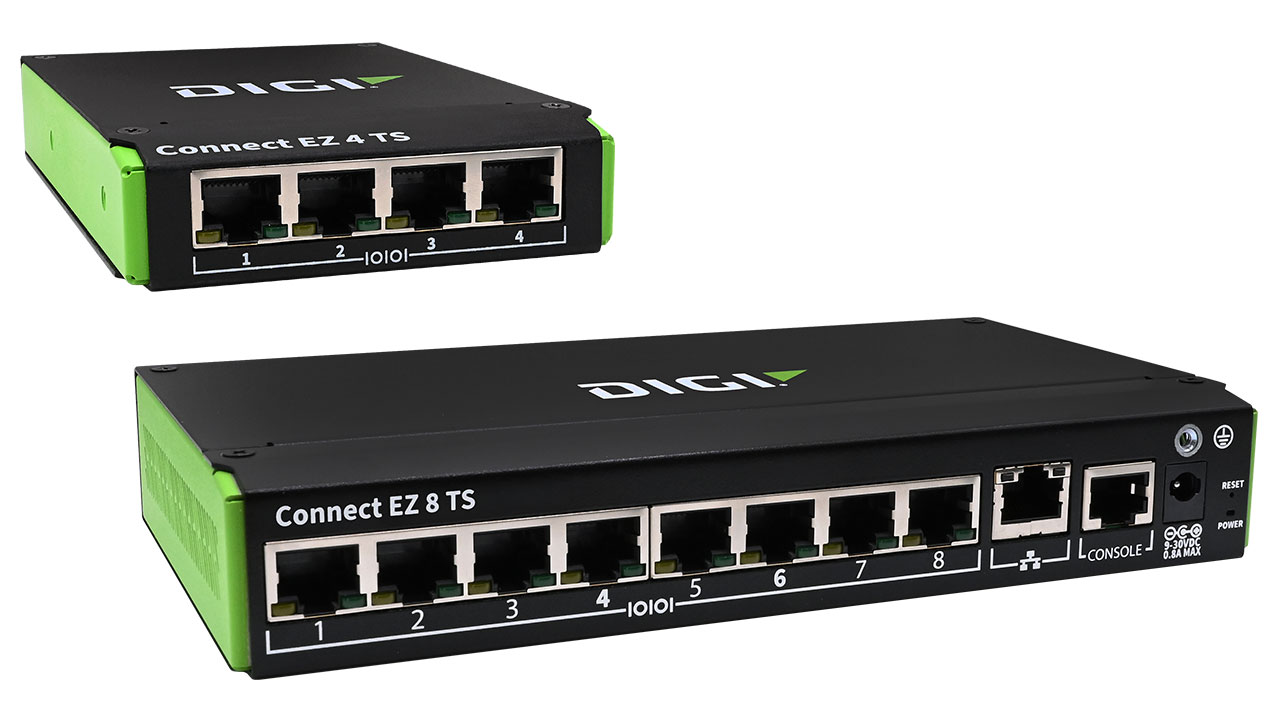
Digi Connect EZ TS is designed as an efficient transition upgrade for legacy serial device servers, giving teams a way to modernize without disrupting what's already working.
It fits into existing environments — no need to rethink cabinet space or rework wiring. It simplifies operations — moving from device-by-device management to centralized visibility. And it brings security in line with current expectations — built into the platform, not layered on later.
Want to see what that looks like in your environment? A quick demo or pilot can clarify things quickly.
So When Does This Become a Priority?
For most teams, it's not one big moment — it's a combination of signals.
An upcoming audit. A device that fails unexpectedly. Or simply realizing there's limited visibility into what's deployed.
If you're even asking the question, it's worth evaluating now — not later.
Where to Start
If this is on your radar, you don't need a massive project plan. Start small.
Look at what's deployed and identify where the risk is highest. Test with a single device — often just one pilot answers 80% of a team's questions. From there, scaling becomes straightforward.
Bottom Line
This isn't about replacing what already works. It's about making sure the foundation behind it keeps up with everything around it.
Modernize your serial connectivity — securely, simply and on your terms.

FAQs
Is Digi Connect EZ TS meant to directly replace ConnectPort TS or PortServer TS?
Digi Connect EZ TS does not directly replace Digi ConnectPort TS or PortServer TS. Think of it as a next-generation platform — built to support similar use cases, but with modern capabilities.
When migrating from Digi ConnectPort TS or PortServer TS to Digi Connect EZ TS, will we have to change our setup?
In most cases, upgrading to Digi Connect EZ TS does not require any major changes. The goal is to fit into your existing environment.
Is Digi Connect EZ TS secure?
Modern Digi platforms such as Digi Connect EZ TS include Digi TrustFence — with secure boot, encryption and centralized authentication aligned with current standards. The Digi TrustFence framework is part of an overall security strategy for today’s IT organizations.
Next Steps