Modern industrial organizations, particularly the operators of both commercial and public-sector water utilities, increasingly face pressure to maximize efficiency and lower costs. XiO's Acuity cloud-native solution bridges the gap between legacy infrastructure and modern operations management. Using networks of smart sensors connected through Digi routers, Acuity turns raw data into actionable intelligence, enabling industrial teams to predict usage patterns, monitor operations, and lower costs for smarter management of water and energy resources.
Optimizing the Delivery of Water
It can seem counterintuitive at first. But for many industrial operators and public agencies alike, when it comes to water supplies, the largest expense is often the electricity required to pump, store, and redirect water to farms, businesses, residences, and even firefighting responders. This is especially true in states like California where time-of-day premiums lead to price spikes during peak consumption hours. As Mauritz Botha, Co-founder and Chief Technical Officer of XiO Water explained, “Price spikes between 4-9 p.m. — the high usage period — create significant incentives for companies and agencies to avoid pumping at those times. But when you identify usage patterns, you can avoid peak periods and pump water during lower-cost periods, balancing regulatory requirements like the need to have 24 hours of water on hand.”
The challenge, of course, is knowing inventory levels across the water system. Years ago, that meant people carrying clipboards and driving trucks from location to location, which is an inherently costly, time-consuming, and inefficient process.
Traditional SCADA systems took over in many locations, paving the way for automation, but very little of that original architecture has changed. These outdated SCADA systems rely on old technology, are vulnerable to cyberattacks, lose vendor/technical support over time, and lack advanced features to improve performance and efficiency.
Not only are these organizations failing to optimize their electrical consumption — they’re also not getting timely information about the performance of their entire system,” said Botha. “Pipe bursts, leaks, and other failures can go undetected, wasting water and causing preventable damage.”
New Levels of Automation, Connectivity and Insight
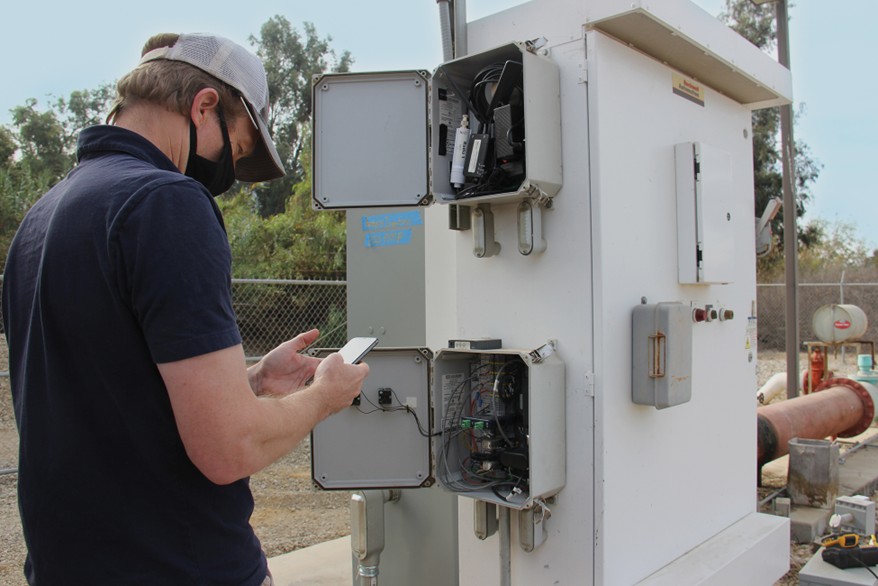
 To leapfrog these barriers using the Internet of Things, XiO Water created Acuity Hub, a modern, cloud-native solution for water and wastewater operators who want to move beyond the limitations of legacy SCADA systems and siloed data. Acuity Hub provides centralized provisioning of remote sensor nodes that provide monitoring, alarms, and data analytics as well as remote control of operational systems and equipment. Acuity Hub enables teams to oversee assets, respond to events, and optimize the water system’s overall performance.
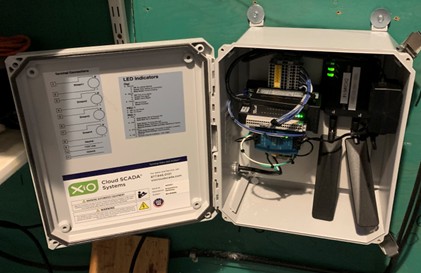
The solution’s connectivity layer, Acuity Connect, translates and unifies data from virtually any industrial device — modern or legacy, including PLCs, sensors, and control systems. Along with sensor nodes, Acuity Connect leverages industrial cellular routers to collect and transmit data from the various elements of the water systems. Digi’s industrial cellular routers are built for trouble-free reliability over a long service life — easy to deploy and centrally manage. Flexible power and connectivity options make it a versatile and cost-effective choice for industrial applications that must provide secure transactions over public and private cellular networks. Key features that support network control and management include dual SIMs for failover connectivity, VLAN support, load balancing between cellular and Ethernet WANs, dual APNs, and configurable APN search. At each site, Acuity Hub also uses an industrial-grade Digi IoT gateway for backhaul connections to the cloud over cellular or Ethernet.
“We chose Digi for a few important reasons,” said Botha. “First, it has the operating range for harsh conditions. We deploy Digi routers in an IP67-rated enclosure for weather protection, and it can withstand the summer heat in California’s Central Valley, for instance. We also like the Linux interface [Digi Accelerated Linux], which enables remote Telnet access to other devices and supports our custom Python scripts for remote and secure auto-configuration and deployment.”
Another key innovation from XiO Water is their application for fire detection and mitigation. Designed to help homeowners in fire-plagued areas like Southern California, this solution employs pumps to pull water from backyard swimming pool and combine it with a fire-retardant gel to spray over the home. This proactive fire mitigation solution not only helps homeowners save their homes in the event of wildfires, but it also dramatically reduces their insurance premiums and provides peace of mind.
The IoT for Water Management: Lower Energy Usage, Lower Waste
XiO Water has installed Acuity at hundreds of sites, primarily in the U.S., helping customers optimize their energy usage, make smarter maintenance decisions, reduce water waste, and improve regulatory compliance. Its first customer, a high-end 40-home retirement village in Northern California’s wine country, deployed the solution and saw immediate results. Acuity Hub reduced their electrical usage by 20% — even though the village’s water consumption rose 15% from the previous year. “It all comes down to ensuring they don’t pump when electricity is expensive,” said Botha. “A couple of years later, when a wildfire forced an evacuation of the village, the operator was able to remotely connect into the water system and adjust tank levels.
“And if a pipe bursts or there’s a slow leak, you know it almost immediately because your pumping activity surges. Now, you don’t have to wait to get next month’s electric bill to see the problem. Or you don’t have to endure rainwater intrusions that create additional treatment problems. Most of our customers can get a payback within six to 12 months following installation.”
Elsewhere in California, the Pleasant Valley County Water District has drilled and equipped 11 deep wells to supplement both surface water supplies and farmers’ wells during drought or dry seasons. These wells in conjunction with the pipeline system and available surface water aid in conserving groundwater and power through more efficient distribution.
Each well has its own controller and Acuity has helped the agency save 17% - $87,000 annually – just in electric costs. "PVCWD has realized significant benefits from XiO’s platform, including measurable energy savings and a dramatic reduction in costs,” said Jared Bouchard, the agency’s general manager. “By expanding data collection and enabling real-time monitoring of production and operational performance, our staff has become more efficient and proactive — directly reducing overtime and improving overall system reliability.”
At the Linda County Water District, Acuity Hub is delivering meaningful benefits as well by providing exceptional visibility into their system’s operation. “The Advanced Alarm tool in Acuity Hub lets our operators acknowledge alarms, add notes, and capture exactly what happened while they're in the field,” said Javier Rios, district engineer. “It’s all role- based and time-stamped, so we stay organized and compliant.”
“As a green tech solution, Acuity Hub lets our customers optimize for more than just costs,” explained Botha. “For instance, instead of pumping during off-peak electrical periods for cost savings, you could pump during periods when you have sufficient renewable energy on hand. Or you can pump for compliance reasons when reserves are insufficient. With Digi’s connectivity, Acuity Hub can provide the immediate and clear visibility to create more efficient water management at a lower cost.