Industrial environments don’t have a data problem anymore.
They have an action problem.
The reality is, many teams still don’t have true visibility into what’s happening across their operations. Data exists—but it’s scattered, siloed, and often incomplete. You might see tank levels in one place, pressure changes in another, and flow data somewhere else entirely — but rarely in a way that gives you a clear, real-time picture.
And yet…
Something happens in the field, and the response still depends on someone noticing it, interpreting it, and deciding what to do next.
That gap?
That’s where things start to break down.
The Uncomfortable Truth About “Modern” Industrial Systems
Let’s be honest — most industrial architectures weren’t built for real-time responsiveness.
They were built in layers.
Sensors collect data. Gateways move it. Control systems handle logic. Cloud platforms visualize everything.
On paper, it’s clean.
In reality, it’s a bit of a relay race.
Data passes from system to system, and every handoff introduces delay. Most of the time, that delay is small enough to ignore.
Until it isn’t.
Because the moment something actually matters — a pressure spike, a tank nearing capacity, a system drifting out of range — you don’t want a chain of dependencies.
You want a system that just reacts.

Monitoring Is Easy. Responding Is Harder.
This is where a lot of solutions quietly fall short.
They’re great at collecting data. They’re great at showing it to you. Some are even great at alerting you.
But they stop right before the most important step.
What happens next?
Do you wait for someone to log in?
Do you rely on a script somewhere?
Do you hope the system reacts fast enough?
The value of data was never in collecting it.
It’s in what you do next.
What Changes When You Connect Sensing and Control
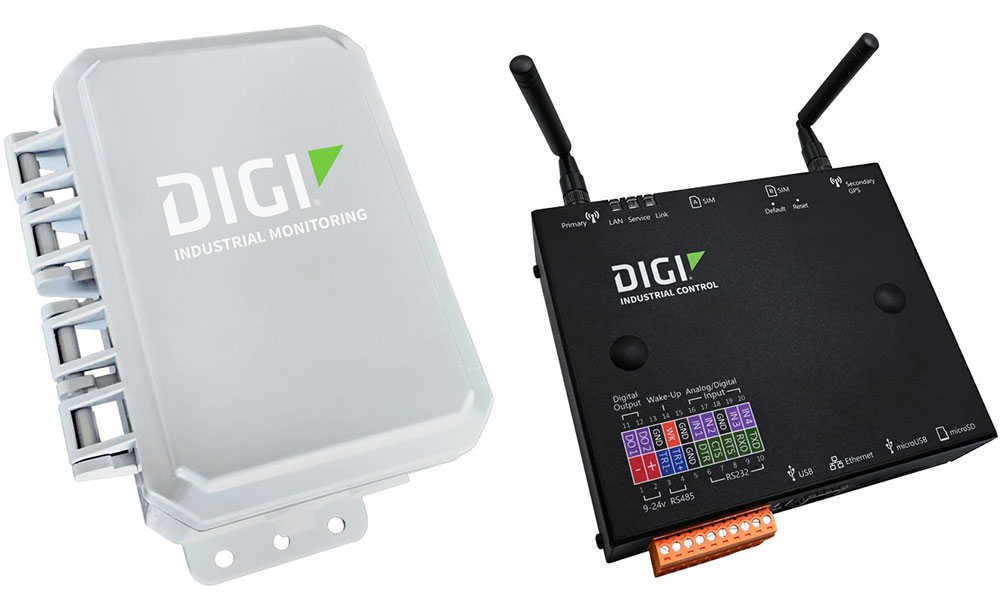 This is where the combination of Digi Connect Sensor XRT-M and the Digi Z45 Industrial Controller starts to feel different.
Instead of treating monitoring and control as separate jobs, they work together as part of the same system.
XRT-M handles remote sensing — getting data out of places that are usually hard to reach and even harder to maintain.
Z45 takes that data and actually does something with it — evaluating conditions and triggering actions right where the data is created.
And behind the scenes, Digi Axess ties everything together so you can see what’s happening across all your sites without jumping between tools.
It’s less about adding new technology and more about removing the gaps between systems.
Get Our Solution Brief
Learn about seamless connectivity and control with Digi Axess
Download PDF
Let’s Start Where Things Usually Get Messy: The Field
If you’ve ever tried to deploy sensors in a remote location, you already know the challenges.
No power. Spotty connectivity. Equipment that doesn’t always play nicely together.
That’s exactly the environment Digi Connect Sensor XRT-M was built for.
It’s battery-powered, connects over cellular, and can start sending data in minutes — not days or weeks.
Because it supports standard protocols like MQTT and Modbus, it doesn’t force you to rethink your entire setup just to get started.
And because it can operate for years without constant maintenance, it reduces the operational overhead that often slows down industrial deployments.

Where Things Usually Slow Down — And Why They Don’t Have To
Here’s the pattern most teams run into:
Data comes in. It gets sent to the cloud. It’s processed. Then something happens.
Eventually.
That works — but it’s not exactly fast. And it’s definitely not resilient.
Digi Z45 changes that dynamic.
Instead of sending everything upstream and waiting, it processes data locally and reacts immediately.
No waiting. No dependency chain. No hoping the system catches up in time.
Even better, it removes much of the complexity traditionally associated with PLCs. Teams can define automation logic through a web-based interface without needing deep programming expertise.
That means faster deployment — and fewer barriers to actually using the system effectively.
And Yes — You Still Get Full Visibility
One of the biggest concerns with edge-based systems is losing visibility.
That concern is valid—because in many architectures, adding edge intelligence often means adding complexity.
That’s not the case here.
You can monitor data, track system behavior, and identify trends without juggling multiple dashboards.
Visibility and control don’t have to be trade-offs anymore.
What This Actually Looks Like in the Real World
In practice, this shift shows up in ways that are both simple and impactful.
A water system doesn’t just monitor tank levels — it automatically adjusts pump activity before there’s a problem.
A pipeline doesn’t just report pressure changes — it triggers a response before damage occurs.
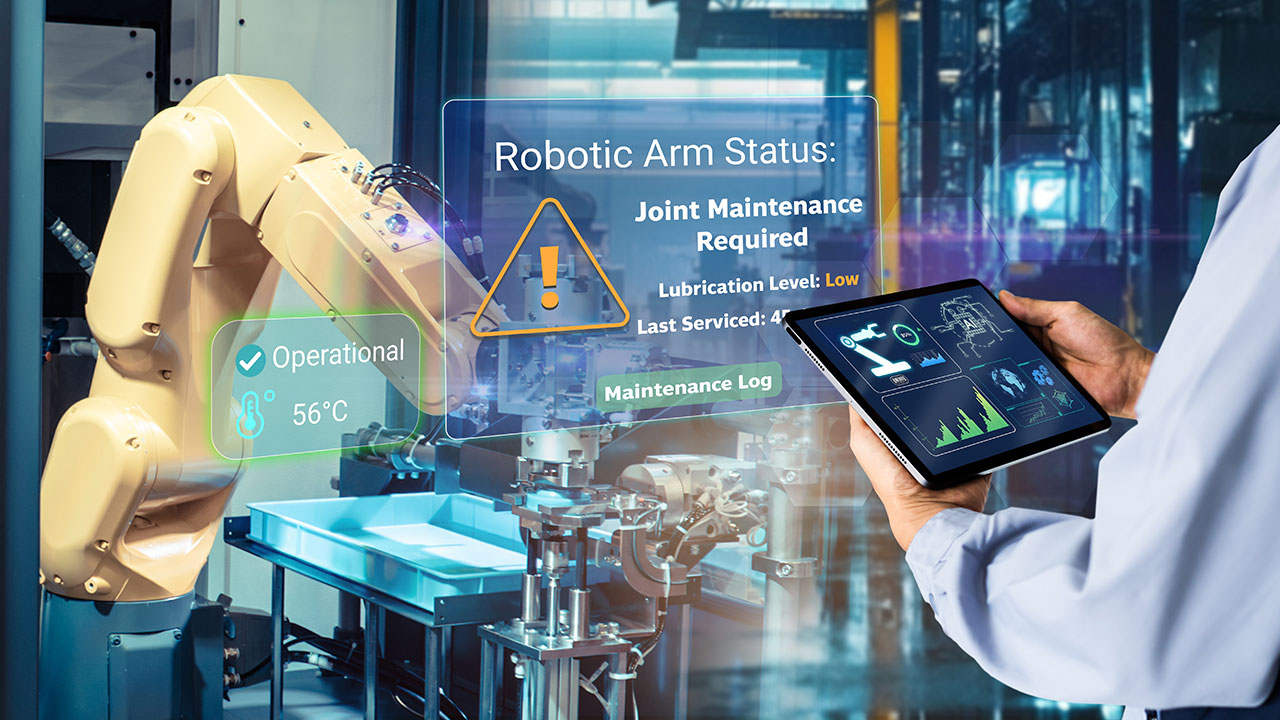
A factory doesn’t just collect machine data — it uses that data to simplify and automate operations without weeks of engineering effort.
In each case, the system isn’t waiting for someone to step in.
It’s already acting.

Why This Matters More as You Scale
Most industrial IoT projects look great at the pilot stage.
Then scale happens — and complexity shows up everywhere.
More devices. More integrations. More maintenance.
What worked in one location becomes harder to replicate across dozens.
By simplifying the architecture upfront — combining sensing, control, and visibility — you avoid that problem later.
You’re not layering complexity on top of your system.
You’re removing it.
The Bottom Line
Industrial IoT isn’t just about seeing what’s happening anymore.
It’s about building systems that respond — quickly, consistently, and without constant human intervention.
With Digi Connect Sensor XRT-M, Digi Z45, and Digi Axess, that shift becomes practical.
Not just more data.
Not just better dashboards.
But systems that actually do something with what they know.
Frequently Asked Questions About Digi Connect Sensor XRT-M and the Digi Z45 Industrial Controller
What is industrial IoT monitoring and control?
Industrial IoT monitoring and control refers to collecting data from sensors and using that data to automatically trigger actions or decisions. Solutions like Digi XRT-M and Z45 enable both real-time monitoring and automated control in a single system.
What is the difference between a sensor gateway and an edge controller?
A sensor gateway collects and transmits data from sensors, while an edge controller processes that data and executes logic locally. Digi Connect Sensor XRT-M acts as the gateway, and Digi Z45 acts as the controller.
Can industrial systems operate without Internet connectivity?
Yes. Edge-based systems like Digi Z45 can continue operating and executing logic locally even if connectivity is lost.
How do you automate industrial systems without PLC programming?
Digi Z45 enables automation by using a no-code, web-based Automation Control application. Users can configure logic, thresholds, alarms, and event-driven actions through an intuitive menu driven interface, while combining SCADA type capabilities in a single platform for faster deployment and lower engineering effort.
What industries benefit from remote monitoring and control?
Industries such as water and wastewater, oil and gas, manufacturing, and environmental monitoring benefit from real-time visibility and automated control of distributed assets.
Next Steps