In our
previous post in this series, we introduced the Digi XBee for Wi-SUN® Solution and explored how utility-grade reliability translates from meters to everything. Today, we’re diving deep into what makes Wi-SUN suitable for critical infrastructure: its comprehensive security architecture and seamless integration capabilities built on open standards.
When it comes to critical infrastructure, security isn’t priority one. It’s priority zero. Wi-SUN adopts a security-by-design approach, with security being built-in, not bolted-on. Every device is uniquely identifiable with digital certificates that can be rotated and revoked for authentication when joining a network, including what is considered post-quantum computing-safe 256-bit AES encryption of data in transit. Not all IoT protocols support this level of encryption strength, making Wi-SUN particularly suitable for critical infrastructure and sensitive applications.
Jump to:
Wi-SUN’s security architecture builds upon a foundation of widely recognized industry standards, including IEEE 802.15.4 for physical and MAC layers, IEEE 802.1X for network access control, IEEE 802.11i security concepts, and 802.1AR with X.509 certificates. This standards-based approach ensures broad interoperability and leverages decades of security research and real-world testing. This means connected systems in critical infrastructure, including energy, utilities, and oil and gas upstream/downstream applications, can rely on full security integration to meet security and compliance requirements.
These aren’t proprietary or experimental security measures. They’re the same battle-tested standards protecting web browsers, enterprise VPNs, mobile device management systems, and critical infrastructure worldwide. This proven foundation means Wi-SUN deployments benefit from continuous security improvements developed by global standards bodies and security researchers.

Every Wi-SUN device begins with a cryptographically secured identity based on IEEE 802.1AR standards. Each device receives a unique X.509 certificate, the same digital certificate format securing enterprise systems worldwide. Paired with a corresponding private key, it creates what’s essentially a digital “birth certificate” that cannot be easily forged or duplicated. This Secure Device Identifier (DevID) forms the foundation of the entire security model.
Before any device can participate in the network, it must undergo rigorous certificate-based authentication. The network uses Extensible Authentication Protocol - Transport Layer Security (EAP-TLS) over EAPOL to verify each device’s identity against its certificate. This process significantly reduces vulnerability to common cyberattacks like device spoofing or unauthorized network access. No certificate, no connection.
Upon successful authentication, the system establishes a Pairwise Master Key (PMK) shared exclusively between the authenticating device and the Digi XBee Hive Border Router. This PMK enables a secure 4-way handshake process that generates and distributes Group Transient Keys (GTKs) to authorized devices throughout the network. The Digi XBee Hive Border Router typically serves as the authenticator, with authentication services either hosted locally on the border router or managed by an external RADIUS server and/or network management system.
Digi TrustFence® is our comprehensive IoT security framework that integrates multiple layers of protection throughout the entire product lifecycle. A key component of Digi TrustFence is the integration is the highest level of Silicon Labs Secure Vault technology (Secure Vault High), specifically selected to provide customers with protection based on Arm PSA Certified Level 3 capabilities.
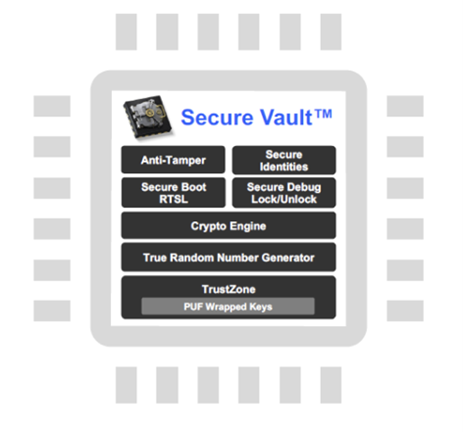 Silicon Labs Secure Vault, integrated within Digi TrustFence on both Digi XBee for Wi-SUN modules and Digi XBee Hive Border Routers, includes its own dedicated security core with ROM, RAM, and Flash, containing cryptographic algorithms and True Random Number Generator (TRNG) functions meeting NIST SP 800-90 requirements.
Through the Digi TrustFence integration of Silicon Labs Secure Vault, Physically Unclonable Functions (PUF) generate unique digital fingerprints for each device, while tamper detection and anti-rollback protection defend against physical attacks and firmware downgrade attempts. Advanced features like Differential Power Analysis (DPA) countermeasures improve resilience even against sophisticated side-channel attacks to help prevent unauthorized access, data breaches, and other security compromises.
Beyond the hardware security core provided by Silicon Labs Secure Vault, Digi TrustFence provides secure boot processes, encrypted storage, and comprehensive certificate management throughout the device lifecycle. This multi-layered approach means security is intrinsic to every Digi XBee for Wi-SUN module and Digi XBee Hive Border Router from the moment of manufacture through decades of field operation.
Wi-SUN employs strong 256-bit AES-CCM encryption from the IEEE 802.15.4 standard to secure all frame-level communications. This encryption strength is not universally supported across IoT protocols, giving the Digi XBee for Wi-SUN Solution a significant security advantage for sensitive and critical infrastructure applications. This encryption method provides triple protection:
- Data confidentiality: Ensuring information remains private with strong 256-bit encryption
- Data authenticity: Verifying the sender’s identity
- Integrity checking: Confirming data hasn’t been tampered with during transmission
The system also includes built-in replay protection mechanisms. AES-CCM can detect and automatically reject replayed messages, protecting against attackers who might intercept and retransmit legitimate network traffic to disrupt operations or gain unauthorized access.
Wi-SUN’s security benefits extend beyond cryptographic protection to include architectural resilience. The self-healing mesh network topology automatically detects communication failures and establishes alternative routing paths, ensuring continued operation even when individual nodes are compromised or fail.
In critical infrastructure deployments, this is a mission critical requirement. It means that even in the face of physical attacks, natural disasters, or targeted cyberattacks against specific nodes, the network maintains connectivity and security. The mesh architecture itself becomes a security feature, eliminating single points of failure that could be exploited by attackers. When one path fails, the mesh finds another.
Digi provides comprehensive Public Key Infrastructure (PKI) management built on the same certificate standards used by major enterprises and government agencies worldwide. Digi XBee for Wi-SUN modules come pre-provisioned with production-ready X.509 certificates from Wi-SUN Alliance approved Certificate Authorities, eliminating complex field provisioning procedures while maintaining compatibility with existing enterprise security policies and certificate management systems.
Digi Remote Manager® provides enterprise-grade certificate lifecycle management using established PKI standards, including remote certificate renewal and revocation without requiring physical device access. These are critical capabilities proven in deployed enterprise IT environments worldwide.
The platform supports comprehensive over-the-air (OTA) firmware updates with cryptographic verification using the same digital signature standards protecting software updates across Windows, Linux, and mobile operating systems. This ensures that security patches and feature updates can be deployed rapidly across thousands of Digi XBee for Wi-SUN modules and Digi XBee Hive Border Routers while maintaining the integrity and authenticity of every update.
Digi TrustFence ensures that every OTA update is cryptographically verified before installation, with secure boot processes preventing unauthorized firmware from executing. This complete chain of trust from manufacture through field updates provides continuous protection throughout the operational lifetime.
Together, these security layers create a comprehensive defense system particularly well-suited for critical infrastructure and large-scale IoT deployments. The combination of Digi TrustFence with integrated Silicon Labs Secure Vault, strong device authentication, robust 256-bit AES encryption, network resilience, and standards compliance provides protection against a wide range of cyber threats, from basic unauthorized access attempts to sophisticated nation-state level attacks targeting critical infrastructure systems.
.jpg?lang=en-US)
One of Wi-SUN’s most powerful features is often overlooked: it’s a true IP-based mesh networking technology. Every node in a Wi-SUN network becomes a true IP device with its own address, enabling seamless integration with existing IT systems, standard networking tools, and enterprise management platforms without requiring proprietary gateways or protocol translation.
This IP-based architecture means your Wi-SUN network works like any other network infrastructure your IT team already manages. Standard tools, protocols, and practices apply. Built on IPv6 foundations for future-proof scalability, Wi-SUN networks easily integrate with current IPv4 environments through standard address translation provided by Digi XBee Hive Border Routers.
For organizations with established IT infrastructure, this seamless integration dramatically reduces deployment complexity and operational overhead. There’s no need to train staff on proprietary protocols or invest in specialized management systems. Wi-SUN works within your existing network architecture.
The IP-based architecture delivers several practical benefits:
- Simplified network management: Use existing network monitoring tools, SNMP management systems, and IT security infrastructure without modification.
- Standard security practices: Apply your organization’s existing firewall rules, VPN configurations, and network segmentation policies directly to Wi-SUN networks.
- Easier troubleshooting: IT staff can use familiar tools like ping, traceroute, and packet analyzers to diagnose and resolve network issues.
- Future-proof investment: IPv6 support ensures your network infrastructure remains viable as the internet continues its transition from IPv4.
Wi-SUN’s commitment to open standards extends far beyond security, providing fundamental technology advantages that eliminate vendor lock-in. Built on IEEE 802.15.4g radio standards, IETF IPv6 networking protocols, IEEE 802.11i security concepts, 802.1AR with X.509 certificates, and Wi-SUN Alliance interoperability specifications, every layer of the technology leverages proven, mature standards already deployed at massive scale.
Unlike proprietary IoT protocols, this standards-based foundation means Wi-SUN networks integrate seamlessly with existing enterprise systems, support standard IT management practices, and benefit from continuous improvements developed by global standards bodies.

For critical infrastructure requiring often way more than 15-20 year operational lifecycles, this standards-based approach provides assurance that technology investments will remain viable and secure throughout their entire operational life.
Consider the alternatives: proprietary protocols may offer short-term advantages, but they create long-term risks. What happens if the vendor discontinues the product line? Goes out of business? Fails to keep pace with evolving security threats? With proprietary systems, you’re locked into a single vendor’s roadmap and business decisions.
Wi-SUN’s open standards approach means your investment is protected by a global ecosystem of vendors, developers, and standards bodies committed to the technology’s evolution. The Wi-SUN Alliance’s robust Wi-SUN CERTIFIED program validates that products from different manufacturers conform to specifications and can communicate seamlessly with one another, fostering price competition and ensuring long-term supply chain stability.
When you’re deploying infrastructure designed to operate for decades, the technology foundation matters enormously. Open standards provide:
- Interoperability: Integration with network components from multiple vendors without compatibility concerns.
- Innovation: Benefit from improvements and innovations developed by the global standards community.
- Longevity: Confidence that standards-based technology will remain supported and secure for decades.
- Ecosystem support: Access to a broad ecosystem of tools, services, and expertise.

The beauty of Wi-SUN’s security architecture, powered by Digi TrustFence with integrated Silicon Labs Secure Vault, is that it scales from a handful of devices to millions without compromising protection. The same security mechanisms protecting TEPCO’s 29 million device network in Tokyo work identically for a 100-node industrial facility or a 10,000-node smart city deployment. Security isn’t a feature that degrades with scale; it’s intrinsic to the architecture. From ten nodes to ten million, the protection remains constant.
Looking Ahead
In our next and final post, we’ll explore the remarkable opportunity created by Cisco OpenCSMP support, which enables leveraging existing utility Wi-SUN infrastructure for broader applications. We’ll also examine specific applications across industries including smart cities, utilities, energy, industrial IoT, building automation, oil and gas operations, and asset management.
The combination of Digi TrustFence security with integrated Silicon Labs Secure Vault, seamless IT integration, and open standards creates a foundation you can trust for mission-critical applications. But the real value comes from putting this technology to work solving real-world challenges.
Ready to explore how Wi-SUN’s security and integration advantages can benefit your organization? Visit our Digi XBee for Wi-SUN page to learn more.
Why is Wi-SUN considered suitable for critical infrastructure?
Wi-SUN was designed with security as a foundational requirement, not an add-on. It combines certificate-based device identity, strong 256-bit AES-CCM encryption, mutual authentication using EAP-TLS, secure key exchange, and replay protection. Built on proven IEEE and IETF standards, it provides the level of assurance required for utilities, municipalities, and industrial operators managing mission-critical systems.
What level of encryption does Wi-SUN use?
Wi-SUN uses 256-bit AES-CCM encryption at the IEEE 802.15.4 layer to secure data in transit. This provides:
-
Confidentiality – Data remains private.
-
Authenticity – The sender’s identity is verified.
-
Integrity – Data tampering is detected.
-
Replay protection – Replayed packets are automatically rejected.
Not all IoT networking technologies support 256-bit encryption at this level, making Wi-SUN particularly well-suited for sensitive infrastructure applications.
How are devices authenticated before joining the Wi-SUN network?
Each Wi-SUN device is provisioned with a unique IEEE 802.1AR Secure Device Identifier (DevID) in the form of an X.509 certificate and corresponding private key.
When joining a network, devices authenticate using EAP-TLS over EAPOL. If a device cannot present a valid certificate, it cannot connect — “no certificate, no connection.” This certificate-based authentication significantly reduces the risk of spoofing and unauthorized access.
What protects the cryptographic keys inside the device?
Digi TrustFence®, integrated with Silicon Labs Secure Vault High (Arm PSA Certified Level 3), anchors security in hardware.
Key protections include:
-
Dedicated hardware security core
-
True Random Number Generator (TRNG)
-
Physically Unclonable Functions (PUF)
-
Tamper detection
-
Anti-rollback firmware protection
-
Differential Power Analysis (DPA) countermeasures
This hardware-based protection helps defend against both remote cyberattacks and sophisticated physical attacks.
In XBee Wi-SUN networks, how are keys managed after authentication?
After successful certificate authentication, a Pairwise Master Key (PMK) is established between the device and the Digi XBee Hive Border Router. A secure 4-way handshake then distributes Group Transient Keys (GTKs) for encrypted mesh communications.
Keys can be rotated and revoked as part of standard lifecycle management.
How are certificates provisioned and managed in XBee Wi-SUN networks?
Digi XBee for Wi-SUN modules come pre-provisioned with production-ready X.509 certificates issued by Wi-SUN Alliance-approved Certificate Authorities.
Certificate lifecycle management, including renewal and revocation, can be handled remotely via Digi Remote Manager®, using the same enterprise-grade PKI practices used in IT environments worldwide.
Can the firmware of XBee Wi-SUN devices be securely updated in the field?
Yes. Wi-SUN supports cryptographically signed over-the-air (OTA) firmware updates. Every update is verified before installation.
Digi TrustFence ensures:
This enables rapid security patch deployment across thousands or millions of deployed devices.
How does Wi-SUN improve resilience against attacks or failures?
Wi-SUN uses a self-healing mesh topology. If a node fails — whether due to physical damage, interference, or attack — the network automatically reroutes traffic through alternate paths.
This eliminates single points of failure and increases operational continuity in disaster scenarios or targeted attacks.
Does security degrade as a Wi-SUN network scales?
No. Wi-SUN’s security model is architecture-based, not size-dependent. The same certificate authentication, encryption, and key management mechanisms operate identically whether the network includes 100 devices or millions.
Large-scale deployments, such as utility networks serving tens of millions of endpoints, demonstrate that Wi-SUN security scales without compromise.
What standards does Wi-SUN rely on?
Wi-SUN is built on widely adopted global standards, including:
-
IEEE 802.15.4 (PHY/MAC)
-
IEEE 802.1X (network access control)
-
IEEE 802.11i security concepts
-
IEEE 802.1AR Secure Device Identity
-
X.509 digital certificates
-
IETF IPv6 networking protocols
These are not proprietary technologies; they are the same foundational standards used in enterprise IT, secure web traffic, VPNs, and mobile device management systems.
Why do open standards matter for critical infrastructure?
Critical infrastructure systems often operate for 15–20+ years. Open standards provide:
-
Interoperability across multiple vendors
-
Long-term viability independent of a single supplier
-
Ongoing security improvements from global standards bodies
-
Reduced vendor lock-in
-
Broader ecosystem support
This protects technology investments over decades of operational life.
What is the Wi-SUN CERTIFIED™ program?
The Wi-SUN Alliance’s certification program validates that products conform to interoperability specifications. Certified devices from different manufacturers can communicate seamlessly, promoting multi-vendor ecosystems and supply chain stability.
What does it mean that Wi-SUN is “IP-based”?
Wi-SUN is a true IPv6-based mesh networking technology. Each node has its own IP address, allowing it to function like any other network device.
This enables:
-
Direct integration with enterprise networks
-
Use of standard IT tools (SNMP, ping, traceroute, packet analyzers)
-
Standard firewall and segmentation policies
-
Seamless IPv4 integration via border routers
How does Wi-SUN IP-based networking reduce operational complexity?
There are a number of benefits that result from Wi-SUN use of standard IP networking:
-
IT teams can manage it using familiar tools
-
No proprietary gateways or protocol translation layers are required
-
Existing monitoring, security, and management systems can be leveraged
-
Training and operational overhead are minimized
oes Wi-SUN support IPv6-only environments?
Yes. Wi-SUN is built on IPv6, ensuring future-proof scalability as the global transition from IPv4 continues. Digi XBee Hive Border Routers provide IPv4 interoperability where needed.
How does Wi-SUN reduce vendor lock-in risk?
Because Wi-SUN is based on open standards and governed by a global alliance, organizations are not tied to a single vendor’s proprietary technology roadmap.
Multiple certified vendors can provide interoperable devices, helping ensure supply chain flexibility and competitive pricing over time.
What happens if a Wi-SUN device is compromised?
Wi-SUN security layers limit blast radius:
-
Certificate-based authentication prevents rogue device impersonation.
-
Compromised certificates can be revoked.
-
Encryption protects communications.
-
Mesh routing isolates failures.
-
Secure boot prevents malicious firmware execution.
The layered design reduces the likelihood of systemic compromise.
Is Wi-SUN prepared for evolving cybersecurity threats?
Yes. Because Wi-SUN builds on widely adopted security standards, it benefits from continuous research, updates, and improvements from the global security community.
Combined with OTA update capability and hardware-rooted trust via Digi TrustFence, deployments can adapt to emerging threats throughout their operational lifetime.
How does Wi-SUN compare to proprietary IoT protocols?
Proprietary protocols may offer narrow feature advantages but can introduce long-term risks, including:
Wi-SUN’s open, standards-based model prioritizes longevity, interoperability, and ecosystem resilience.
What industries benefit most from Wi-SUN security and open standards?
Wi-SUN is particularly well-suited for:
-
Electric, gas, and water utilities
-
Smart cities and municipal infrastructure
-
Industrial IoT environments
-
Oil and gas operations
-
Building automation systems
-
Renewable energy and distributed energy resources
-
Large-scale asset management networks
Any deployment requiring high reliability, long operational life, and strong cybersecurity can benefit.
Conclusion
Wi-SUN combines:
-
Hardware-rooted security (Digi TrustFence + Secure Vault)
-
Certificate-based authentication
-
256-bit AES encryption
-
Secure OTA updates
-
Self-healing mesh resilience
-
True IP-based integration
-
Open standards interoperability
For organizations deploying infrastructure that must operate securely for decades, Wi-SUN provides a standards-based, scalable foundation designed to withstand both today’s threats and tomorrow’s uncertainties.
Next Steps