What Is 5G RedCap?
 5G RedCap (Reduced Capability 5G) is a streamlined 5G variant designed to bridge the gap between LTE and high-performance 5G networks. Standardized by 3GPP in Release 17, 5G RedCap delivers a practical middle ground for connected devices that need more capability than legacy LTE options but don't require the full functionality, power consumption, or cost of traditional 5G eMBB (Enhanced Mobile Broadband).
By intentionally scaling back certain features such as antenna configurations, bandwidth, and peak data rates, RedCap 5G enables cost-effective, power-efficient connectivity for massive IoT deployments, industrial automation, and edge intelligence applications. This makes 5G RedCap particularly relevant for organizations seeking device connectivity, remote infrastructure monitoring, and distributed enterprise connectivity. RedCap isn't a future technology. It's ready now. 2026 marks the first year where infrastructure and devices are aligned, and production-ready solutions are commercially available. With LTE's sunset expected in 2030-2035, RedCap can be adopted today. It provides a 65% power reduction vs. 5G eMBB with throughput up to 223 Mbps (download) and 123 Mbps (upload) depending on band configuration.
5G RedCap Meaning (Reduced Capability 5G Explained)
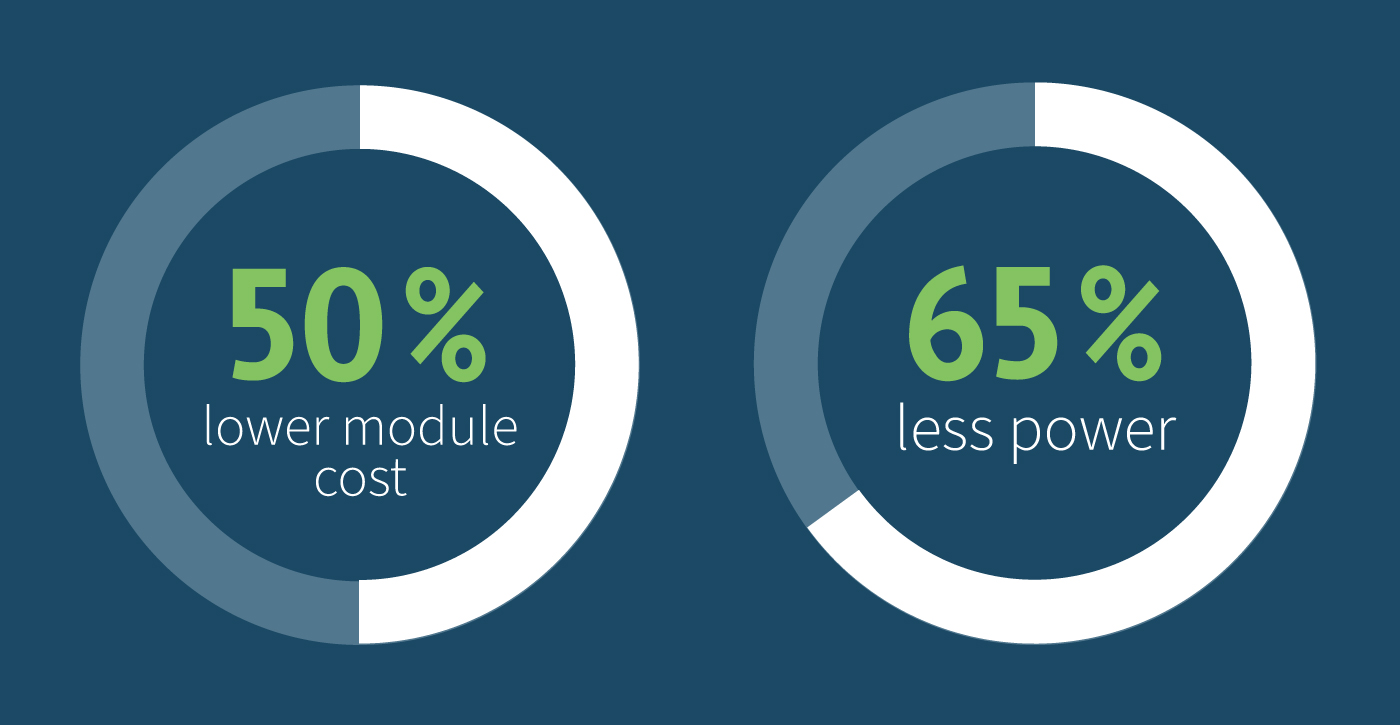 What is RedCap? 5G RedCap refers to the intentional design philosophy of "reduced capability 5G" and is not a limitation but an optimization. It's 5G technology tailored to match real-world IoT requirements by eliminating unnecessary complexity. By reducing antenna counts (1 or 2 receive antennas — down from 4 in full 5G NR), narrowing bandwidth (down to 20 MHz), and simplifying RF requirements, RedCap 5G achieves lower device costs compared to 5G eMBB, reduced power consumption (65% lower), and smaller form factors while maintaining 5G's core advantages in security, latency, and network efficiency.
Why 5G RedCap Matters for IoT
Existing cellular technologies leave a significant capability gap for many IoT deployments. LTE serves low-data applications effectively, while 5G eMBB targets high-bandwidth, latency-sensitive use cases like autonomous vehicles and AR/VR. However, a large middle tier of IoT applications, such as industrial sensors with video feeds, remote infrastructure requiring moderate throughput, and distributed retail systems, doesn't fit neatly into either category. 5G RedCap addresses this gap by providing 5G's architectural advantages (enhanced security, network slicing, edge computing support) without the cost and complexity of 5G eMBB implementations. As carriers like AT&T, Verizon, and T-Mobile gradually transition away from LTE and toward 5G Standalone (SA) networks (in the 2030-2035 timeframe), RedCap IoT becomes increasingly practical for scalable, future-proof deployments.
Bridging the Gap Between LTE and 5G eMBB
Many IoT applications require more than LTE Category 1 or Category 4 can reliably deliver but don't need the multi-gigabit speeds of 5G eMBB. 5G RedCap fills this gap today by offering throughput up to 223 Mbps (download) and 123 Mbps (upload) depending on band configuration — substantially more than Cat 4 LTE (150/50 Mbps peak but with higher overhead) while avoiding the device complexity and power demands of full 5G eMBB. This middle ground enables use cases like industrial video monitoring, utilities telemetry, and distributed enterprise connectivity without over-engineering or underpowering the solution.
RedCap and the Shift to 5G Standalone (SA)
The industry-wide transition to 5G Standalone networks makes 5G RedCap more relevant and practical. Unlike Non-Standalone (NSA) deployments that rely on LTE anchors, 5G SA enables native support for RedCap 5G devices, simplified provisioning, and access to advanced features like network slicing and ultra-reliable low-latency communication (URLLC). According to GSMA Intelligence's 5G tracking data, more than 230 operators worldwide launched commercial 5G networks as of 2024, with SA deployments accelerating through 2025. This momentum aligns 5G RedCap technology with long-term carrier and enterprise connectivity strategies.
How 5G RedCap Technology Works
5G RedCap technology operates as a simplified subset of 5G eMBB, using the same core network architecture and protocols while scaling back device-side complexity. The key design principle is optimization: RedCap devices support fewer frequency bands, narrower channel bandwidths (typically 20 MHz versus 100 MHz for 5G eMBB), reduced antenna configurations (1 or 2 receive antennas, vs. 4 in full 5G eMBB), and lower peak data rates. These reductions don't compromise fundamental 5G capabilities — 5G RedCap still benefits from improved spectral efficiency, lower latency (sub-20ms typical), and native support for edge computing integration compared to LTE-based solutions.
Reduced Device Complexity in RedCap
5G RedCap achieves cost and size reductions through intentional simplifications. By supporting single or dual receive antennas instead of four, requiring narrower RF bandwidth (20 MHz), and eliminating ultra-wideband components, RedCap modules can be smaller, simpler, and less expensive to manufacture. According to ABI Research, these reductions can lower module costs by 30-50% compared to 5G eMBB devices while enabling smaller form factors suitable for space-constrained industrial and IoT applications. Similarly, Qualcomm's 5G NR-Light technical brief reports that RedCap devices are designed to be "less complex and more cost-effective" than 5G eMBB devices, with simplified antenna configurations and reduced bandwidth requirements.
Power Efficiency and Cost Considerations
Reduced complexity directly translates to improved power efficiency. RedCap IoT devices consume 65% less power than 5G eMBB implementations because they process less data, operate with simpler RF chains, and support power-saving features like extended Discontinuous Reception (eDRX) and Power Saving Mode (PSM). This makes 5G RedCap viable for battery-powered applications requiring multi-year operational lifespans and reduces thermal management challenges for always-on industrial devices. Lower module costs also improve scalability economics for large IoT deployments spanning thousands or tens of thousands of endpoints.
RedCap vs LTE vs 5G eMBB: The Practical Differences
Choosing the right cellular technology requires understanding practical tradeoffs beyond peak theoretical performance. 5G RedCap vs 5G comparisons reveal that RedCap intentionally sacrifices maximum throughput and advanced features (like millimeter wave support) to achieve better cost-efficiency and power consumption for mid-tier applications. Meanwhile, 5G RedCap versus LTE comparisons show that RedCap offers superior latency, network efficiency, and future-proofing despite similar peak speeds in some configurations. The table below summarizes key differences:
| Technology |
Peak Downlink |
Peak Uplink |
Latency |
Device Complexity |
Power Efficiency |
Long-Term Viability |
| 5G RedCap |
~223 Mbps |
~123 Mbps |
<20ms |
Moderate |
High |
Excellent |
| LTE Cat 4 |
150 Mbps |
50 Mbps |
~30-50ms |
Moderate |
Moderate |
Declining |
| LTE Cat 1 |
10 Mbps |
5 Mbps |
~30-50ms |
Low |
High |
Declining |
| LTE-M |
1 Mbps |
1 Mbps |
~50-100ms |
Very Low |
Very High |
Good |
| NB-IoT |
~250 kbps |
~250 kbps |
~1-10s |
Very Low |
Very High |
Declining |
| 5G eMBB |
1+ Gbps |
500+ Mbps |
<10ms |
High |
Lower |
Excellent |
5G RedCap vs LTE (Cat 1, Cat 4, Cat 6)
5G RedCap delivers comparable or better throughput than LTE Cat 4 with significantly lower latency and improved spectral efficiency. While LTE categories remain functional today, carrier sunset timelines and declining LTE investment make RedCap 5G a better long-term choice for new deployments. According to Ericsson Mobility Reports, many operators plan to repurpose LTE spectrum for 5G by 2030-2035, which aligns 5G RedCap technology with future roadmaps for multiyear IoT projects.
5G RedCap vs LTE-M and NB-IoT
RedCap 5G is not a replacement for LTE-M or NB-IoT but addresses a different tier. LTE-M and NB-IoT excel at ultra-low-power, low-data applications (asset tracking, simple sensors, meters). 5G RedCap use cases such as industrial cameras, distributed routers and asset tracking require more capabilities. Where LTE-M delivers 1 Mbps and NB-IoT under 250 kbps, RedCap provides throughput up to 223 Mbps download and 123 Mbps upload (depending on band configuration) for applications needing richer data, occasional video, or bidirectional communication. Both technologies coexist, serving different device tiers within the same IoT ecosystem.
5G RedCap vs 5G eMBB
Full 5G eMBB targets high-performance applications requiring multi-gigabit speeds, ultra-low latency (<5ms), and advanced features like massive MIMO and millimeter wave connectivity. RedCap, by comparison, is 5G optimized for practicality rather than peak performance. Most industrial IoT deployments don't need 1+ Gbps throughput; they need reliable, cost-effective connectivity with better latency and efficiency than LTE. Instead of integrating 5G's full complexity, RedCap solutions deliver appropriate capability without over-engineering or unnecessary device costs for mid-tier applications.
Benefits of 5G RedCap for IoT and Industrial Connectivity
Organizations adopting reduced capability 5G gain multiple advantages spanning cost, performance, security, and long-term viability. These benefits position RedCap IoT as a strategic choice for scalable deployments across industrial, utilities, transportation, retail, and enterprise environments. The following sections outline key operational and technical outcomes that differentiate 5G RedCap technology from legacy cellular options and 5G eMBB implementations.
Lower Device Cost and Reduced Complexity
5G RedCap's simplified design — fewer antennas, narrower bandwidth, reduced RF complexity — directly lowers module and device costs compared to 5G eMBB. This cost reduction improves total cost of ownership (TCO) for large-scale deployments where every dollar per endpoint multiplies across thousands of devices. Lower complexity also simplifies hardware integration, reduces global certification burdens, and accelerates time-to-market for IoT product developers. For organizations planning to connect distributed infrastructure, equipment fleets, or multi-site enterprises, RedCap 5G's economics enable financially viable scaling beyond pilot projects.
Improved Power Efficiency Compared to 5G eMBB
5G RedCap consumes significantly less power than 5G eMBB — as much as 65% less — due to reduced antenna count, narrower RF bandwidth, and simplified processing requirements. Compared to LTE, RedCap delivers improved spectral efficiency and lower latency per bit, though absolute power consumption varies by use case and duty cycle. This power advantage matters for battery-operated sensors, remote infrastructure, and devices where thermal management or operational lifespan is critical. According to Qualcomm research, RedCap devices can achieve 2-3x better power efficiency than comparable LTE Category 4 devices due to improved spectral efficiency and modern power-saving modes like enhanced Discontinuous Reception (eDRX) and connected-mode optimizations.
5G-Native Security and Future-Proofing
RedCap inherits core 5G security features including enhanced encryption, mutual authentication, subscriber identity protection, and secure key management, which are capabilities beyond what LTE typically offers. As carriers continue investing in 5G Standalone networks and decommissioning legacy infrastructure, RedCap 5G aligns with long-term roadmaps rather than betting on declining technologies. This future-proofing provides a clear migration path from LTE to RedCap, simplifies lifecycle planning, and ensures connectivity infrastructure remains viable through multi-decade equipment lifespans typical in industrial and infrastructure deployments.
Better Performance Than LTE for Mid-Speed IoT
While peak speeds may appear similar on spec sheets, 5G RedCap delivers measurably better real-world performance than LTE through lower latency (sub-20ms versus 30-50ms typical for LTE), improved spectral efficiency, and better handling of network congestion. For 5G RedCap use cases involving real-time monitoring, industrial control loops, or distributed enterprise systems requiring consistent responsiveness, these performance improvements translate to more reliable operations, faster troubleshooting, and reduced error rates even when peak throughput isn't the primary concern.
Scalable Connectivity for Large IoT Deployments
RedCap IoT supports standardized, repeatable deployments across large device fleets with simplified hardware specifications, centralized management, and consistent network behavior. Unlike fragmented LTE implementations with varying carrier support across categories and bands, 5G RedCap technology offers more uniform specifications and ecosystem alignment. This standardization simplifies procurement, reduces testing overhead, and enables organizations to deploy thousands of endpoints with confidence in consistent performance, security posture, and long-term supportability.
5G RedCap Use Cases
5G RedCap use cases span diverse industries and applications where mid-tier cellular connectivity provides the optimal balance of capability, cost, and complexity. The following scenarios illustrate where RedCap 5G delivers practical advantages over both legacy LTE and 5G eMBB implementations. These use cases emphasize reliability, moderate data rates, simplified deployment, and long operational lifecycles — characteristics that exemplify 5G RedCap's sweet spot in the IoT connectivity landscape.
Industrial IoT and Equipment Monitoring
5G RedCap enables predictive maintenance, remote diagnostics, and real-time telemetry for industrial equipment requiring moderate data throughput and consistent low latency. Manufacturing facilities, processing plants, and industrial campuses benefit from RedCap IoT connectivity for sensors, PLCs, and edge controllers that need more capability than LTE but don't justify 5G eMBB infrastructure costs. Applications include vibration monitoring, thermal imaging, quality control systems, and distributed manufacturing execution systems (MES) where reliable, secure connectivity supports Industry 4.0 initiatives. Learn more about Digi's industrial IoT solutions.
Utilities, Smart Infrastructure, and Remote Sites
Electric utilities, water systems, and smart city infrastructure leverage 5G RedCap technology for SCADA systems, distributed energy resources (DER), substation monitoring, and remote infrastructure management. RedCap 5G provides the throughput needed for occasional diagnostic video, multi-sensor telemetry, and bidirectional control while maintaining power efficiency for solar-powered or battery-backed installations. The improved latency and security compared to LTE make 5G RedCap particularly valuable for critical infrastructure requiring both operational reliability and cyber-resilience. Explore Digi's utilities solutions and transportation infrastructure offerings.
Retail, Branch Networks, and Enterprise Edge
Distributed retail environments, branch offices, and enterprise edge locations use RedCap 5G for primary or backup WAN connectivity, point-of-sale systems, security cameras, digital signage, and IoT sensors. 5G RedCap simplifies multi-site deployments by eliminating wired broadband dependencies while providing sufficient throughput for business operations, inventory management, and customer engagement systems. Centralized management, consistent security policies, and simplified zero-touch provisioning make RedCap IoT practical for enterprises managing hundreds or thousands of locations. Discover Digi's retail solutions for distributed connectivity.
Video-Lite and Situational Awareness Applications
5G RedCap use cases involving occasional or event-triggered video demonstrate how RedCap handles moderate bandwidth demands without 5G eMBB overkill. Construction sites, parking facilities, perimeter security, and mobile surveillance applications benefit from 5G RedCap's ability to stream moderate-resolution video (720p-1080p) on-demand rather than continuously. By supporting video when needed while maintaining lower power and cost profiles compared to 5G eMBB cameras, RedCap 5G enables broader deployment of visual awareness systems across remote locations, temporary installations, and distributed infrastructure.
What to Consider Before Adopting 5G RedCap
Successfully deploying 5G RedCap requires evaluating multiple factors beyond radio technology specifications. Organizations should assess network readiness, coverage environments, hardware requirements, and management infrastructure to ensure RedCap IoT implementations deliver intended outcomes. The following considerations help IT leaders, IoT architects, and operations teams plan practical 5G RedCap technology migrations that align technical capabilities with business requirements and avoid common deployment pitfalls that can undermine pilot and production rollouts.
Network Readiness: 5G SA Matters
5G RedCap requires 5G Standalone (SA) network infrastructure. It cannot operate on 5G Non-Standalone (NSA) deployments anchored to LTE. Organizations should verify carrier SA availability in target deployment regions and understand timeline roadmaps for areas where SA coverage is emerging. While major U.S. carriers including T-Mobile, Verizon, and AT&T have launched SA networks in many markets, coverage density and feature availability vary. Engaging carriers early in planning helps identify coverage gaps, spectrum availability, and any special provisioning requirements for RedCap 5G devices.
Coverage and Bands
5G RedCap operates on sub-6 GHz 5G spectrum — the same mid and low bands used for conventional 5G coverage. Organizations deploying RedCap IoT solutions should evaluate RF propagation characteristics, indoor penetration requirements, and band support across devices and carrier networks. Unlike millimeter wave 5G with limited range, RedCap 5G on sub-6 GHz bands provides coverage comparable to LTE, making it viable for indoor installations, rural infrastructure, and mobile applications. However, specific band alignment between devices, carriers, and regional spectrum allocations requires validation during planning phases.
Power and Hardware Design
5G RedCap technology impacts device design decisions including antenna placement, enclosure materials, thermal management, and power supply sizing. While RedCap reduces complexity compared to 5G eMBB, it still requires more capable hardware than LTE. Organizations should assess installation environments, including outdoor weather exposure, temperature extremes, vibration, and electromagnetic interference, and select RedCap 5G hardware rated for specific conditions. Power budgeting for battery-operated deployments should account for actual usage patterns, network conditions, and power-saving mode behavior rather than relying solely on theoretical specifications.
Security and Manageability
Secure provisioning, centralized monitoring, and lifecycle management capabilities are critical for scaling RedCap IoT beyond pilots. Organizations should evaluate device management platforms, zero-touch provisioning workflows, security policy enforcement, and remote troubleshooting capabilities before committing to large deployments. 5G RedCap inherits 5G's security advantages, but those benefits require proper implementation including secure boot, credential management, encrypted communications, and vulnerability management processes. Solutions like Digi Remote Manager provide centralized oversight for distributed RedCap 5G deployments.
Enabling 5G RedCap Deployments with Digi
Digi International provides production-ready platforms supporting 5G RedCap connectivity for industrial, infrastructure, and enterprise deployments. By combining RedCap 5G cellular modules with proven routing, security, and management capabilities, Digi enables organizations to deploy scalable, future-proof connectivity solutions. Digi's approach emphasizes operational readiness by integrating 5G RedCap technology into hardened platforms designed for real-world industrial and mission-critical environments where reliability, security, and manageability are non-negotiable requirements.
Digi IX25 5G RedCap
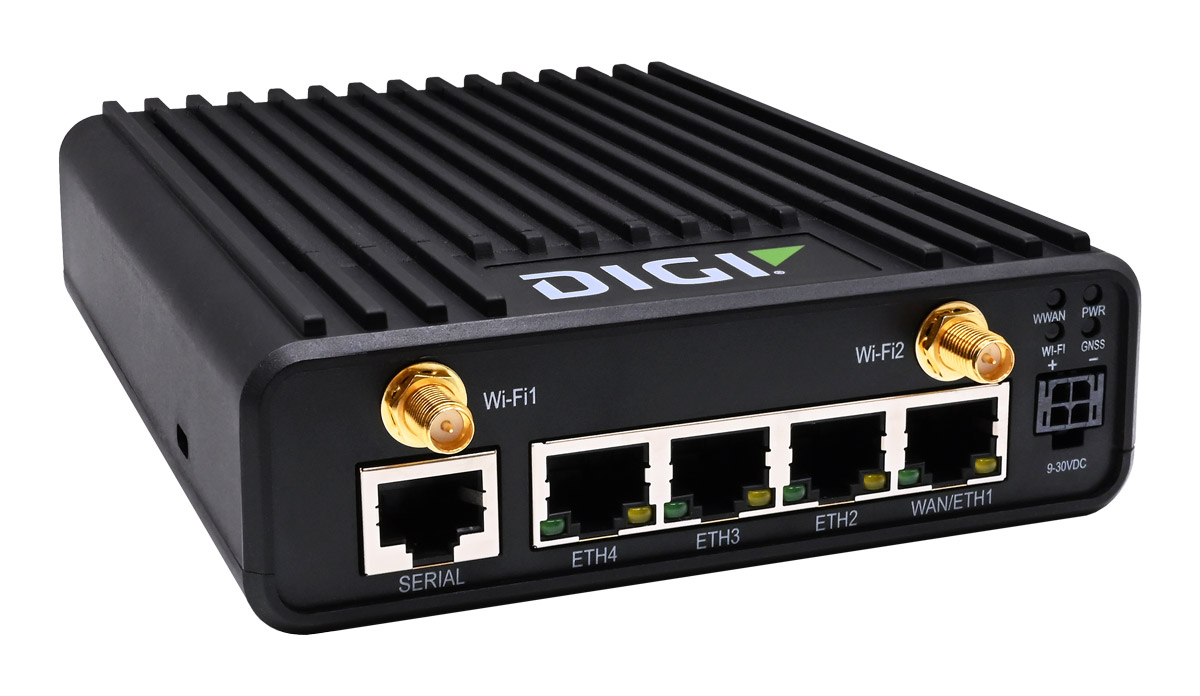 The Digi IX25 5G RedCap industrial cellular router brings 5G connectivity to rugged, industrial-grade platforms suitable for manufacturing, utilities, transportation, and infrastructure deployments. Designed for extended temperature ranges, shock and vibration resistance, and long operational lifespans, Digi IX25 supports 5G RedCap alongside fallback options including LTE and legacy cellular for flexible deployment scenarios. The platform integrates enterprise-grade routing, firewall capabilities, VPN support, and compatibility with Digi's centralized management infrastructure, enabling organizations to deploy RedCap IoT solutions with confidence in security, reliability, and lifecycle supportability.
What You Get with the Digi IX25 5G RedCap Approach
Deploying RedCap through Digi platforms provides operational advantages beyond basic connectivity. Organizations gain simplified migration paths from existing LTE infrastructure, centralized provisioning and management through Digi Remote Manager, comprehensive security features including stateful firewall and IPsec VPN, and long-term product lifecycles aligned with industrial equipment replacement cycles. Digi's RedCap 5G approach emphasizes practical deployment characteristics, including wide operating temperature ranges (-40 °C to +74 °C industrial ratings), DIN rail and wall-mount options, and redundant connectivity with automatic failover that matter when connecting thousands of endpoints across diverse environments.
Digi's 5G Cellular Router Portfolio
Beyond Digi IX25, Digi offers comprehensive cellular router solutions supporting Gigabit-Class LTE and 5G cellular. The Digi EX cellular router series brings 4G/5G capabilities to retail, branch office, and commercial deployments requiring simplified installation and cloud-managed operations. Digi's industrial (IX) router portfolio supports the complete range of industrial connectivity requirements, from manufacturing automation to critical infrastructure applications, enabling organizations to standardize on consistent platforms across diverse use cases while adapting cellular technology to specific deployment requirements. And the Digi portfolio of transportation (TX) router solutions supports traffic management, and mobile transportation use cases from public transit to railway and first responder connectivity. Visit our 5G solutions page to learn more about the next generation of cellular networking.
Have questions or looking for more information? Contact the Digi team to get expert support.
5G RedCap FAQs
What Is NR-Light in 5G?
5G NR Light is the technical designation used within 3GPP standards documentation to describe 5G RedCap. The terms are interchangeable — NR-Light appears in formal specifications, while RedCap is more commonly used in commercial and marketing contexts. According to 3GPP Release 17 specifications, 5G NR Light and RedCap both refer to the same set of simplified 5G features designed specifically for IoT and mid-tier industrial applications. Understanding this terminology helps when evaluating carrier roadmaps, module specifications, and industry discussions.
Is 5G RedCap Faster Than LTE?
5G RedCap delivers peak speeds up to 223 Mbps (download) and 123 Mbps (upload) depending on band configuration — but provides measurably better real-world performance through lower latency (sub-20 ms versus 30-50 ms for LTE), improved spectral efficiency, and superior network congestion handling. The practical performance advantage of RedCap 5G emerges in responsiveness, consistency under load, and efficiency rather than raw throughput. For applications requiring real-time interaction, distributed control, or reliable moderate-bandwidth connectivity, 5G RedCap technology outperforms LTE despite comparable peak speed specifications.
Does 5G RedCap Replace LTE-M or NB-IoT?
RedCap targets a different tier than LTE-M and NB-IoT. It's best for applications that need more capability than LTE-M/NB-IoT but don't need 5G eMBB complexity. LTE-M (1 Mbps) and NB-IoT (sub-250 kbps) remain optimal for ultra-low-power, low-data applications like asset tracking, simple sensors, and utility meters. 5G RedCap use cases are those that require richer data, such as industrial cameras, smart city traffic sensors, and connected robots, where 50-150 Mbps throughput matters. Both RedCap IoT and LPWAN technologies coexist, serving different device tiers within comprehensive IoT connectivity strategies.