Summary
Hardware is the first line of defense for IoT devices, so security should be designed in from the start rather than added later. Common weak points include exposed debug ports, side-channel leakage, counterfeit components and poor PCB or connector design. Choosing secure components, controlling the supply chain, planning authenticated updates and aligning with standards like NISTIR 8259 and IEC/ISA 62443 helps keep devices secure throughout their lifecycle.
With the Internet of Things now integral to connected experiences and industrial applications, IoT hardware design today sits at the uneasy intersection of opportunity and risk. Every new sensor, gateway or smart actuator that drives efficiency also creates a fresh entry point for attackers.
Rather than bolting on a strong IoT hardware security posture later, it should begin with component choices, secure-by-design board architecture and attention to supply-chain provenance. When hardware becomes the first line of defense, the device’s attack surface shrinks and detection and containment become simpler.
Common Hardware Vulnerabilities That Make IoT Devices Insecure
To build a secure IoT device design, first identify its most likely failure points. Attackers often target these hardware-level vulnerabilities.
Unsecured Physical Interfaces
The purpose of debug ports — such as UART and JTAG — is for development and not for day-to-day operations. If left accessible, they allow direct firmware extraction, memory access or device manipulation.
For example, SEC consult disclosed an unlocked JTAG interface on a Siemens SM-2558 module, enabling physical access. Vendors had to patch this, as exposed debug interfaces can let attackers bypass higher-level protections.
Side-Channel Leakage
Hardware can leak information through power draw, electromagnetic emissions, timing and other physical side channels. Attackers can exploit these side channels to recover cryptographic keys without ever compromising the software stack.
Compromised Components and IoT Supply Chain Security Risks
There are IoT hardware security concerns at the component level as well. Parts can be counterfeit, tampered with or carry pre-installed malware before they ever reach a bench. Weak controls around sourcing, storage and manufacturing create opportunities for compromised silicon, altered firmware or mislabeled tolerances that undermine security long before deployment.
Industry data shows a rise in counterfeit and nonconforming parts. The ERAI logged 1,055 suspect items in 2024, the highest benchmark since 2015. Fortunately, the number decreased to 748 in 2025. The numbers rise and fall with the emergence of new threats and vulnerabilities, which means original equipment manufacturers (OEMs) must be vigilant in sourcing parts as well as in end-to-end product design and deployment.
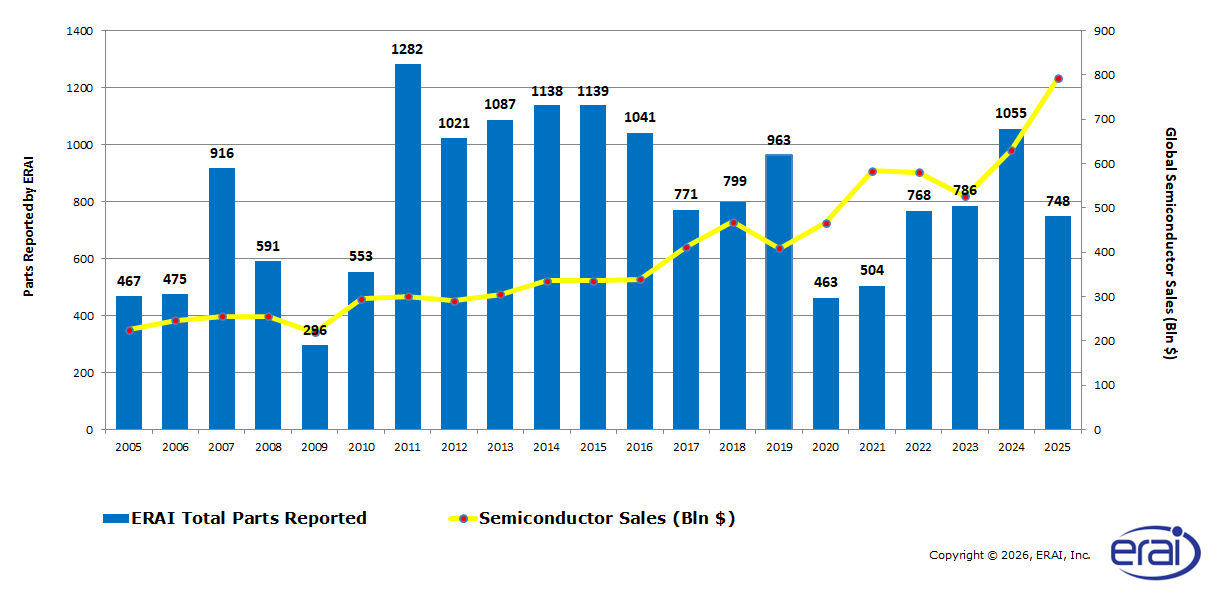
Source: ERAI Annual Report 2025
Board-Level and Connector Weaknesses
A poor printed circuit board (PCB) layout, exposed test pads, weak connector attachments and insufficient isolation between subsystems create attack surfaces that compromise IoT device security. Each of these does so because misrouted traces or unshielded buses allow an attacker to access critical interfaces.

Integrating Security Across the Product Lifecycle
Given the vulnerabilities of IoT hardware, it is essential to establish robust security mechanisms by integrating them into every stage of a product's lifecycle. Start making protection a built-in property of the device by turning to the drawing board. During concept and design, OEMs can translate risks into requirements, including:
- Cryptographic primitives to trust
- Data to isolate
- Components required to enforce those decisions
Early threat modeling and clear IoT hardware security requirements reduce costly rework later. For instance, by choosing a microcontroller with secure boot or an integrated root of trust, these design decisions pay off for the device’s entire life.
Factory provisioning and supply-chain controls solidify those design decisions. Veteran suppliers require traceable part provenance and design a provisioning flow that injects unique keys and device identity under controlled conditions, ideally at a secured production step rather than in the field. By selecting the right architecture and provisioning strategy early, manufacturers can avoid issues later on.
Finally, plan out the maintenance of the devices when they are in the field. Secure, authenticated over-the-air (OTA) updates, signed firmware images with rollback protection and lifecycle key-management processes. Each method patches vulnerabilities without opening new attack surfaces, so security remains effective from day one. Moreover, new and emerging cybersecurity regulations like the EU Cyber Resilience Act and other cybersecurity laws increasingly require OEMs to maintain the security of their devices in the field, so these strategies are no longer a “nice to have.”
Get Our White Paper
Learn about the Cyber Resilience Act and how to comply
Download PDF
Managing IoT Security Standards and Regulations
IoT security standards turn good intentions into repeatable practice. Meeting them helps sell devices, reduce legal risk and make embedded device security easier to measure. Buyers, integrators and regulators increasingly expect baseline controls, so turning compliance into a checklist is good business as well as security.
NISTIR 8259 is a good starting point, as it outlines the foundational activities device makers should undertake. It also defines a core baseline of device cybersecurity capabilities to consider, such as firmware update controls and minimal exposed interfaces.
Other standards complement NIST by focusing on sectors or product classes. For example, IEC/ISA 62443 frames the industrial automation and control system security as a lifecycle and process problem. Standards like these create value because they shape decisions. Use these to set minimum requirements in specs, contracts and test plans. Early alignment, along with a secure by design approach, simplifies verification, certification and maintenance.

Securing the Core Components of IoT Hardware
The PCB, processor modules, radio modules and the ports connect it all. Use the following guidelines to understand how to design or select components that reduce risk.
1. Work with the Physical Foundation
The PCB is the central component that routes power, signals and ground between every part. When engineers carefully lay it out, noise reduction occurs and it is harder for an attacker to reach signals. A well-designed layout also enhances long-term reliability, which in turn supports security by preventing field failures.
Beyond component selection, consider the broader layout for security. A thoughtful PCB design addresses signal integrity and minimizes electromagnetic interference, thereby mitigating the risk of side-channel attacks. Place high-value nets under solid ground pours, add guard traces and use controlled impedance where necessary so sensitive signals are not trivially accessible.
To integrate security seamlessly into the PCB, treat the layout as a security control. Shield sensitive zones, make test points lockable or destructible and document probe points in test plans to prevent unintended access after assembly.
2. Secure System-on-Modules (SOMs)
SOMs supply the CPU, memory and often peripheral controllers. They are effectively the device’s brain, packaged to simplify design. Using a pre-qualified SOM can significantly reduce development time and integration risk, as the module vendor validates complex subsystems.
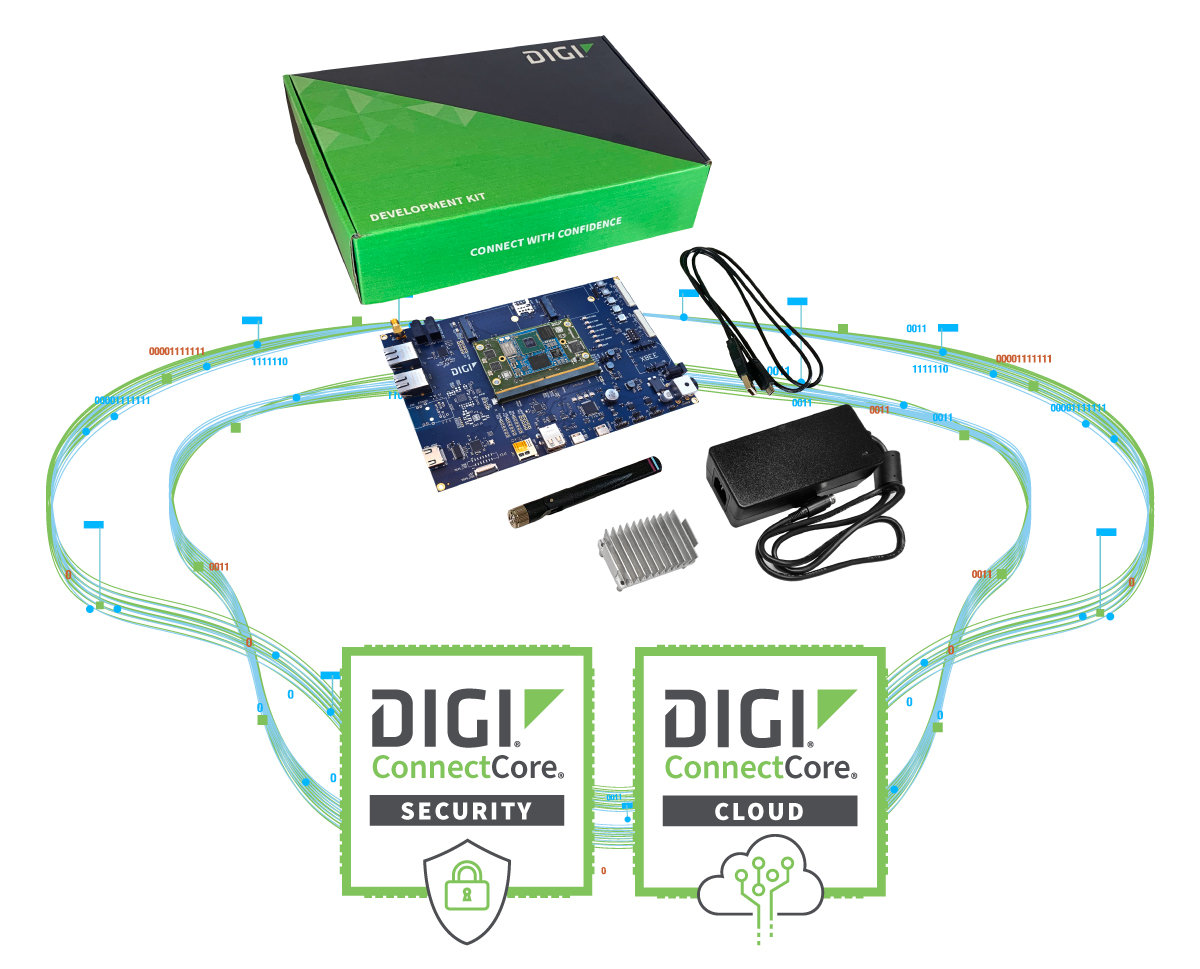
Choose SOMs with secure boot, hardware root of trust, encrypted storage and vendor-supported lifecycle tools. For example, the Digi ConnectCore development platform offers secure boot, hardware-backed key storage, and lifecycle services for measured boot, signed firmware and key isolation.
Digi TrustFence security builds on those primitives to provide a consistent device security architecture across ConnectCore and other Digi product families, making it easier to maintain a unified security posture across devices.
Advanced lifecycle options such as Digi ConnectCore Security and ConnectCore Cloud Services offer managed provisioning, certificate handling and remote monitoring, supporting centralized key management and scalable updates.
3. Establish Security on the Connectivity Layer
Wireless modules isolate the radio frequency (RF) and stack complexity from an application and help with regulatory certification. They are handy for adding connectivity without redesigning RF front ends or building complex stacks from scratch.
When selecting modules, require hardware-backed identity, robust firmware update paths and a vendor commitment to security patching. Choose modules that support security factory provisioning of unique credentials and that can sandbox host interfaces so a compromised application cannot misuse the radio.
A modular radio family such as the Digi XBee ecosystem can accelerate integration while providing consistent security behavior across host processors and radio modules. This feature simplifies integration and ongoing patch management.
4. Close the Security Gaps in I/O Ports and Interfaces
Connectors and I/O ports are the device’s gateway to the outside world. It is invaluable for testing, but dangerous if left exposed in production, so the design must be intentional.
Disable or remove debug and programming pads on production boards or route them behind removable shields. Where physical connectors are essential, implement logical gating, jumperless access controls or one-time programming fuses.
For user-facing ports, require host authentication and limit accepted protocols to the minimum needed for operation. Consider tamper-evidence, tamper-response logic or fuse-backed modes for devices that protect mission-critical data.

Securing IoT Hardware Design
Make security an integral part of the product from the outset. Small, early choices save problems down the road, so keep those basic requirements and processes alive through design, production and retirement. Taking such measures will ensure security in your IoT hardware design remains consistent throughout the product lifecycle.
Use the following checklist during design review and keep it live through test and production:
- Prioritize security from day one.
- Choose components and modules with security features rather than adding protections later.
- Design the board and enclosure to minimize physical access and signal leakage.
- Limit and lock external ports and debug interfaces on shipped units.
- Plan secure provisioning and authenticated updates before production.
- Make operational readiness part of the release plan.
As a next step, turn this checklist into a working design and production plan by engaging Digi Particle Design Services to accelerate secure IoT hardware design, certification and go to market, and improve ongoing lifecycle management of your deployed solutions.
FAQs: IoT Hardware Design Security
What is secure IoT hardware design?
Secure IoT hardware design builds security into a device’s physical components and architecture from the start, rather than adding it later. It includes choosing processors with secure boot and a hardware root of trust, protecting debug interfaces, laying out the PCB to resist probing, and controlling the supply chain.
What are the most common IoT hardware vulnerabilities?
The most common IoT hardware vulnerabilities are unsecured debug ports (UART and JTAG), side-channel leakage, counterfeit or tampered components, and weak PCB or connector design. Each lets an attacker reach firmware, extract cryptographic keys or access critical interfaces without breaking the software stack.
Why are UART and JTAG ports a security risk?
UART and JTAG are development interfaces. If left accessible on production devices, they can allow direct firmware extraction, memory access or device manipulation. Attackers can use them to bypass higher-level protections, so production boards should disable them, remove the pads or lock access.
How do you secure debug ports on production IoT devices?
Disable or remove debug and programming pads on production boards, or route them behind removable shields. Where physical connectors are required, use logical gating, jumperless access controls or one-time programming fuses. Document all probe points in test plans so no unintended access remains after assembly.
What is a hardware root of trust in IoT?
A hardware root of trust is a secure, immutable foundation in a device’s silicon that anchors all other security functions, such as verifying firmware at startup and storing keys. Choosing a microcontroller or system-on-module with one builds trust into the device for its entire life.
What is secure boot and why does it matter for IoT devices?
Secure boot verifies that firmware is authentic and unmodified before a device runs it. This blocks altered or malicious firmware from executing at startup. It matters because it protects the device from the first instruction, and it is one of the highest-value features to select early in design.
How can IoT manufacturers reduce supply chain security risks?
Vet suppliers, require traceable part provenance, and control sourcing, storage and manufacturing. Inject unique keys and device identities at a secured production step rather than in the field. This matters because parts can be counterfeit, tampered with or pre-loaded with malware before they reach the assembly line.
How can PCB layout improve IoT device security?
A security-minded PCB layout makes critical signals harder to reach and reduces leakage. Place high-value nets under solid ground pours, add guard traces, shield sensitive zones, and make test points lockable or destructible. Good layout also reduces electromagnetic interference, which helps mitigate side-channel attacks.
What are side-channel attacks on IoT hardware?
Side-channel attacks recover secrets by observing physical byproducts of a device’s operation, such as power draw, electromagnetic emissions or timing, instead of attacking its software. Attackers can use them to extract cryptographic keys without compromising the software stack. Careful PCB design and hardware-level protections help reduce the risk.
How should IoT devices receive secure firmware updates?
IoT devices should use authenticated over-the-air (OTA) updates with signed firmware images and rollback protection, backed by lifecycle key-management processes. This lets manufacturers patch vulnerabilities in the field without opening new attack surfaces, so security stays effective after deployment.
Which standards apply to IoT device security?
NISTIR 8259 is a common starting point. It outlines foundational activities for device makers and a baseline of cybersecurity capabilities, such as firmware update controls and minimal exposed interfaces. IEC 62443 addresses industrial automation and control system security as a lifecycle and process issue. Use them to set requirements in specs, contracts and test plans.
What should an IoT hardware security checklist include?
An IoT hardware security checklist should cover these steps:
- Prioritize security from day one.
- Choose components and modules with built-in security features.
- Design the board and enclosure to limit physical access and signal leakage.
- Lock external ports and debug interfaces on shipped units.
- Plan secure provisioning and authenticated updates before production.
- Include operational readiness in the release plan.
What security features should you look for in a system-on-module (SOM)?
Look for secure boot, a hardware root of trust, encrypted storage and vendor-supported lifecycle tools. For example, Digi ConnectCore offers secure boot, hardware-backed key storage and lifecycle services, and Digi TrustFence provides a consistent security architecture across Digi product families.
Why are IoT security regulations becoming more important for manufacturers?
Buyers, integrators and regulators increasingly expect baseline security controls, and emerging laws such as the EU Cyber Resilience Act require OEMs to keep devices secure in the field. Strong hardware and update practices therefore reduce legal risk, support sales and are no longer optional.
About the Author
 Lou Farrell is the senior editor of Revolutionized Magazine, specializing in crafting compelling articles within the fields of technology, artificial intelligence, and innovation. With over four years of experience, Lou breaks down complex subjects into engaging, informative, and actionable insights, aiming to empower his readers. Writing is his greatest passion in life.