A campus area network can comprise a sprawling manufacturing facility where production lines, administrative offices, and warehouse operations need to communicate seamlessly. Or it can refer to a “mini city,” such as a collection of buildings for a large technology company that require scalable, secure, resilient connectivity. And of course it can also be a university campus where dormitories, lecture halls, and research labs require instant access to shared resources.
This specialized network serves as the backbone that connects multiple buildings and departments across a defined geographic area, creating unified, high-performance infrastructure for modern organizations. While deploying and managing these networks presents unique challenges — especially in industrial environments, as well as schools and colleges, where reliability and secure device control are paramount — the right connectivity solutions make all the difference.
So — what is a campus area network and how does it serve modern organizations? A campus area network or CAN connects multiple local area networks (LANs) across a physical campus or organizational site, creating a unified private network that spans buildings, facilities, or terminals within a defined geographic boundary.
What is CAN in practical terms? It's the networking infrastructure that enables seamless communication between departments, buildings, and systems across educational institutions, corporate campuses, industrial complexes, and transportation hubs. While these networks are commonly associated with universities, they critical enablers in a range of scenarios for secure, high-performance connectivity across enterprise and industrial environments where centralized control, scalability, and reliability are essential for operational success, delivering essential CAN features for distributed operations.
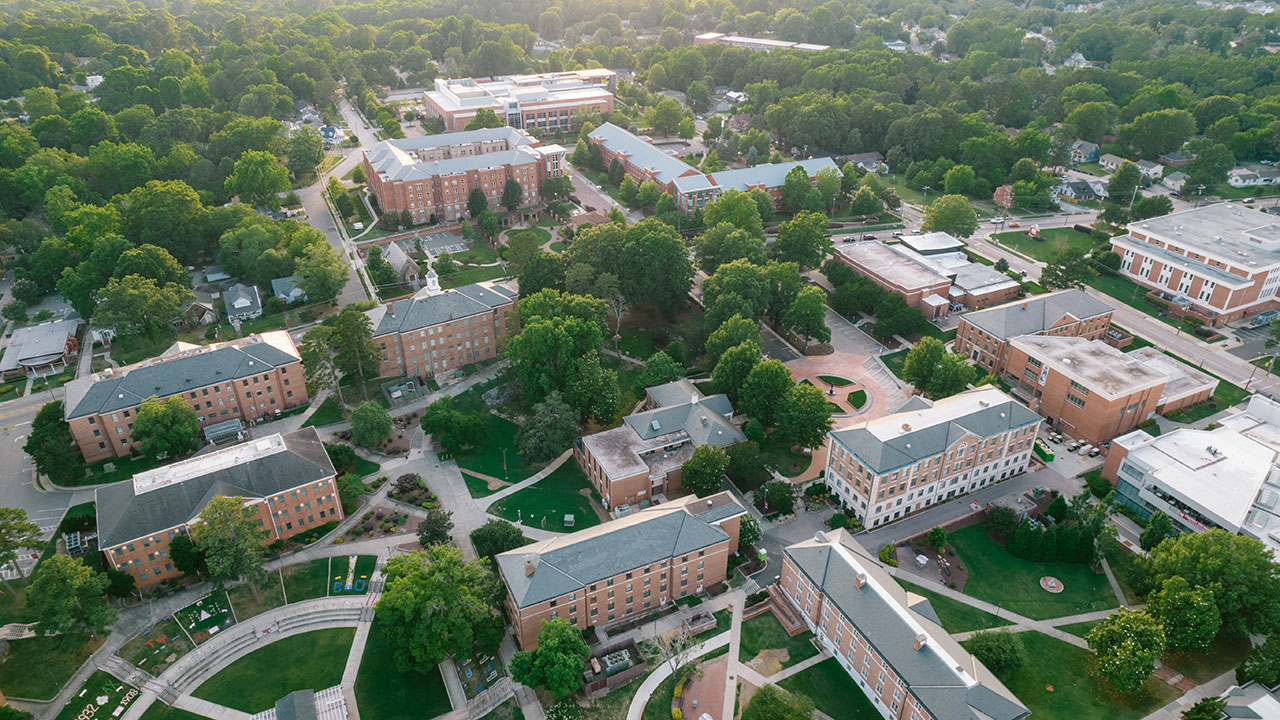
University Campus (Getty Images)
Key Features of a CAN
Campus area networks are distinguished by several defining characteristics:
- Centralized control: Single organizational ownership and management of the entire network infrastructure
- High-speed Internet connectivity: Optimized for fast data transfer using fiber-optic transmission media and enterprise-grade networking hardware
- Physical locality: Covers a defined geographic area within campus boundaries
- Unified infrastructure: Integrates multiple LANs under a common backbone network architecture
Understanding CAN vs LAN, CAN vs WAN, and CAN vs MAN requires examining scope, ownership, and application. Campus area networks occupy the middle ground between local and wide-area networking, offering the control and performance of LANs with broader coverage area.
- CAN (Campus Area Network): Connects multiple buildings across a campus with centralized organizational control
- LAN (Local Area Network): Covers a single building or floor with localized networking equipment
- WAN (Wide Area Network): Spans cities, countries, or continents using third-party telecommunications infrastructure
- MAN (Metropolitan Area Network): Covers an entire city or metropolitan area, often with mixed ownership models
CAN vs LAN
CAN vs LAN differences center on scope and complexity: while LANs focus on connecting devices within immediate proximity, campus area networks link multiple LANs across broader geographic areas. A corporate office LAN might connect workstations within one building, while a CAN would interconnect that office building with manufacturing facilities, warehouses, and administrative centers across an industrial site.
CAN vs WAN
CAN vs WAN is a distinction between ownership and control: campus area networks remain under single organizational ownership with direct infrastructure control, while WANs typically rely on third-party carriers and public networks. A multinational corporation might use WANs to connect offices worldwide but deploy CANs to link buildings within each individual corporate campus location.
CAN vs MAN
CAN vs MAN differences relate to ownership scope and user diversity: campus area networks serve single organizations with unified policies and management, while MANs typically support multiple entities with varied requirements. A university CAN serves one institution's needs, while a MAN might connect multiple universities, businesses, and government offices across a metropolitan region.
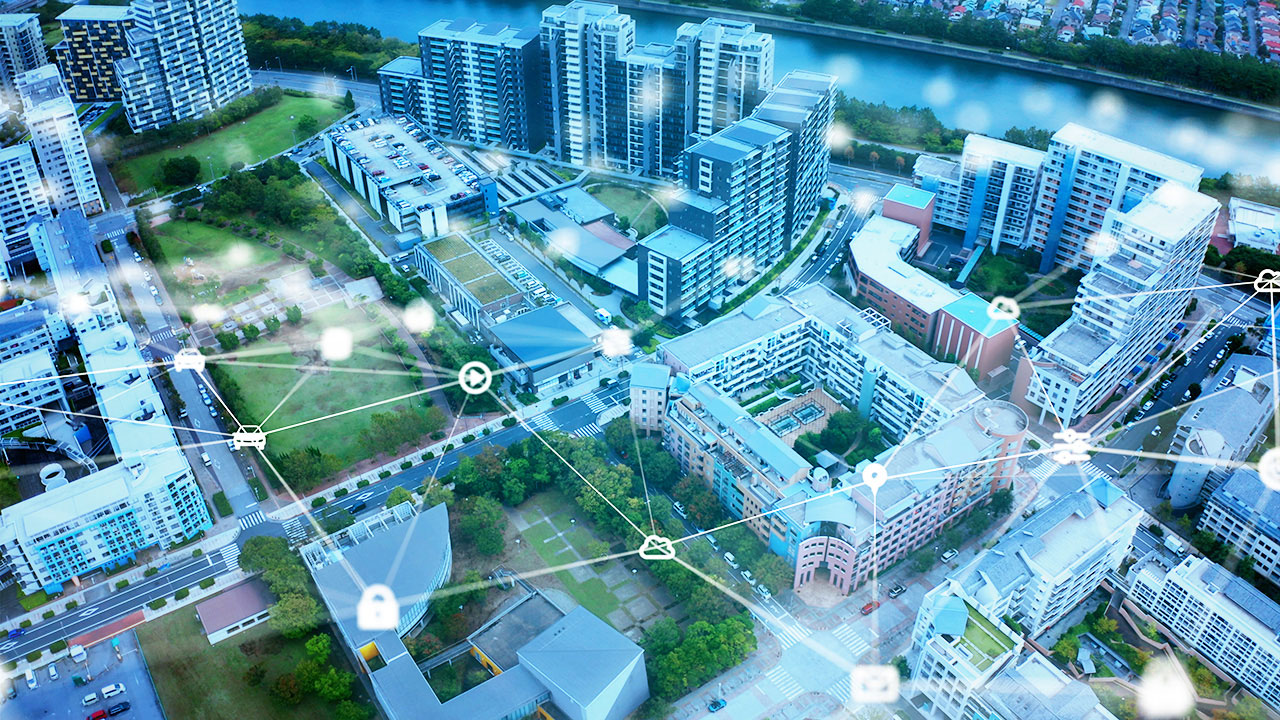
Metropolitan Area Network (Getty Images)
Campus area networks operate by interconnecting multiple buildings or departments through a high-speed backbone network that carries traffic between distributed LANs. This architecture creates a unified network environment where users in different locations can access shared resources, applications, and services. These networks must be designed with reliability, security, and scalability as foundational principles.
These networks rely on five essential components that work together to deliver reliable, high-performance connectivity. These components include networking hardware, transmission media, backbone network infrastructure, network services, and network management tools. In industrial or enterprise settings, they often require specialized equipment and centralized oversight.
Networking hardware forms the foundation of any campus area network, encompassing switches, routers, access points, and security appliances that direct traffic between buildings and systems. Enterprise and industrial CAN deployments require rugged, high-availability equipment capable of operating in challenging environments while supporting advanced features like failover, redundancy, and remote configuration.
Transmission media carries data signals between network components, with fiber-optic cables typically serving as the primary backbone network infrastructure due to their high bandwidth capacity and immunity to electromagnetic interference. Campus area networks often utilize a combination of fiber for inter-building connections and copper or wireless links for endpoint connectivity.
The backbone network serves as the high-speed core infrastructure that interconnects all buildings and major network segments within a campus area network. This critical component typically operates at multi-gigabit speeds using redundant fiber-optic connections and enterprise-grade routing equipment to ensure reliable connectivity between distributed sites.
Network services encompass the applications, protocols, and management functions that enable campus area networks to deliver connectivity, security, and performance across all connected systems. Essential services include DNS, DHCP, network authentication, traffic management, and security enforcement that operate consistently across the entire campus infrastructure.
Network management tools provide centralized visibility, control, and automation capabilities essential for maintaining campus area networks across multiple buildings and complex infrastructure deployments. These tools enable network administrators to monitor performance, configure devices, troubleshoot issues, and implement security policies from a unified management platform.
Stay Connected and Secure — Effortless IoT Management with Digi Remote Manager

Secure Student Connectivity (Getty Images)
Campus area networks deliver significant operational advantages by enabling faster communication between departments, providing centralized control over security policies, reducing network latency, and creating unified access to data and services. These benefits extend across sectors from education to industrial operations, positioning CANs as critical infrastructure for digital transformation.
Enhanced Communication and Collaboration
Campus area networks eliminate communication barriers between buildings and departments by providing seamless connectivity that enables real-time collaboration, file sharing, and application access across the entire campus infrastructure. This enhanced connectivity supports video conferencing, unified communications, and cloud-based productivity tools.
Centralized Security and Policy Management
Campus area networks enable organizations to implement and enforce consistent security policies across all buildings and network segments from a centralized management platform. This unified approach simplifies compliance requirements, reduces security gaps, and provides comprehensive visibility into network traffic.
Improved Performance and Reliability
CANs deliver superior performance compared to multiple independent networks by optimizing traffic flow, implementing quality of service policies, and providing redundant connectivity paths between critical systems. This enhanced reliability supports mission-critical applications and real-time manufacturing processes.
Cost-Effective Scalability
Campus area networks reduce total cost of ownership by consolidating network infrastructure, centralizing management resources, and enabling shared services across multiple buildings and departments. This scalable architecture supports organizational growth and technology adoption.
Simplified IT Management
Campus area networks streamline IT operations by providing unified management interfaces, standardized equipment deployments, and consistent configuration policies across all network segments. This simplified approach reduces administrative overhead and accelerates troubleshooting.
Find out: What is LTE? How it works, and why it matters
Campus area networks serve diverse organizations across education, industry, healthcare, government, and transportation sectors. Educational institutions use these networks to support large student populations, while industrial CAN deployments enable manufacturing coordination and process automation.
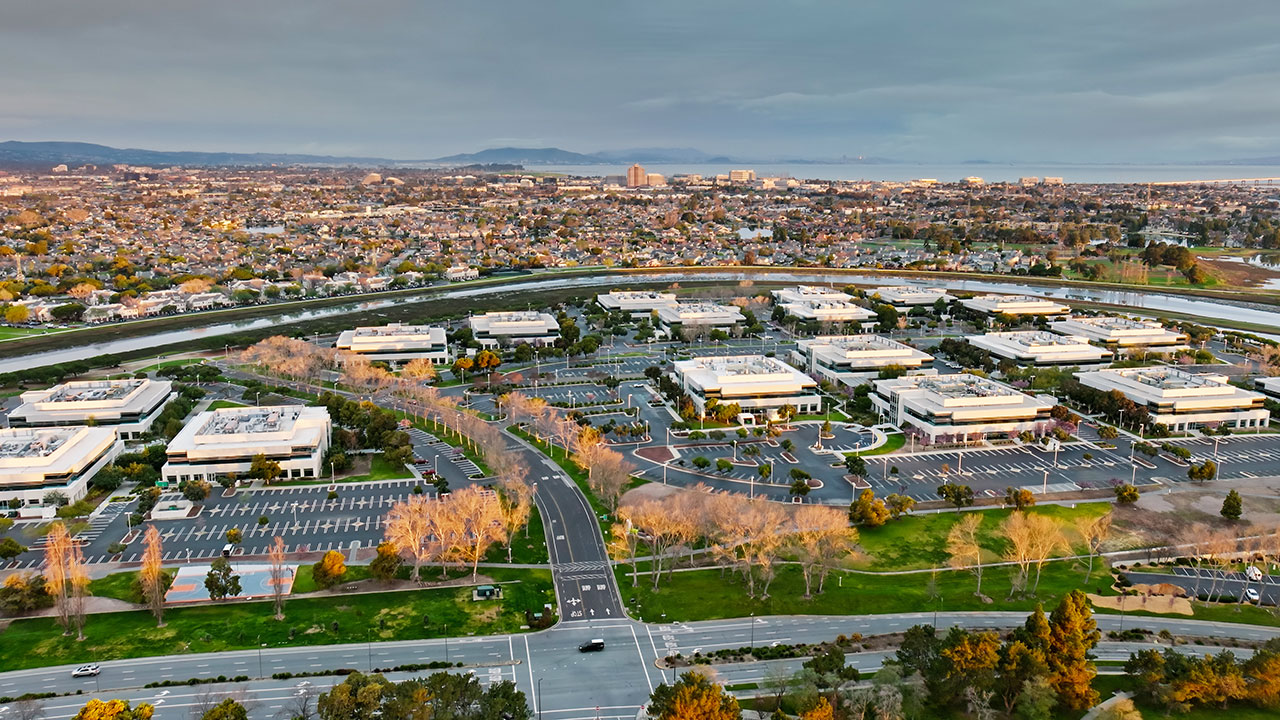
Technology Office Park (Getty Images)
University and Educational Campuses
Universities utilize campus area networks to connect dormitories, academic buildings, research facilities, and administrative offices across sprawling campus environments. These networks must support thousands of concurrent users while providing access to educational resources.
- High-density wireless access for student devices and mobile learning applications
- Research network segments with specialized security requirements
- Integration with student information systems and campus emergency notification
Corporate Campuses and Office Parks
Corporate campuses use campus area networks to connect headquarters buildings, satellite offices, conference facilities, and employee amenities across business park environments. These office CAN deployments emphasize security, productivity applications, and support for hybrid work models requiring advanced CAN features.
- Executive communication systems across multiple buildings in office CAN deployments
- Integration with building automation and security systems using specialized network services
- Support for bring-your-own-device policies and guest network access through advanced networking hardware
Industrial Complexes
Industrial CAN deployments connect manufacturing facilities, warehouses, administrative buildings, and utility infrastructure across large industrial sites. These campus area networks must integrate operational technology systems with traditional IT networks while maintaining security separation.
Healthcare Campuses
Medical and healthcare CAN implementations connect hospitals, medical office buildings, research facilities, and administrative centers while ensuring compliance with healthcare regulations. These specialized healthcare CAN networks support critical medical applications, electronic health records, and life-safety systems requiring robust CAN features.
- Medical imaging systems and electronic health record access across healthcare CAN infrastructure
- Nurse call systems and patient monitoring infrastructure supported by reliable network services
- Integration with medical equipment networks and compliance systems using specialized networking hardware
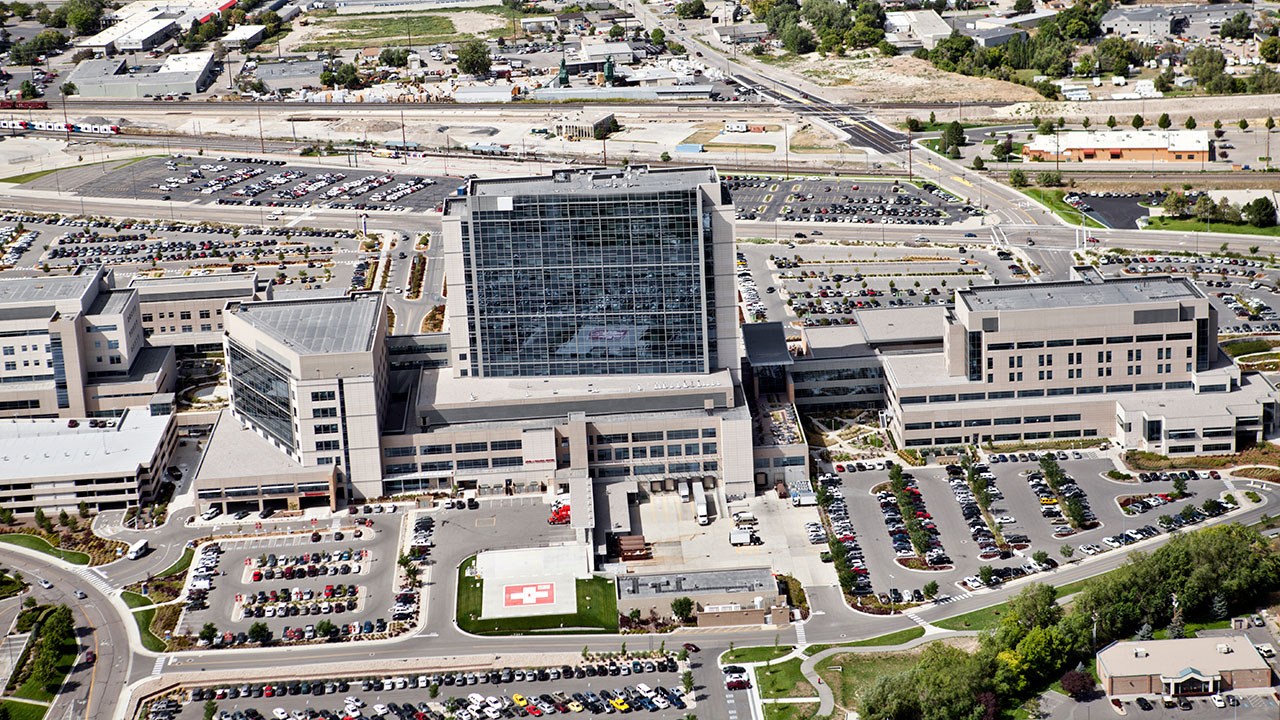
Hospital Complex (Getty Images)
Government or Military Bases
Military CAN and government facility networks provide secure connectivity between administrative buildings, operational centers, housing, and support facilities across installations. These deployments emphasize security, redundancy, and integration with specialized communication systems.
- Classified and unclassified network segregation capabilities
- Integration with base security and emergency response infrastructure
- Support for specialized military communication protocols
Large Venues and Distributed Sites
Transportation hubs, sports venues, and distributed facilities use campus area networks to connect terminals, concourses, parking structures, and operational centers. These implementations support high-capacity public access while maintaining separate operational networks.
- Public Wi-Fi and digital signage across passenger terminals
- Baggage handling and airport operational database integration
- Security camera networks spanning multiple buildings and outdoor areas
Campus area network implementation presents significant challenges including security complexity, network scalability requirements, cost management, and ongoing maintenance across distributed infrastructure. These issues become magnified in enterprise, industrial, and transportation environments where network downtime directly impacts operations.
- Security and privacy
- Complexity and scalability
- Cost and configurability
- Maintenance and downtime
Security and Access Control
Security represents the most critical challenge in campus area network deployments, requiring comprehensive protection against both external threats and internal security breaches across multiple buildings and network segments. A CAN must implement network segmentation, access control policies, and monitoring systems that protect sensitive data.
Network Complexity and Scalability
Campus area networks face ongoing complexity challenges as organizations add new buildings, applications, and devices to existing infrastructure. Managing consistent performance, routing policies, and service quality across heterogeneous equipment requires extensive technical expertise and careful architecture planning.
Cost and Configurability
Campus area network deployments require substantial upfront investment in infrastructure, equipment, and implementation services, with ongoing costs for maintenance, upgrades, and expansion. Organizations struggle to balance performance requirements with budget constraints while ensuring future scalability.
Maintenance and Downtime
Maintaining campus area networks across distributed infrastructure presents logistical challenges, especially when network issues affect multiple buildings or critical operational systems. Scheduled maintenance windows become complex when coordinating across different departments and operational requirements.
Modern campus area network deployments benefit from centralized management platforms, industrial-grade connectivity solutions, and integrated IoT support that simplify implementation and ongoing operation. Digi solutions comprehensively address the unique challenges of campus and other private networks through scalable infrastructure solutions, centralized device management, and support for both traditional IT and operational technology requirements. These advanced Digi offerings enable organizations to deploy robust CANs while reducing complexity, improving security, and ensuring long-term scalability with specialized CAN features optimized for diverse industry applications.
Digi Remote Manager
Digi Remote Manager® (Digi RM) provides centralized visibility and control for campus area network devices across multiple buildings through a unified cloud-based management platform. This comprehensive solution enables remote configuration, monitoring, and troubleshooting of network infrastructure.
Industrial and Transportation-Grade Connectivity
Digi's industrial and transportation-grade connectivity solutions, deliver the rugged reliability required for industrial CAN and transportation applications where environmental conditions and mission-critical operations demand exceptional performance. For instance, the Digi HX20 series supports office CAN and industrial CAN deployments with advanced cellular connectivity, while Digi's portfolio of industrial, enterprise and transportation cellular routers provides CAN features essential for challenging environments, supporting a wide temperature range and electromagnetic interference resistance.
These include:
- Digi cellular router solutions, which seamlessly integrate Digi RM for remote management, supporting networks of any size or complexity:
- Digi embedded systems, offering easy-to-build and deploy solutions with powerful connectivity and processing capabilities:
- Digi infrastructure management solutions for campus connectivity:
Additionally, Digi offers Professional Services to support your project anywhere along the way from ideation and planning, to site development, product procurement, deployment, team training and ongoing management.
IoT Integration and Edge Computing
Digi CAN solutions enable seamless integration of IoT devices and edge computing capabilities within campus area networks. These comprehensive Digi CAN solutions provide the foundation for digital transformation initiatives while supporting modern applications including sensor networks, automation systems, and real-time analytics across distributed campus environments, delivering CAN features optimized for industrial IoT deployments.
Campus area networks provide critical infrastructure that enables modern organizations to operate efficiently across multiple buildings and locations. From educational institutions to industrial CAN deployments, these networks provide the foundation for collaboration, security, and operational excellence. SOC 2 Type 2 compliant Digi Remote Manager offers comprehensive device management capabilities to support the challenges of private network environments, providing centralized control, automated monitoring, and simplified maintenance across distributed infrastructure while reducing operational complexity.
Organizations seeking to optimize their network performance while can explore Digi's solutions at www.digi.com.
CAN vs WAN: when do I need each?
A CAN is owned and managed by a single organization and spans a limited geographic area (your campus). A WAN typically spans cities, regions, or countries and usually relies on third-party carrier infrastructure. Many organizations use both: CAN for on-site connectivity, WAN for connecting campuses and remote sites.
CAN vs MAN: aren’t they basically the same?
Not quite. A MAN (metropolitan area network) spans a city/metro area and often supports multiple organizations. A CAN usually supports one organization across one defined campus (even if it’s large), with unified policies and centralized management.
Why is fiber so common in campus networks?
Fiber is traditionally popular for inter-building connections because it supports high bandwidth, long distances, and strong immunity to electromagnetic interference (EMI) — but modern networks often convert to wireless connectivity due to the sophisticated remote management capabilities, lower total cost of ownership and fewer reliability challenges.
What are common CAN use cases beyond universities?
CANs are widely used in:
- Manufacturing and industrial sites (OT/IT integration, SCADA/MES support)
- Corporate campuses (secure enterprise connectivity across buildings)
- Healthcare campuses (EHR access, imaging, patient monitoring systems)
- Transportation hubs and venues (public Wi-Fi + separate operational networks)
- Government/military bases (segmentation, redundancy, secure access control)
How do I secure a campus area network?
Best-practice building blocks include:
- Network segmentation (VLANs/VRFs) separating IT, OT, guest, and critical systems
- Strong identity and access control (802.1X/NAC where appropriate)
- Centralized policy enforcement (firewalls, intrusion prevention, secure remote access)
- Continuous monitoring (visibility into traffic, device health, and anomalies)
How do industrial CANs differ from office or university CANs?
Industrial CANs often require:
- Ruggedized hardware and environmental tolerance
- High availability and redundancy for mission-critical operations
- Support for industrial protocols and OT segmentation
- Remote management for distributed cabinets, substations, and restricted areas
When should I use wireless or cellular in a CAN?
Wireless/cellular can be ideal for:
- Hard-to-trench areas (yards, parking, temporary sites)
- Backup connectivity/failover
- Mobile assets and remote structures on campus
- Rapid expansion without waiting for fiber builds
Many CANs use a hybrid design: fiber backbone + Wi-Fi/cellular for edge and resilience.
What’s “centralized management” and why does it matter?
Centralized management lets teams monitor, configure, update, and troubleshoot devices across the campus from one place — critical when you have many buildings, remote cabinets, or sites with limited IT staffing.
How does Digi help with campus area networks?
Digi supports CAN deployments with:
What’s a good first step if I’m planning a CAN?
Start with a simple discovery checklist:
- How many buildings and network segments (IT/OT/guest) do you need?
- What are your uptime requirements and failure modes?
- Which applications are mission-critical (SCADA, video, EHR, voice, building automation)?
- Where do you need fiber vs. wireless/cellular?
- What management and security policies must be consistent campus-wide?
Additionally, you can reach out to an expert at Digi to help with your project definition, site survey, and deployment planning needs.
Next Steps