Summary
LTE still works, but carriers are shifting investment and spectrum to 5G, so branch routers bought this budget cycle will likely still be in service as LTE reliability begins to decline. This guide covers the signs it’s time to move off LTE and 10 capabilities to evaluate in your next branch router, including failover speed, true 5G performance, consolidated LAN, edge compute, security, carrier flexibility and centralized management. It shows where Digi EX60 fits as a 5G option for primary and failover WWAN connectivity.
As IT and networking leaders finalize infrastructure budgets for the year ahead, one line item deserves a second look: branch connectivity hardware still running on LTE. LTE remains functional today, but carriers are already shifting investment and spectrum toward 5G, a process expected be complete around 2028, which means
4G LTE reliability will begin to degrade. Equipment purchased this budget cycle will likely still be in service when that transition accelerates.
This guide walks through what to evaluate before renewing or expanding an LTE-based branch fleet and where Digi EX60 fits as a 5G alternative built for primary and failover wireless WAN (WWAN) connectivity.
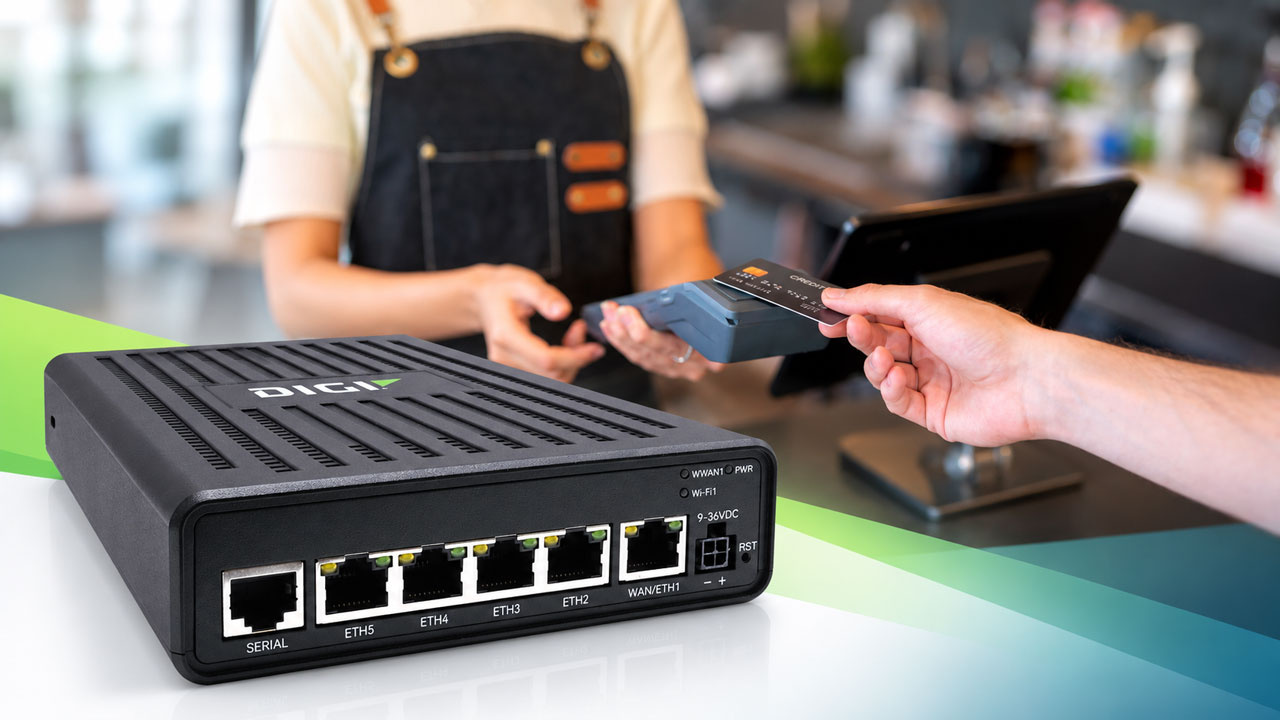
Signs It Might Be Time to Move Off LTE
Before evaluating specific hardware, it helps to know whether LTE is still serving your organization well. A few signals worth checking for:
- Your failover strategy still relies on LTE as the backup for a wired connection, with no faster option layered in.
- New locations are being provisioned with the same LTE-era hardware your team standardized on years ago.
- Branch bandwidth demands, cloud applications, video, point-of-sale and surveillance have grown faster than WAN capacity has.
- IT is managing several separate devices per site, such as a router, switch, access point and cellular gateway, instead of one platform.
If more than one of these sounds familiar, it is worth evaluating what a 5G branch platform brings to the table.
Learn more about the features and capabilities of the Digi EX60 5G branch router in this introductory blog post.
10 Capabilities to Evaluate in Your Next Branch Router
 Whether you are comparing vendors or building a request for proposal, these are the capabilities worth putting on the checklist, and where Digi EX60 stands on each.
1. Failover Speed, Not Just Failover Capability
Ask: Does the secondary connection activate on demand, or does it stay ready in advance? Digi EX60 has Dual SIM Dual Standby (DSDS) which keeps the secondary carrier connection live and running in the background, enabling true instant failover, up to 10X faster than traditional approaches that must first detect a primary connection loss and then establish a secondary link.
2. True 5G Performance, Not Repackaged LTE
Ask: Is the platform 5G-native, or is it an LTE router with a 5G modem added on? Digi EX60 supports 5G eMBB based on 3GPP Release 17, with Cat 20 LTE fallback and carrier aggregation, so branches get real 5G throughput with LTE as the fallback, not the default.
3. Consolidated LAN, Not Another Box
Ask: Does this replace hardware, or add to it? Digi EX60 combines tri-band Wi-Fi 7 and five Ethernet ports, including one 2.5 GbE interface, on the same platform as the cellular WAN connection.
4. Edge Compute, Not Just Connectivity
Ask: Can the platform run workloads locally, or does everything go to the cloud? Digi Accelerated Linux (DAL OS) and Digi Containers let applications run directly on Digi EX60, reducing latency, WAN utilization and dependency on continuous cloud access.
5. Centralized Visibility Across Every Site and Edge Devices
 Ask: Can IT see and manage the whole fleet, and reach connected equipment behind it, without a truck roll? Digi Remote Manager provides centralized configuration, monitoring and troubleshooting, and Digi Remote Reach, included with Digi Remote Manager, adds direct, peer-to-peer access to devices connected behind Digi EX60, such as point-of-sale terminals and modems, without routing session traffic through a vendor cloud.
6. AI-Ready Infrastructure, on Your Terms
Ask: Does the platform lock you into one AI tool, or let you bring your own? Digi Remote Manager includes an MCP server built for enterprise control, exposing fleet data such as device status, signal metrics, event logs and configuration compliance to the AI assistant of your choice. For teams that want a ready-to-use AI experience on that same foundation, Digi Artificial Network Intelligence (DANI) is available as a value-added service: a purpose-built AI agent that lets operators ask questions in plain language, catches anomalies before they cause downtime and can cut fleet-wide diagnostic time from hours to minutes.
7. Security Built In, Not Bolted On
Ask: Does the platform meet enterprise security requirements out of the box? Digi EX60 combines FIPS 140-3 validated cryptography, the Digi TrustFence security framework, two-factor authentication and Western modem options. Digi SureLink continuously monitors connection health, and Digi Remote Manager itself is SOC 2 Type 2 compliant, extending that same assurance to how the management platform is operated and audited.
8. Carrier Flexibility Without Lock-In
Ask: Is the platform tied to one carrier, or built for diversity? Digi EX60 supports dual Nano-SIMs, eSIM/eUICC over-the-air provisioning, DSDS, CBRS Band 48/n48 and AT&T, T-Mobile and Verizon.
9. A Downtime Cost You Can Actually Calculate
Ask: Does your team know what an outage actually costs? Gartner reports that network downtime costs organizations an average of $5,600 per minute, with enterprise-level outages running significantly higher, a number worth putting next to the cost of the hardware you are evaluating. See our blog post on retail downtime to learn more.
10. One Platform Across Every Location Type
Ask: Does the same hardware work for a retail storefront, a branch office, a remote site and an MSP deployment? With Digi EX60, a retailer can prioritize payment uptime, a branch office can lean on 5G for cloud application performance, a remote facility can go cellular-first where fiber is not an option and a managed service provider can standardize the same platform across hundreds of customer sites, all on the same core architecture.
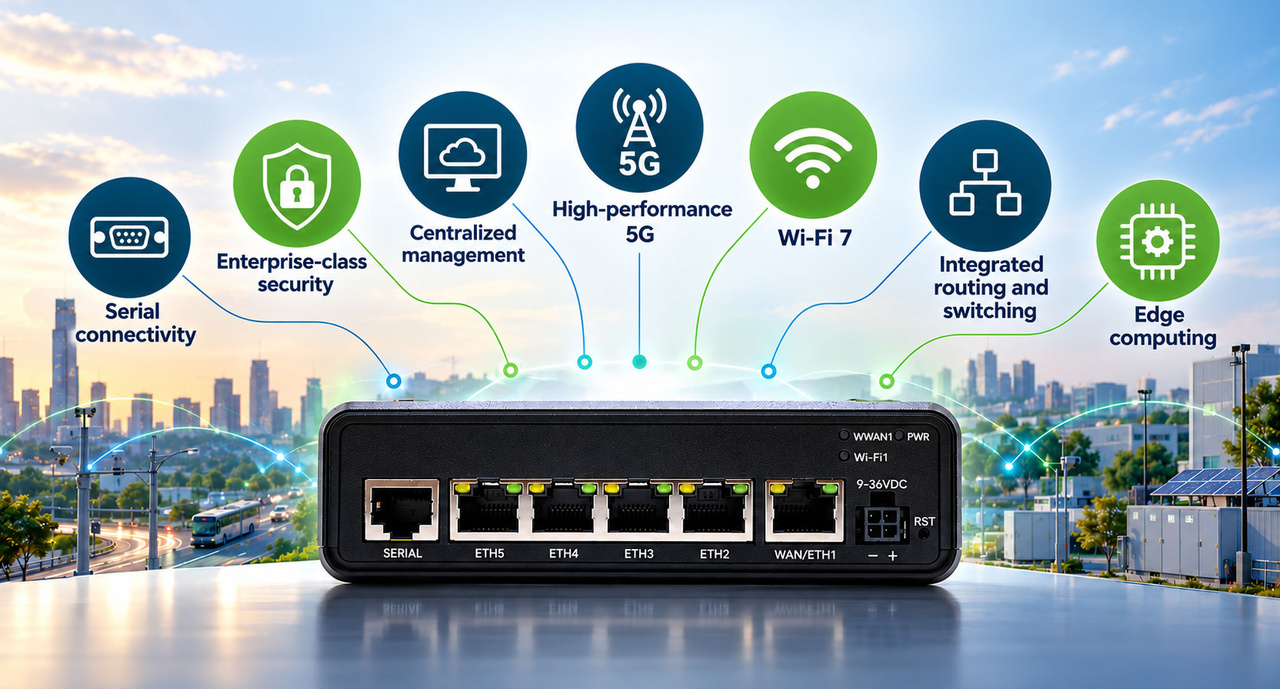
Digi EX60 5G Branch Router Features at a Glance
Making the Call in Your Current Budget Cycle
LTE will keep working for a while longer, but the connectivity decisions made in your current budget cycle will outlast that runway. Digi EX60 gives networking and IT leaders a way to move to 5G, add cellular, wired and satellite options such as Starlink to the same failover strategy and standardize branch connectivity on one platform, without waiting for a forced migration.
Get Our Solution Brief
Learn how to implement fast failover in retail networks
Download PDF
Frequently Asked Questions: Moving Branch Connectivity from LTE to 5G
Is LTE being phased out, and when should branches plan to move to 5G?
Carriers are shifting investment and spectrum toward 5G, a process that is expected to be complete by around 2028, and LTE service is expected to degrade. LTE still works today. But branch routers bought this budget cycle will likely still be in service as the transition accelerates. Planning the move now avoids a forced migration later. Sunset timing varies by carrier, so confirm dates with yours.
How do I know if my LTE branch routers need to be replaced?
Four signs point to it:
- LTE is your only backup for a wired connection.
- New sites still get the same LTE-era hardware your team standardized on years ago.
- Branch bandwidth demands from cloud apps, video, point-of-sale and surveillance have outgrown WAN capacity.
- IT manages several devices per site (router, switch, access point, cellular gateway) instead of one platform.
If more than one applies, it’s worth evaluating a 5G branch platform such as Digi EX60.
How does Dual SIM Dual Standby (DSDS) make failover faster?
Traditional cellular failover must first detect that the primary connection is down, then establish a secondary link. With DSDS, Digi EX60 keeps the secondary carrier connection live in the background, so it’s already established when an outage hits. This enables failover up to 10X faster than traditional approaches.
What should a branch failover strategy include beyond a single LTE backup?
Build in layers of independent paths. A common design is a primary wired connection, 5G cellular on a second carrier and, where wired and cellular options are limited, a satellite terminal such as Starlink on the Ethernet WAN/LAN port. Connection monitoring such as Digi SureLink adds automatic detection of connection problems. Digi EX60 supports all of these on one platform.
How much does network downtime cost a branch or retail location?
Gartner reports that network downtime costs organizations an average of $5,600 per minute, with enterprise-level outages running significantly higher. Your own figure depends on revenue per minute, idle labor and lost payment transactions at each site. Calculating it shows whether a more resilient failover design pays for itself.
Can I avoid being locked into one carrier with a 5G branch router?
Yes, if the platform is built for carrier diversity. Digi EX60 supports dual Nano-SIMs, eSIM/eUICC over-the-air provisioning, DSDS, CBRS Band 48/n48 and AT&T, T-Mobile and Verizon. That lets organizations diversify carriers and standardize one hardware platform across locations.
Can one 5G router replace a separate router, switch, access point and cellular gateway?
At many branch sites, yes. Digi EX60 combines the cellular WAN, tri-band Wi-Fi 7 and five Ethernet ports (one 2.5 GbE) on one platform, so there are fewer boxes to install, configure and fail. Sites that need more wired ports than are built in may still add a switch.
What security and compliance capabilities should a 5G branch router have?
Look for validated cryptography, a device security framework, strong authentication and a management platform with audited controls. Digi EX60 combines FIPS 140-3 validated cryptography, the Digi TrustFence security framework and two-factor authentication. Digi SureLink monitors connection health, and Digi Remote Manager is SOC 2 Type 2 attested.
What’s the difference between the Digi Remote Manager MCP server and DANI?
Both the Digi Remote Manager MCP server and DANI (Digi Artificial Network Intelligence) enhance the capabilities of Digi Remote Manager. The MCP server is included with Digi Remote Manager. It exposes fleet data (device status, signal metrics, event logs, configuration compliance) to the AI assistant of your choice. Digi Artificial Network Intelligence (DANI) is a value-added service built on that foundation. It’s a ready-to-use AI agent that lets operators ask questions in plain language and spot anomalies before they cause downtime. Digi states it can cut fleet-wide diagnostic time from hours to minutes.
What if a site needs a rugged or outdoor-capable 5G device?
Digi EX60 is an indoor router. For rugged, indoor/outdoor deployments, see Digi EX61, a PoE-powered 5G extender with an IP66 enclosure and DSDS failover. Both are managed through Digi Remote Manager.