We live in a connected world, where businesses, industrial sites and municipalities depend on consistent, reliable network access to keep operations running smoothly. From credit card processing at retail locations to fare collection in mobile public transit systems, to keeping your pop-up store online, connectivity is crucial. This is why failover is a critical requirement for all systems that demand always-on connectivity. But what is failover? Understanding the failover meaning is essential for organizations that rely on uninterrupted connectivity to support critical operations and customer experiences.
In this blog post, we will provide a failover definition and discuss its importance in connected environments where even brief interruptions can result in lost revenue, compromised safety, and operational disruptions. Additionally, we’ll cover how Digi supports failover strategies with built-in redundancy, dual-SIM technology and more — to ensure your connected systems automatically switch to a backup connection when the primary network fails.
Learn more about Digi's cellular failover solutions
Jump to:
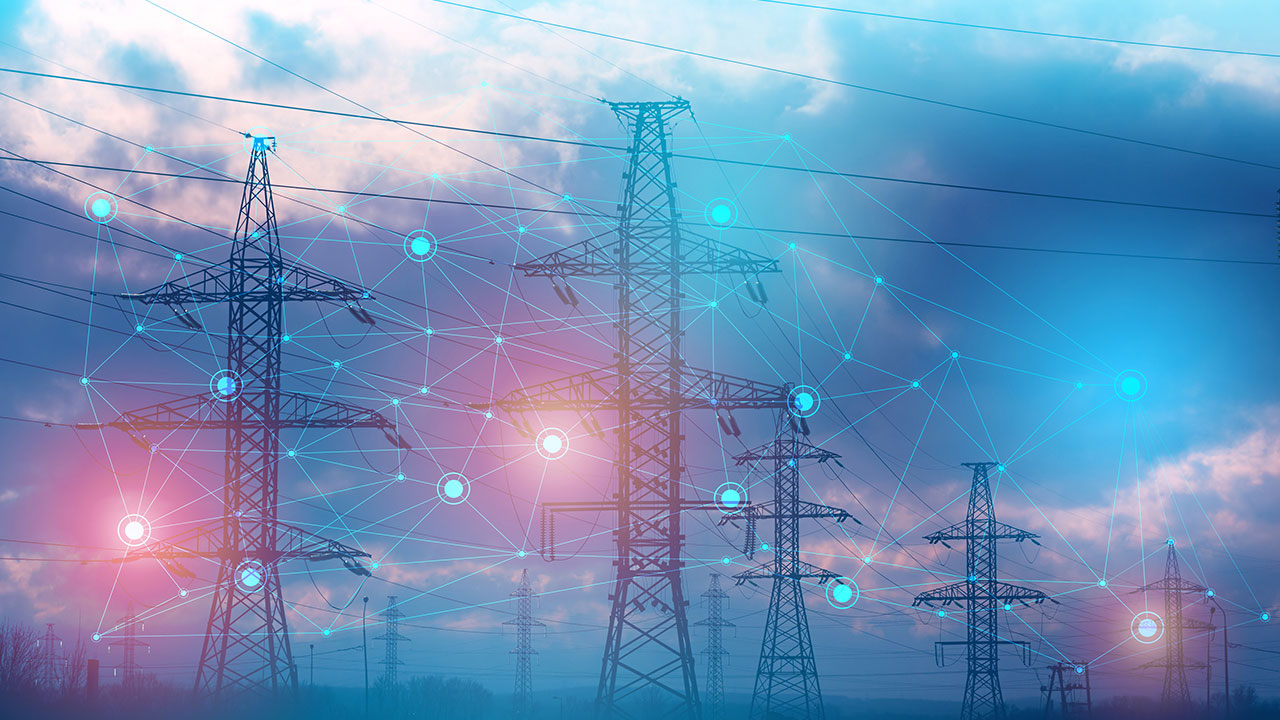
At its core, failover is an automated backup mechanism that instantly redirects network traffic from a primary connection to a secondary, standby connection when the original link becomes unavailable. Failover ensures continuous connectivity for applications and systems where downtime simply isn't acceptable. Often failover is from a wired WAN to a wireless WAN, but in mobile and remote locations multiple Wireless WAN connections are used to add the resiliency required to run modern networks. Depending on the configuration failover can even maintain session persistence, and private routing.
Digi has spent decades building intelligent, resilient, and high-performing cellular routers that provide enterprise and industrial connectivity designed specifically to deliver seamless failover and always-on communications. Through innovations like Digi SureLink, dual SIM architecture, eSIM support, and advanced networking capabilities inside DAL like VRRP, Digi's products provide automated, intelligent switching that keeps critical systems connected without manual intervention or service interruption.
What’s the right failover strategy for retail?

Failback
While failover protects against outages by switching to a backup connection, failback is the complementary process that returns network traffic to the original or preferred connection once it becomes stable again. Digi SureLink and native routing solutions handle failback smoothly and automatically, restoring the optimal network path without requiring user intervention or causing any disruption to performance. This intelligent transition ensures organizations benefit from their preferred connection's speed, cost structure, or features while maintaining the protection of always-available redundancy.
Redundancy
Redundancy refers to having alternate systems, network paths, or connections in place — such as a second SIM card, an additional cellular carrier, or a backup wired line. This built-in flexibility and duplication of critical resources is what enables true failover and network failover capabilities. Digi designs its routers with both hardware and software redundancy to maximize uptime in the field, incorporating dual SIM slots, multiple carrier support, and intelligent path selection to ensure that connectivity remains available even when primary networks experience degradation or complete network failure.

Network failover isn't just a technical safeguard — it's a business necessity that directly impacts safety, service quality, and operational efficiency in real-world applications. Consider police vehicles moving through different cellular coverage zones, transit systems relying on real-time passenger information systems, or remote retail locations that need internet connectivity to take payments. When connectivity drops, the consequences can range from inconvenient to dangerous. Lost network access can prevent emergency responders from accessing vital databases, disrupt public transportation schedules, interrupt point-of-sale transactions, or cause gaps in infrastructure monitoring data.
Digi's cellular routers are specifically engineered for mobile and remote deployments where connectivity must follow the device — whether that's a bus traveling across a city, an ambulance responding to emergencies, or a utility monitoring station in a rural area. Technologies like dual SIMs and Digi SureLink help to prevent downtime by automatically switching between cellular networks based on signal strength, location, and performance metrics, ensuring uninterrupted access regardless of changing conditions.
Public Safety and Emergency Vehicles
Police vehicles, ambulances, fire trucks, and other emergency response units depend on continuous, real-time network access for GPS routing, dispatch communications, license plate recognition systems, and access to critical law enforcement and medical databases. As these vehicles move rapidly through different carrier coverage areas and network zones, Digi routers equipped with dual-carrier functionality automatically switch to the strongest available cellular network without delay or dropped connections. This seamless network failover ensures that first responders maintain uninterrupted access to the systems and information they need to protect public safety.
Explore Digi's FirstNet solutions for public safety
Connected Public Transit and Rail Systems
Passenger trains, subway systems, and city buses increasingly rely on robust onboard connectivity to deliver essential services — from real-time digital signage and route information to passenger Wi-Fi access and operational monitoring systems. As public transit vehicles travel along their routes, they encounter varying cellular coverage from multiple carriers. Digi's failover-ready solutions with dual SIM capabilities keep all connected services running smoothly by automatically transitioning between carriers as the vehicle crosses different coverage zones, ensuring continuous connectivity for both passenger-facing amenities and critical operational systems.
Learn about Digi's public transit connectivity solutions
Remote Industrial or Infrastructure Monitoring
IoT sensors deployed at utilities, construction sites, water treatment facilities, and infrastructure locations need stable, reliable connectivity to continuously transmit operational data, environmental readings, and system status updates. In remote or rural areas where cellular coverage may be limited, variable, or provided by only certain carriers, Digi routers deliver essential cellular failover capabilities through eSIM support, dual SIMs and intelligent carrier selection. This redundancy prevents critical data loss and ensures accurate, timely reporting even when one cellular network experiences coverage gaps or service degradation.
Explore Digi's full lineup of cellular routers designed for reliable, always-on connectivity across mobile, industrial, and enterprise applications.
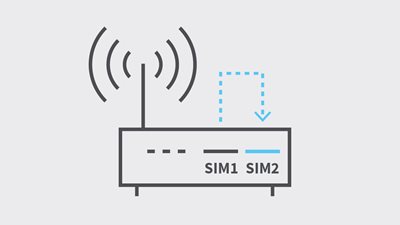 Holding multiple carrier profiles is only half the equation. The router still has to know when the active connection has failed and act on it. That's the job of Digi SureLink, Digi's link-integrity service that continuously verifies the cellular connection is carrying traffic and automatically triggers recovery, including failover to the backup SIM or eSIM profile, the moment it isn't.
Unlike basic "modem connected" checks that only confirm the radio is attached to a tower, SureLink validates true end-to-end connectivity by running active tests against destinations beyond the carrier network. When SureLink detects a problem, it executes a configurable sequence of recovery actions that maps directly onto the SIM failover capabilities described above: restart the modem interface, switch SIM slots (or eSIM profile), reset the modem, and as a last resort, reboot the device.
How Digi SureLink Works
 SureLink works by running user-defined link integrity tests at a configurable interval. This can be a Ping, DNS lookup, or TCP connection tests aimed at a known-good destination. Each test has thresholds for failure count, pass count, and response timeout, so operators can tune sensitivity to match the application: aggressive checks for mission-critical fleets, lighter checks where cellular data costs matter.
When consecutive tests fail, SureLink walks through its recovery action list in order. For a router with dual SIMs or a Digi eSIM, that list typically includes a SIM failover step where the router drops the failed carrier, activates the alternate SIM slot or switches to the next eSIM profile, and re-establishes the data session on the healthy carrier. If the new carrier passes SureLink's tests, traffic continues uninterrupted from the application's perspective. If it doesn't, SureLink keeps going: modem reset, device reboot, and continued monitoring until a working path is restored.
Where Digi Failover Solutions Are Most Useful
 The combination of SureLink and Dual SIM or eSIM redundancy is where Digi's failover story really earns its keep. Public transit, fleet, and first-responder vehicles transit through coverage zones where the primary carrier can degrade in seconds. SureLink detects the degradation and forces a switch to the backup SIM or alternate eSIM profile before passenger services, dispatch traffic, or onboard applications notice.
Smart city sensors, traffic management nodes, and remote infrastructure sites sit in locations where a tower issue can knock out a single carrier for hours; SureLink ensures the router doesn't sit waiting on a dead connection and instead fails over to the alternate carrier automatically. In retail, kiosk, and branch deployments where a stalled cellular backup defeats the whole purpose of having one, SureLink's active testing is what guarantees the backup path is actually working when the primary WAN drops.
In every one of these cases, the value is the same: SIM failover only matters if something is paying attention to the connection. SureLink is what pays attention.
Contact Digi to learn more about Digi SureLink and how it can enhance your connectivity strategy.
WAN Bonding Technology
Another key strategy for critical systems that require constant uptime is WAN bonding — a software-enabled strategy that utilizes WAN smoothing and WAN aggregation techniques to optimize connectivity. Digi WAN Bonding combines multiple cellular and wired connections to deliver the lowest latency of the bonded interfaces, along with resilient and seamless handover, and a throughput representative of the combined interfaces.
This capability is particularly useful for transit systems, as a powerful add-on capability to complement SureLink in the event that mobile connections degrade in quality.
True always-on connectivity depends on more than a. single carrier connections. Digi routers deliver redundancy at the SIM layer through complementary technologies — the Digi eSIM solution and traditional dual SIM slots. This hardware-level redundancy allows devices to switch between cellular carriers as network conditions change or when one carrier experiences service degradation.
Built on the GSMA SGP.32 standard and packaged as a rugged 2FF 3-in-1 punchout or built into the product, a single Digi eSIM holds mulitple carrier profiles simultaneously and switches between them remotely. For failover specifically, this is a step-change. Instead of being locked to whichever two carriers were physically installed at deployment, fleets can carry a curated set of profiles tuned to the regions and use cases they actually operate in. Customers can rotate carriers in response to outages, coverage changes, contract negotiations, or performance data, all from a single pane of glass in Digi Remote Manager.
Dual SIM technology is especially valuable in remote locations where carrier coverage varies significantly, in mobile applications where vehicles transit through different coverage zones, or in mission-critical deployments where even brief connectivity interruptions are unacceptable. When combined with Digi SureLink, dual SIM capabilities enable fast, intelligent carrier switching without requiring manual reconfiguration, password entry, or service interruption — delivering true always-on connectivity.
Why SIMs Failover Matter
Single-carrier connections are single points of failure. SIM failover — whether delivered through eSIM profile switching, dual SIMs, or both working together — keeps a second carrier path warm and ready so a regional outage, tower issue, or degraded signal doesn't translate into application downtime. Combined with Digi SureLink, Digi's SIM failover capabilities enable fast, intelligent carrier switching without manual reconfiguration, password entry, or service interruption, turning what would have been downtime into seamless continuity.
 The Digi Managed Context Protocol (MCP) Server is a hosted MCP endpoint that securely integrates Digi Remote Manager (DRM) and Genesis capabilities as standardized AI-accessible tools. It enables MCPcompatible AI systems to monitor, query and manage Digi-connected infrastructure and wireless WAN (WWAN) deployments at scale — without custom REST integration or additional infrastructure.
By bridging enterprise AI platforms with Digi’s secure device management environment, organizations can accelerate operational workflows, reduce complexity, and gain intelligent, context-aware interaction with distributed edge deployments. Leverage natural language interfaces to query fleets, generate configuration insights and streamline troubleshooting.
Combining AI-driven automation with the Digi MCP Server enables organizations to strengthen failover strategies and improve business continuity across distributed networks and connected infrastructure. Through secure access to Digi Remote Manager and Genesis capabilities, AI systems can continuously monitor network health, identify connectivity degradation, analyze failover events, and proactively recommend or initiate recovery actions using natural language workflows. This allows IT and operations teams to respond faster to outages, optimize cellular and WAN failover performance, and maintain uninterrupted connectivity for critical applications such as retail operations, public safety communications, industrial IoT, and transportation systems. With intelligent, context-aware visibility into edge deployments, the Digi MCP Server helps reduce downtime, streamline troubleshooting, and support resilient, always-on operations at scale.
Learn more about Digi Ventus Genesis and managed network failover.
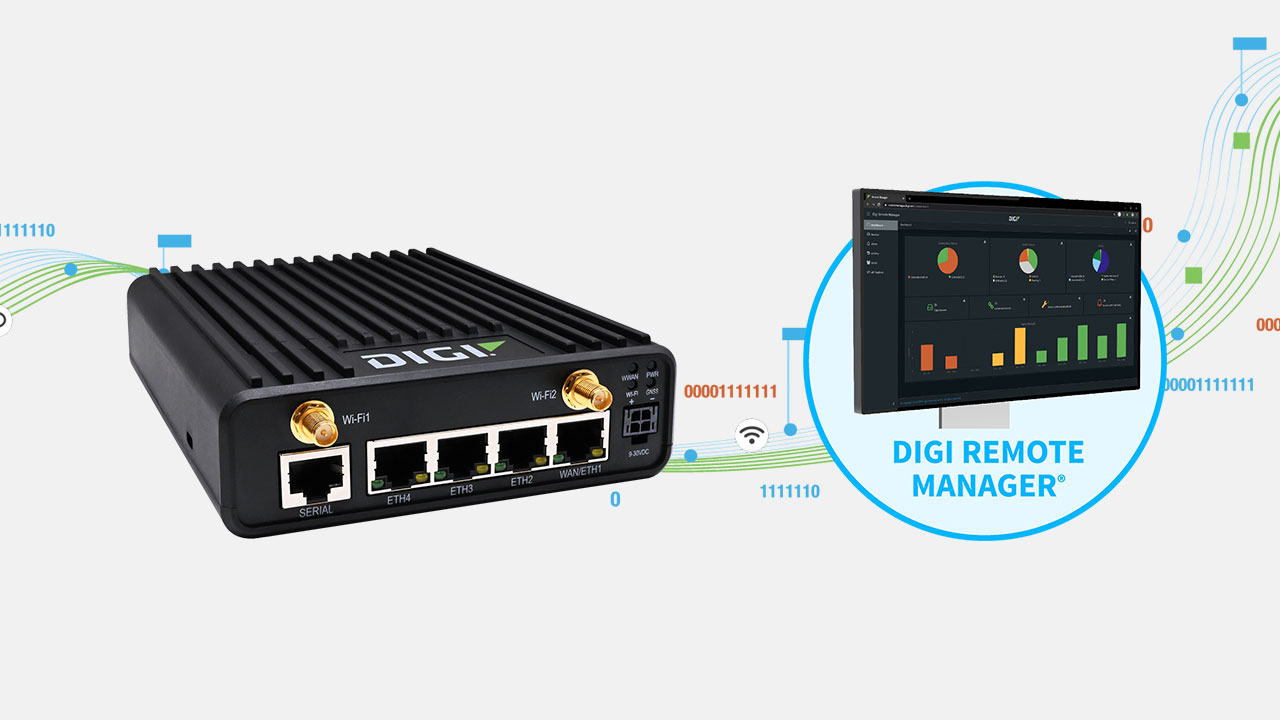 Not all failover strategies deliver the same level of protection or performance. When evaluating a failover system for your organization, consider key factors such as automatic switching capabilities, real-time responsiveness to changing conditions, eSIM support with a flexible bootstrap profile, multi-carrier support through dual SIM functionality, and intelligent carrier selection.
Basic failover solutions may simply switch to a backup after detecting failure, but advanced systems like those from Digi continuously monitor network health and proactively optimize connections before problems impact operations. Digi's routers combine robust hardware design, eSIM capability, dual SIM capabilities, Digi SureLink, Digi WAN Bonding technology, and sophisticated monitoring to deliver a secure failover solution that actively adapts as conditions change — whether you're managing stationary infrastructure or highly mobile deployments.
Learn more about why failover is essential for your business operations.
Keep Your Network Online with Digi
Reliable failover has become essential for any connected system that cannot afford downtime or service interruptions. Whether you're managing a mobile fleet of emergency vehicles, overseeing a public transit network, monitoring remote industrial equipment, or operating retail locations that depend on constant payment processing, Digi's cellular connectivity technology keeps data flowing and operations running smoothly. Our router solutions, eSIM, dual SIM architecture, and Digi SureLink service provide the redundancy and intelligent automation your organization needs to maintain always-on connectivity across challenging and dynamic environments.
Have questions or need help choosing the right failover solution for your specific requirements? Contact the Digi team to get expert support and guidance tailored to your connectivity needs.
What is failover in networking?
Failover is an automatic process that switches network traffic from a primary internet or WAN connection to a backup connection when the primary link fails. The goal of failover is to maintain continuous connectivity and prevent downtime for critical systems, applications, and devices.
What does failover mean?
The failover meaning refers to the ability of a network, router, or system to automatically transition to a secondary connection or backup resource when the primary connection becomes unavailable. Failover helps organizations maintain uptime, business continuity, and uninterrupted operations.
Why is network failover important?
Network failover is important because even brief outages can disrupt business operations, payment processing, public safety communications, IoT monitoring, and customer services. Failover minimizes downtime by ensuring traffic automatically reroutes through an available backup connection.
What is the difference between failover and failback?
Failover switches traffic to a backup connection when the primary connection fails. Failback is the process of returning traffic to the preferred or primary connection once it becomes stable again. Together, failover and failback help maintain reliable and optimized network performance.
How does cellular failover work?
Cellular failover works by using a cellular network as a backup WAN connection. If a wired internet connection fails, the router automatically switches traffic to a cellular network to maintain connectivity. Advanced solutions can also switch between multiple cellular carriers using dual SIM or eSIM technology.
What is SIM failover?
SIM failover is the automatic switching between SIM cards or carrier profiles when a cellular connection experiences degradation, signal loss, or network failure. SIM failover improves uptime by ensuring devices always have access to an alternate carrier network.
What are dual SIM routers used for?
Dual SIM routers are used to provide network redundancy and continuous connectivity. They allow a router to connect to multiple cellular carriers and automatically switch between them based on signal quality, carrier availability, or network performance.
What is the benefit of eSIM for failover?
eSIM technology allows devices to store multiple carrier profiles remotely without physically replacing SIM cards. For failover, eSIM enables flexible carrier switching, simplified remote management, and improved resiliency across different coverage areas and network conditions.
What is WAN bonding?
WAN bonding is a networking technology that combines multiple internet connections — such as cellular and wired WAN links — into a single logical connection. WAN bonding improves bandwidth, reduces latency, and provides seamless connectivity if one connection degrades or fails.
How does Digi SureLink support failover?
Digi SureLink continuously monitors end-to-end network connectivity using active tests such as ping, DNS, and TCP checks. If a connection fails, SureLink automatically initiates recovery actions, including modem resets and SIM failover, to restore connectivity with minimal disruption.
Which industries benefit most from failover technology?
Industries that rely on always-on connectivity benefit most from failover technology, including:
- Public safety and emergency response
- Public transit and rail systems
- Retail and point-of-sale operations
- Utilities and infrastructure monitoring
- Industrial IoT deployments
- Smart city applications
What should organizations look for in a failover solution?
Organizations should look for:
- Automatic failover and failback
- Dual SIM or eSIM support
- Multi-carrier compatibility
- Real-time network monitoring
- WAN bonding capabilities
- Intelligent routing and carrier selection
- Remote management and visibility
How does failover improve business continuity?
Failover improves business continuity by preventing outages from interrupting critical services, communications, transactions, and operational data flows. Automatic failover reduces downtime, protects productivity, and helps organizations maintain reliable customer and operational experiences.
What is always-on connectivity?
Always-on connectivity refers to a network design that maintains continuous internet or WAN access without interruption. Technologies such as failover, WAN bonding, dual SIM routing, and redundancy are commonly used to support always-on communications in enterprise and industrial environments.
Next Steps