In an era where wireless connectivity underpins every digital initiative — from EV charging and retail automation to oilfield telemetry and branch networking — managed service providers, systems integrators and channel operators are under tremendous pressure to deliver more reliability, more visibility, and more speed with far fewer resources. The Digi Ventus’ Managed Connectivity Platform (MCP) is reshaping that landscape. More than an incremental improvement, MCP is a first-to-market unified model that brings hardware, connectivity, security, remote monitoring, and lifecycle services into a single, predictable subscription designed for scale.
This is the story of how MCP elevates the channel, empowers end users, and builds long-term value in the broadband, cellular hardware, and managed-services markets.
Quick answer: Managed service providers (MSPs) can grow their business with cellular solutions by offering managed cellular connectivity as a service (MCaaS), rather than selling standalone hardware or data plans. By combining pre-configured cellular devices, multi-carrier connectivity, remote monitoring, security, and lifecycle management into a single subscription, MSPs can unlock new revenue streams while reducing operational complexity.
Key growth drivers for managed connectivity as a service include:
- Recurring revenue models: Cellular connectivity delivered as a managed service creates predictable monthly revenue and higher customer lifetime value
- Faster deployments: Pre-staged, zero-touch cellular solutions shorten deployment cycles from months to weeks or days, allowing MSPs to close deals faster
- Expanded use cases: Cellular enables MSPs to address new markets such as failover, primary LTE/5G, fixed wireless access, POTS replacement, EV charging, retail, and temporary or remote sites
- Lower cost to serve: Centralized monitoring, automated lifecycle management, and multi-carrier optimization reduce support overhead and truck rolls
- Stronger customer retention: Always-on monitoring, built-in security, and proactive management create stickier customer relationships
Platforms like the Digi Ventus Managed Connectivity Platform (MCP) make this approach scalable by unifying hardware, connectivity, security, monitoring, and lifecycle services into a single, channel-ready managed solution.
The growth of 4G/5G and fixed wireless access has accelerated dramatically, but enterprise adoption has repeatedly been slowed by the same recurring barriers: hardware complexity, SIM provisioning, cross-carrier inconsistency, high costs of skilled installers and IT personnel, and the ever-present risk of misconfiguration. MCP eliminates these barriers by delivering a turnkey managed connectivity solution built for mass-scale deployment and lifecycle management.
The initiative is bold enough that Dane Sukamer, Vice President of Channel Sales at Digi Ventus, characterizes it as transformational.
“The Managed Connectivity Program gives our channel the ability to deliver the same simplicity and reliability that Digi has engineered for decades,” said Surkamer.
“By turning complex cellular deployments into a turnkey managed service, MCP helps our channel organizations build stickier customer relationships and capture long-term recurring revenue.”
Digi’s first-to-market leadership in bringing a unified, fully managed cellular solution helps our channel to reduce friction for their customers, add more value, and win new business.
Partners and end users have been clear: traditional do-it-yourself cellular connectivity can present cost and scalability challenges. Multi-carrier rate plans, device staging, SIM management, RF optimization, firmware upkeep, and day-to-day monitoring all place strain on limited IT teams.
Cellular connectivity can present a range of challenges, from selecting the right device to navigating carrier rate plans, configuring devices at scale, and dedicating resources to remotely monitoring and managing the deployed network and keeping firmware up to date and secure.
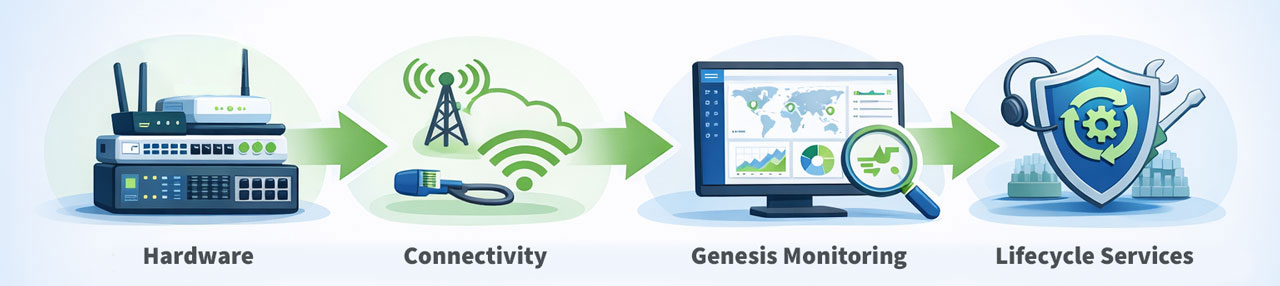
MCP was engineered to solve each of these issues systematically:
- Pre-staged hardware arriving “ready-to-connect”
- Zero-touch installation that shortens deployment cycles from months to weeks
- Digi Ventus Genesis® monitoring, which turns any screen into a professional network operations center (NOC) and enables real-time diagnostics
- Digi TrustFence® security, ensuring multi-layer device protection and supporting secure boot, authentication, and hardened firmware
- Flexible OpEx subscription that eliminates heavy upfront CapEx and simplify technology refresh cycles
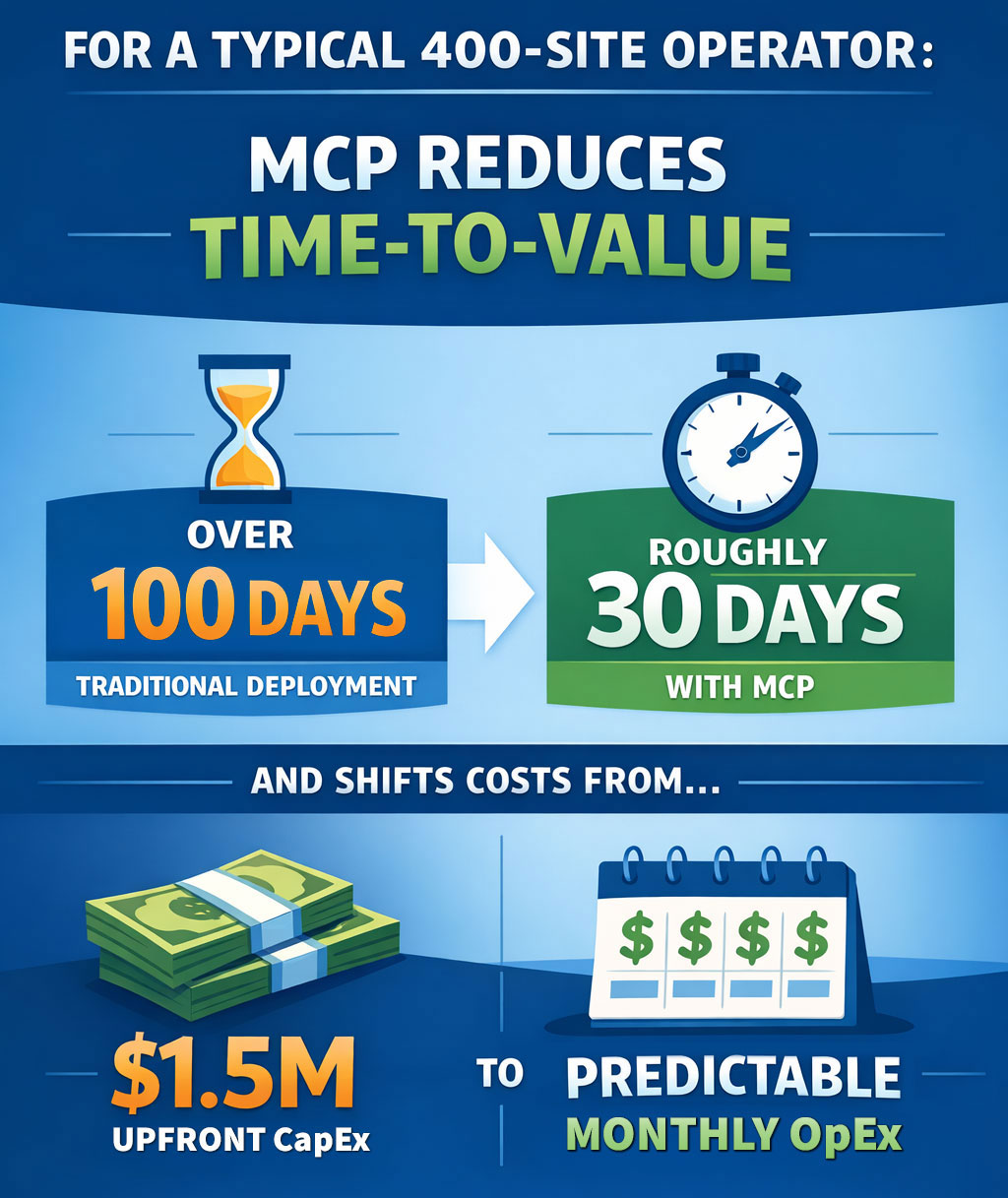
For a typical 400-site operator, MCP reduces time-to-value from more than 100 days to roughly 30 days, while shifting more than $1.5M in upfront cost to predictable monthly OpEx.
Before MCP, no provider in the broadband or cellular hardware ecosystem offered a unified, end-to-end service combining:
- Pre-configured cellular routers
- Multi-carrier connectivity
- Lifecycle firmware and configuration management
- A dedicated monitoring and partner-ops console
- A contractual OpEx model designed for channel resale
Digi’s announcement underscores this distinction: MCP is one of the first in the industry to unify hardware, connectivity, monitoring, and lifecycle services under a single recurring-revenue model. This isn’t simply a new product — it is the creation of an entirely new category: Managed Cellular Connectivity as a Service.
The Channel Perspective: What MCP Makes Possible
 Few know the market realities better than managed-service providers themselves. For2Fi CEO John Reed, one of MCP’s earliest beta users, was clear about MCP’s impact on his business.
“Customers had tried LTE and 5G and either had a poor experience… or they got burned with an overage bill and walked away. We really wanted to change that experience.”
Reed explained that For2Fi’s shift to Digi was driven by the completeness of the solution and Digi’s channel-centric execution.
“As soon as I heard what you guys were doing with Ventus and Genesis… what we’ve been able to put together in the last year to give a truly managed service has been huge.”
Reed’s customers — from national retail chains to single-location businesses — now receive fully managed, pre-configured devices often shipped within 48 hours.
“If I get an order today before noon Eastern, it ships today, the customer has it tomorrow and it’s up and running.”
This speed is not only operationally valuable, it enables the channel to capture opportunities that traditional hardware-first models simply cannot support.
Here are four key advantages that support channel agility and sales wins.
MCP replaces one-off device sales with recurring revenue while offloading the heavy operational burden of staging, upgrades, SIM swaps, and troubleshooting. The economics are powerful:
Channel organizations keep their brand relationship with the customer while Digi supplies enterprise-grade cellular core engineering.
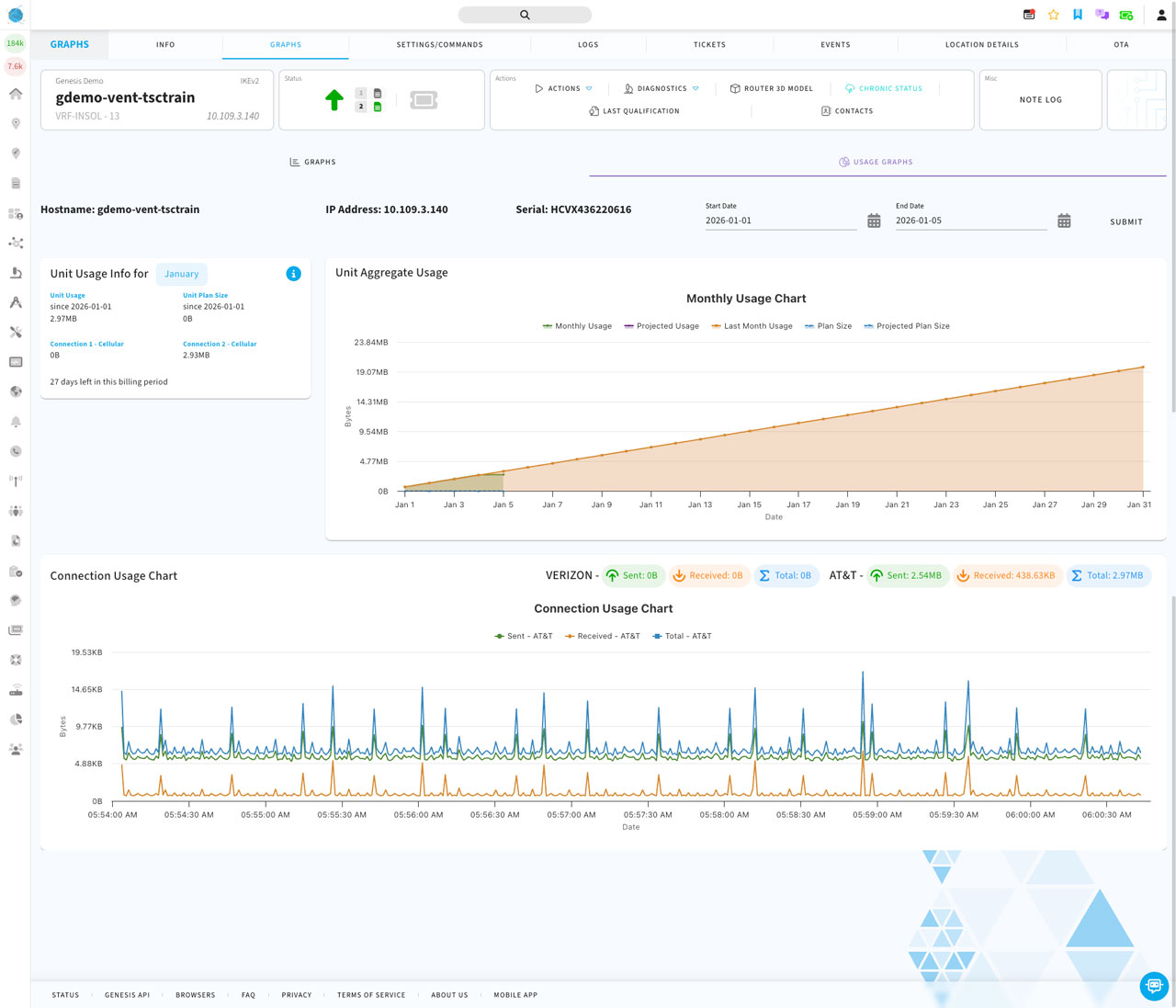 Channel organizations gain access to Genesis, a purpose-built MSP console that delivers visibility with all the great features IT teams require in a NOC (network operations center) without overwhelming complexity.
As Genesis training materials highlight, this remote management solution provides:
MSPs can bring their own SIMs (MPaaS) or leverage Digi’s multi-carrier optimized SIMs (MCaaS). Either model is battle-tested for large-scale deployments, from EV charging to retail chains.
Digi’s EX and IX routers carry decades of field-proven industrial design. Jeff Noska, Digi Ventus Senior Director of Product Management, reminded internal sellers, “This is Digi’s DNA. We know industrial better than anybody in the business.”
This matters for mission-critical networks — from remote oilfields to 5G-powered kiosks — where consumer-grade gear simply fails.

End users benefit from the simplicity of a single managed solution that “just works.”
- Devices arrive pre-staged and ready to connect, reducing installation to minutes.
- Digi TrustFence provides continuous security, including secure boot, data authentication, protected hardware ports, and compliance up to FIPS 140-2 and IEC 62443 SL3.
- Genesis delivers “real-time visibility” and exception-based management, which is key for understaffed IT teams.
- The OpEx model makes upgrades seamless, letting customers refresh hardware as technology evolves.
John Reed emphasized the value from an operational angle.
“Why pay for a backup if it's down?… We monitor their devices, monitor their data plans… and make sure that backup is available when they need it.”
Whether the use case is failover, primary LTE/5G, POTS replacement, or temporary cellular for a jobsite, MCP delivers enterprise-grade resilience powered by multi-carrier optionality.
Across the MCP launch period, Digi channel organizations achieved wins that were fully enabled by the unified managed-service model:
- A 1,000-location retail chain using EX routers shipped and started deployment within days
- EV charging deployments experiencing a 75% reduction in first-charge failures after Digi engineering applied proper configuration and lifecycle management
- A national retailer moving to dual-carrier managed failover for peak-season reliability
- Multi-thousand-site qualification projects completed in under 24 hours, thanks to streamlined SIM validation workflows
Every example reinforces MCP’s central value: scale without complexity.
The multi-carrier, multi-device, multi-use-case world of wireless connectivity demands new approaches. Partners want simplicity. End users want outcomes, not infrastructure headaches. And the market needs solutions built for scale. MCP answers that need with clarity and conviction.
As Jeff Noska summarized when reflecting on the partnership that helped shape the program:
“The product wouldn’t be what it is today without our channel… They’ve helped us build a complete solution.”
In MCP, Digi Ventus has not only delivered that complete solution — it has delivered a category-defining platform that sets the pace for the entire managed-connectivity market.
What is the Digi Ventus Managed Connectivity Platform (MCP) Program?
The Digi MCP Program is a unified, subscription-based managed service that brings together Digi’s enterprise and industrial grade cellular hardware with multi-carrier connectivity, security, remote monitoring, and lifecycle management into a single, scalable solution. It is designed specifically for channel organizations to deliver cellular connectivity as a managed service rather than a one-time hardware transaction.
Who is MCP designed for?
MCP is built for managed service providers (MSPs), systems integrators, and channel organizations that deploy and manage cellular connectivity for enterprise and industrial customers. It supports a wide range of use cases including retail, EV charging, oil and gas, smart cities, branch networking, kiosks, and temporary or remote sites.
How is MCP different from traditional cellular connectivity solutions?
Traditional cellular deployments require solution providers or end customers to manage hardware sourcing, SIM provisioning, carrier contracts, firmware updates, security, and ongoing monitoring independently. MCP unifies all of these elements into a single managed service, reducing complexity, accelerating deployment, and shifting costs from CapEx to predictable OpEx.
What does “first-to-market” mean in the context of MCP?
MCP is one of the first solutions in the industry to combine pre-configured cellular hardware, multi-carrier connectivity, lifecycle management, security, and a channel-ready OpEx subscription under a single managed program. Rather than selling components separately, MCP delivers Managed Cellular Connectivity as a Service.
What hardware is included in MCP?
MCP leverages Digi’s enterprise and industrial-grade cellular routers, which are purpose-built for the most demanding enterprise and industrial environments. Devices are pre-staged, pre-configured, and shipped ready to connect, significantly reducing deployment time and installation errors, and are fully managed by Digi Ventus and the managed service provider (MSP).
How does Digi Ventus MCP simplify deployment?
Devices arrive pre-staged and “ready-to-connect,” enabling zero-touch installation. In many cases, deployments that once took months can now be completed in weeks — or even days — with minimal on-site technical expertise required. Further, MCP requires no technical expertise on the part of the end customer, as the solution is fully managed by Digi Ventus.
What is Genesis and why is it important?
Genesis® is Digi Ventus’ purpose-built monitoring and operations platform. It provides channel partners with real-time visibility into device health, connectivity status, and SIM usage through an intuitive, browser-based interface. Genesis effectively turns any screen into a professional NOC, without the complexity of traditional network management tools.
How does MCP address security?
MCP includes Digi TrustFence®, a multi-layer device security framework that supports secure boot, authentication, encrypted communications, and hardened firmware. It is designed to meet enterprise and industrial security requirements, with compliance support up to FIPS 140-2 and IEC 62443 SL3.
What SIM and connectivity options are available?
Partners can choose between two flexible models:
- MCaaS (Managed Connectivity as a Service): Digi provides optimized, multi-carrier SIMs.
- MPaaS (Managed Platform as a Service): Partners bring their own SIMs while leveraging Digi’s platform, hardware, and lifecycle services.
Both models are supported at scale and across diverse use cases.
How does MCP benefit channel partners financially?
MCP replaces one-time hardware sales with predictable recurring revenue while reducing the operational burden of staging, firmware updates, troubleshooting, and lifecycle management. This results in lower cost to serve, higher customer retention, and increased lifetime value — all while channel providers maintain the primary customer relationship.
What benefits do end customers see from the Digi Ventus MCP program?
End customers receive a solution that “just works”:
- Faster deployments with minimal on-site effort
- Always-on monitoring and proactive issue resolution
- Enterprise-grade security built in from day one
- Predictable monthly costs and easier technology refresh cycles
This allows IT teams to focus on outcomes instead of connectivity maintenance.
What types of deployments is MCP best suited for?
Digi Ventus MCP supports both primary and backup LTE/5G connectivity, failover, POTS replacement, fixed wireless access, and temporary or mobile deployments. It is equally effective for single-site customers and multi-thousand-location rollouts.
How quickly can customers see value from MCP?
Managed service providers report reducing time-to-value from more than 100 days to approximately 30 days, with some deployments shipping within 48 hours and going live almost immediately after installation.
Is MCP available today?
Yes. Digi Ventus MCP is available through authorized Digi channel providers. The program was shaped with direct channel input and is already delivering results in real-world deployments across multiple industries.
How can managed service providers get started with MCP?
MSPs can engage with Digi Ventus to learn more about onboarding, available configurations, and go-to-market support. Digi provides the core engineering, platform, and lifecycle services — enabling the MSP to focus on customer relationships and growth.
To learn more, visit https://ventus.digi.com.