The Internet of Things (IoT) has functionally revolutionized the manufacturing and production sector. Through IoT
industrial technology, factory floors experience heightened efficiency, greater precision, and optimized performance, all while improving safety. 5G edge computing creates opportunities for the next evolution in
industrial IoT, setting the stage for
industry 4.0.
While many people are aware of 5G and edge computing as separate technologies, not all understand how the two intertwine. Similarly, some overlook the potential benefits of harnessing edge computing and 5G together, including the advantage 5G edge computing provides early adopters.
5G edge computing offers superior network performance for industrial IoT and industrial automation, offering enhanced throughput and significantly reduced latency when compared to its 4G LTE predecessor. Plus, it allows manufacturers to experience enhanced security within private networks, all while providing edge virtualization that reshapes IoT.
Key takeaway: 5G edge computing combines ultra-low-latency 5G connectivity with localized edge compute to enable real-time industrial automation, AI inference, and secure private network operations for Industry 4.0.
Best for: Robotics, machine vision, predictive maintenance, closed-loop control systems.
Primary benefits: <5ms latency, better reliability, improved security via private 5G, simplified retrofitting.
Take me to Digi's key 5G edge computing solution
Jump to:
Article overview:
This blog post explores how 5G edge computing is transforming industrial IoT and accelerating the shift toward Industry 4.0. It explains how combining high-speed 5G connectivity with decentralized edge computing enables real-time data processing, dramatically reducing latency while increasing network capacity and performance. By processing data closer to devices rather than relying on centralized cloud systems, manufacturers can achieve faster decision-making, improved automation, and more efficient operations across smart factories.
The article also highlights five key benefits of 5G edge computing in manufacturing, including enhanced reliability through dense network architectures, stronger security via private networks, and the ability to retrofit existing infrastructure without full system overhauls. It emphasizes how improved device collaboration allows for real-time optimization of workflows, resource allocation, and production efficiency. Overall, the post positions 5G edge computing as a foundational technology for industrial innovation, enabling scalable, secure, and high-performance IoT ecosystems that support advanced applications like AI, robotics, and automation.

5G edge computing is the intersection of two technologies: 5G network technology and edge computing. It brings together high-speed network technology with decentralized computational power to enhance operational efficiency and make data-driven adjustments in near or true real-time.
5G networks are an evolution in wireless connectivity, offering significant improvements over the capabilities of their predecessors. Overall, 5G provides three primary advantages:
- Accelerated data transmission, reaching up to multi-Gigabit/s and outpacing 4G LTE by up to 10-fold
- Reduced latency, potentially down to single-digit milliseconds
- Increased capacity with increased bandwidth, supporting more IoT devices simultaneously
Edge computing involves data processing that occurs at the “edge” of a network. With traditional approaches, data is transferred to a central location to complete computations and generate a command, which then must travel back to the originating device. That creates an innate level of latency.
With edge computing, computations occur at the device level. Data isn’t sent to a central location for processing — instead, happening at the edge of the IoT technology stack — accelerating command issuance and eliminating unnecessary latency. Functionally, edge computing saves time, and since data isn’t transmitted to a central location, available bandwidth isn’t strained.
When combined, 5G and edge computing support highly demanding applications, including industrial robotics, automation, and artificial intelligence (AI) in manufacturing, more effectively.

Industry 4.0 relies on one core concept: device interconnectivity. Industrial connectivity differs from its office-based counterpart, requiring exceptional reliability and rugged solutions that withstand the unpredictable — and even hazardous — conditions common within facilities. Latency reduction is similarly critical, as data transmission delays can deoptimize production.
5G edge computing addresses — if not eliminates — many of the challenges that hinder Industry 4.0, effectively setting the stage for the next evolution of smart manufacturing facilities. Here’s a look at five ways edge computing and 5G combined lay the path for Industry 4.0.
1. Reduce Latency for Real-Time Communication
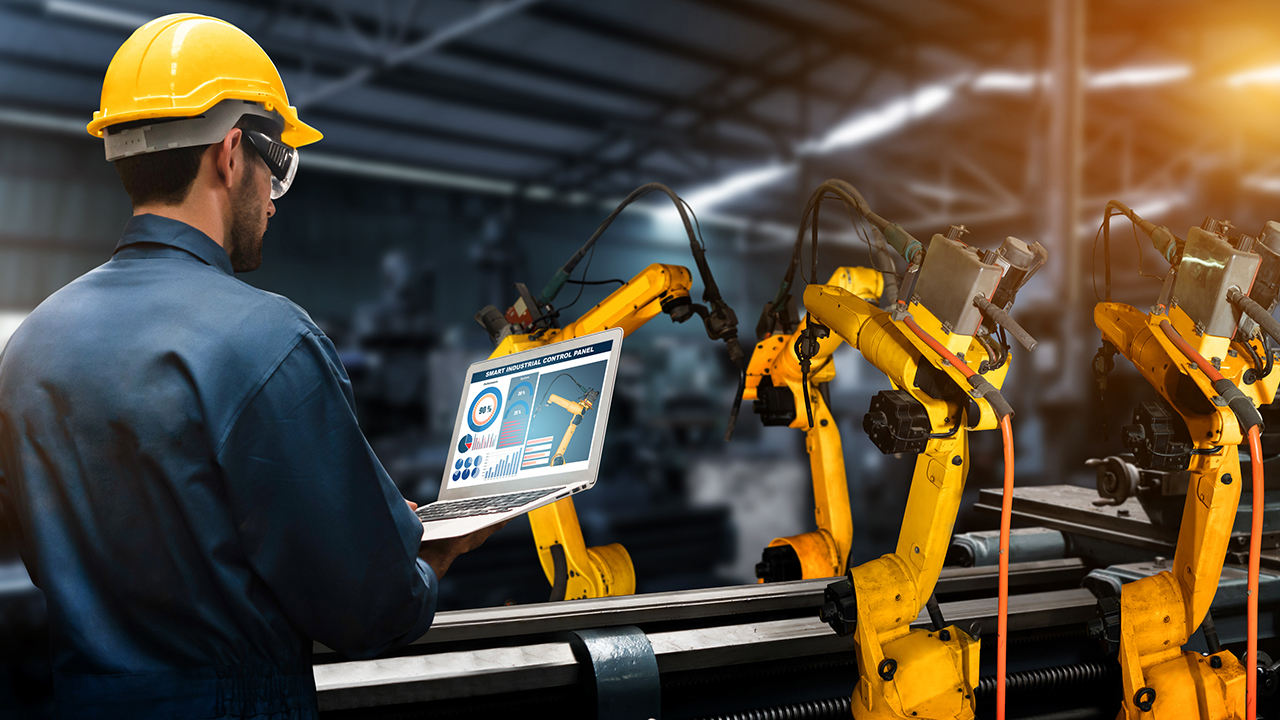
With 5G edge communications, industrial companies create a collaborative system, reducing latency withy device-level computations and direct communication between devices.
What it enables: 5G edge computing dramatically reduces latency by keeping data processing closer to machines and operators — rather than sending it across a wide network to centralized cloud systems.
Why it matters: Many Industry 4.0 workloads require split-second responses. When latency drops, systems can operate more safely, more precisely, and more efficiently.
Examples in manufacturing:
- Closed-loop control for robotics and motion systems
- Real-time safety stops and emergency shutoffs
- Machine vision inspection and automated defect detection
Bottom line: Lower latency helps industrial automation run faster and more reliably.
2. Increase productivity through higher reliability and scalability
 The dense network node deployment of 5G enhances reliability and inherently incorporates redundancy and scalability.
What it enables: 5G offers high device density and reliable connectivity, while edge compute handles local workloads without overloading centralized systems. This combination supports continuous operations—even in complex industrial environments.
Why it matters: Industry 4.0 often means more connected assets: sensors, machines, vehicles, and smart tools. As device counts increase, a scalable network architecture becomes essential.
Examples in industrial environments:
- Connecting thousands of sensors across a facility
- Supporting mobile equipment and changing layouts
- Avoiding downtime caused by overloaded Wi-Fi or congested networks
Bottom line: 5G edge computing scales Industry 4.0 without sacrificing performance.
3. Enhance Security Through Private Networks
 private networks is a viable path. Industrial facilities can functionally separate themselves from mobile networks while achieving speeds similar to wired alternatives. These solutions also lead to computing capabilities akin to what’s offered through public clouds while ensuring that sensitive data remains in-house.
What it enables: Edge computing reduces the need to send sensitive operational data offsite by enabling local data processing and local policy control. When paired with private 5G, organizations can limit access, segment traffic, and control device connectivity more tightly than public networks.
Why it matters: Many industrial organizations must meet strict security requirements and comply with regulations or internal governance policies. Keeping workloads and data localized can reduce exposure and risk.
Examples in secure industrial deployments:
- On-site processing for proprietary manufacturing data
- Segmented networks separating OT and IT traffic
- Controlled identity and access policies for connected equipment
- Reduced reliance on public cloud for mission-critical operations
Bottom line: 5G edge computing can improve security by keeping sensitive operations closer to home.
4. Process and Act on Data Closer to Where It’s Generated
 What it enables: Edge computing allows data to be processed at or near the source—on a device, gateway, on-prem edge server, or carrier edge—so decisions happen locally.
Why it matters: This reduces bandwidth demands and avoids delays caused by transmitting large volumes of sensor data to the cloud. It also makes operations more resilient if connectivity is disrupted.
Examples in Industry 4.0:
- Filtering sensor data locally and sending only key insights to the cloud
- Fast anomaly detection on edge nodes in remote facilities
- Local decision-making for equipment coordination
Bottom line: Processing at the edge improves speed, resilience, and cost-efficiency.
5. Enable More Complete AI/ML Integration at the Edge
 AI/ML-based automation is a vital part of the broader smart manufacturing landscape, and 5G edge computing takes the concept to the next level.
What it enables: 5G edge computing enables AI and machine learning workloads to run closer to operations — especially AI inference, where models evaluate real-world inputs and generate immediate outputs.
Why it matters: Many AI-powered Industry 4.0 applications require real-time responses that cloud systems can’t consistently provide due to latency, cost, or bandwidth constraints.
Examples of AI/ML edge use cases:
- Machine vision inspection using real-time image inference
- Predictive maintenance scoring from vibration/temperature data
- Intelligent scheduling based on current production performance
- Adaptive process optimization (quality tuning and yield improvement)
Bottom line: AI becomes more actionable when it runs closer to the machines it supports.
Effectively, edge computing with 5G connectivity allows industrial companies to address evolving needs and launch next-generation, future-proof technology. Incorporating remote monitoring, adding sensors, expanding networks, and implementing closed-loop controls don’t require manufacturing or production facilities to revamp their tech stack from the ground up. Industrial companies can incorporate purpose-driven connectivity into the mix, functionally augmenting existing solutions without a complete network rebuild.
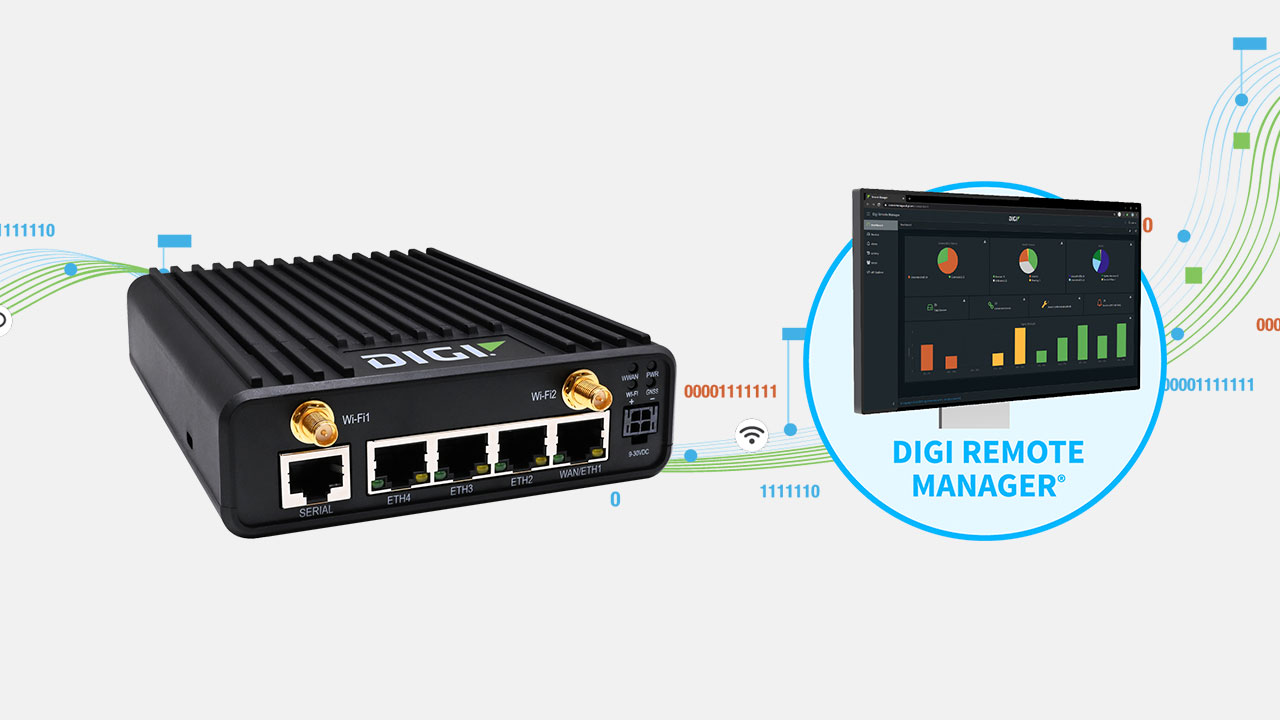
Harnessing the power of 5G edge computing allows manufacturers and production facilities to successfully transition to Industry 4.0, paving the way for greater efficiency and optimization. Your journey toward the next evolution in industrial operations can begin today. Digi offers a range of cellular IoT connectivity solutions, including Digi IX25 — a purpose-built 5G edge computing IIoT router solution, enabling swift processing, analysis, and integration of industrial asset data for Industry 4.0 applications. Digi IX25 offers essential 5G connectivity and edge intelligence to support diverse applications in the most demanding environments.
For those who want to enhance their computing capabilities and prepare for Industry 4.0 but want additional guidance and support, Digi Professional Services can help.
Digi is ready to assist with any part of your 5G edge computing plan, ensuring you can harness the power of cutting-edge solutions effectively to optimize operations while enhancing security and enhancing connectivity. Contact us to see how Digi can make your 5G and edge computing goals come to life.
Use this checklist to plan and deploy 5G edge computing in industrial environments — whether you’re retrofitting legacy equipment or designing a new Industry 4.0 facility.
The goal is to align connectivity, compute placement, security, and operations so real-time applications (automation, AI, machine vision, predictive maintenance) perform reliably at scale.
1. Define the workload requirements
Before selecting hardware or network architecture, document what each application needs:
- Latency target (e.g., <10ms for closed-loop control; 10–30ms for machine vision)
- Reliability and uptime requirements (mission-critical vs best-effort)
- Bandwidth needs (video streams vs sensor telemetry)
- Data sensitivity (what must stay local vs can go to the cloud)
- Mobility needs (fixed machines vs mobile assets/vehicles)
Start with one high-value workload and expand after proving ROI.
2. Decide where compute will run (edge placement)
Identify which processing should happen:
- On-device (immediate responsiveness, limited compute)
- On a gateway/router (common for retrofits and localized analytics)
- On-prem edge server (high performance, centralized onsite control)
- Carrier/telco edge (MEC) (lower latency than cloud; useful for wide-area deployments)
- Cloud (training AI models, long-term analytics, enterprise integration)
Run real-time inference and control at the edge, and use the cloud for storage + fleet-wide insights.
3. Select the right network model (public vs private 5G)
Choose based on control, performance, and security needs:
- Public 5G: faster to deploy, good for non-critical or mobile assets
- Private 5G: best for industrial reliability, predictable performance, access control, and segmentation
- Hybrid: private onsite + public for roaming assets or remote sites
If downtime or latency directly impacts safety, yield, or throughput, private 5G is often the better fit.
4. Validate coverage and performance with RF and site planning
Industrial spaces present unique challenges (metal, vibration, interference):
- Perform an RF site survey (especially in metal-heavy environments)
- Plan for coverage, handoffs, and mobility
- Ensure backhaul capacity (fiber/ethernet) supports your edge traffic
- Build redundancy for mission-critical zones
Don’t skip this; coverage design is one of the biggest drivers of success.
5. Design for security from day one
Treat the edge environment as a security boundary:
- Segment OT and IT traffic with network slicing/VLANs
- Define device identity, authentication, and access policies
- Use least-privilege principles for all connected assets
- Ensure secure remote access with auditing/logging
- Plan patching and lifecycle management for edge devices
Keep sensitive operational data local when possible, and transmit only what’s needed.
6. Plan integration with OT systems (PLC/SCADA/MES)
Edge projects often stall due to integration complexity:
- Identify data sources and protocols (e.g., Modbus, OPC UA, Ethernet/IP)
- Decide what data is required for real-time decisions vs long-term analytics
- Ensure the edge layer supports existing workflows (not just new ones)
- Coordinate ownership between IT and OT teams early
Integration success is often more important than hardware selection.
7. Operationalize monitoring and lifecycle management
To scale beyond a pilot, you’ll need operational visibility:
- Monitor device health, connectivity, and performance metrics
- Track data flows, latency, and compute utilization
- Centralize alerts and event logging
- Implement standardized provisioning and configuration templates
Define what “normal” looks like before scaling fleet-wide.
8. Pilot, measure, and scale
Start small and measure outcomes tied to business goals:
- Choose one or two use cases (e.g., machine vision, predictive maintenance)
- Track success metrics: defects reduced, downtime avoided, throughput gains, response time
- Document changes needed to improve reliability, security, and integration
- Expand to additional lines or sites once operational repeatability is proven
Pilots succeed when they prove a measurable improvement in speed, quality, or uptime.

What Is 5G Edge Computing in Simple Terms?
5G edge computing combines ultra-fast 5G wireless networks with local data processing at or near connected devices. Instead of sending data to distant cloud servers, information is processed closer to where it’s generated, enabling faster response times, reduced latency, and more efficient real-time decision-making.
Why Is 5G Good for Edge Computing?
5G augments the existing capabilities of edge computing. Additional network speed accelerates inter-device communication, creating a collaborative environment that can effectively leverage automation while incorporating real-time workflow optimization. Collectively, this dramatically enhances performance. Plus, it makes incorporating high-demand technologies — including AI and machine learning — more viable, supporting better application response times and accelerating data collection and processing.
How Will 5G Impact Edge Computing?
5G network speeds support near or true real-time communication, allowing network-connected devices to communicate faster, creating a collaborative environment that streamlines automation solutions. Real-time workflow decisions can occur based on current facility conditions, increasing operational agility and eliminating common challenges, such as bottlenecks, through smart resource allocation and optimized task or function timing.
What Is the Value Opportunity of 5G Edge Computing?
With 5G edge computing, businesses can optimize operations and workflows by decentralizing data processing. Computations can occur at the device level, reducing strains on networks and other computing devices, such as servers. Additionally, real-time production adjustments are possible with 5G edge computing and IoT devices, ensuring optimized workflows for greater overall efficiency.
What Is the Difference Between Edge Computing and Cloud Computing?
Edge computing incorporates device-level computation power, allowing various IoT devices or other connected technologies to analyze data locally without reliance on a central server or similar data-processing solution. Cloud computing uses centralized servers — typically owned and supported by a third-party provider — that are housed offsite. Computations require sending the data to the cloud server, usually over the internet, and waiting for a response to be transmitted back.
What Industries Benefit Most from 5G Edge Computing?
Industries that rely on real-time data and automation benefit the most from 5G edge computing. These include manufacturing, transportation and logistics, healthcare, energy, and smart cities. In these sectors, 5G edge computing supports applications like predictive maintenance, autonomous systems, remote monitoring, and AI-driven analytics.
How Does 5G Edge Computing Improve Industrial IoT (IIoT)?
5G edge computing enhances Industrial IoT by enabling faster communication between devices, reducing latency, and allowing data to be processed locally. This improves operational efficiency, supports real-time automation, and enables smarter decision-making across connected industrial systems.
Is 5G Edge Computing Secure?
Yes, 5G edge computing can improve security by allowing organizations to process and store sensitive data locally rather than transmitting it over public networks. Additionally, private 5G networks offer greater control, reduced exposure to external threats, and enhanced data protection for critical operations.
What Are the Key Benefits of 5G Edge Computing?
The main benefits of 5G edge computing include ultra-low latency, faster data processing, improved reliability, enhanced security, and the ability to support advanced technologies like AI, machine learning, and automation. These advantages help businesses optimize performance and enable real-time insights.
How Does 5G Edge Computing Enable Real-Time Analytics?
By processing data at the edge of the network, 5G edge computing eliminates delays associated with sending data to centralized systems. This allows organizations to analyze data instantly and act on insights in real time, which is critical for applications like robotics, quality control, and predictive maintenance.
What Role Does 5G Edge Computing Play in Industry 4.0?
5G edge computing is a foundational technology for Industry 4.0, enabling seamless connectivity, real-time communication, and intelligent automation. It supports interconnected systems that can self-optimize, improving productivity, efficiency, and flexibility in modern manufacturing environments.
Can Existing Infrastructure Support 5G Edge Computing?
In many cases, existing infrastructure can be upgraded to support 5G edge computing through retrofitting. Businesses can integrate edge devices, sensors, and 5G connectivity into current systems without needing a complete overhaul, making adoption more cost-effective and scalable.
What Is the Difference Between 5G Edge Computing and Traditional Networks?
Traditional networks rely on centralized data processing, which can introduce latency and slow response times. In contrast, 5G edge computing processes data locally and uses high-speed 5G connectivity, enabling near real-time communication and significantly improved performance.
How Does 5G Edge Computing Support AI and Machine Learning?
5G edge computing provides the speed and low latency required for AI and machine learning applications to operate effectively in real time. By processing data closer to the source, it enables faster model training, quicker insights, and immediate responses in applications like robotics, video analytics, and predictive maintenance.
Next Steps
Editorial note: This blog post was originally published in October of 2023 and was updated in April of 2025.