LoRaWAN® has become one of the most widely deployed low-power, wide-area network (LPWAN) technologies for the Internet of Things (IoT). The LoRa Alliance® reports that about 150 million LoRaWAN devices are now deployed worldwide, growing at roughly 25% per year. Digi offers a complete LoRaWAN solution today to support this large and growing market.
In addition to the well-known long-range, low-power characteristics, there are other important benefits that LoRaWAN technology provides, which solve many of the challenges involved in deploying an IoT solution. For example, organizations deploying IoT networks need to address connectivity, security policies, harsh radio environments, and deployment and maintenance costs. This article explains some of the lesser-known benefits that LoRaWAN offers for engineers, product managers and decision makers to consider and introduces the completely integrated Digi X-ON edge to cloud solution.
1. Interference Immunity
 LoRa radio signals extend range and coverage through two mechanisms: Very high receiver sensitivity and excellent interference immunity. Most use cases are limited by distance or interference. The advantage of LoRa is that it can operate below the noise floor. This means that what appears as noise due to interference can be a recoverable signal for LoRaWAN systems both within the LoRaWAN channels and in adjacent frequency bands.
This makes LoRa a better fit than most other RF technologies such as Wi-Fi, BLE, and proprietary long-range sub-GHz wireless technologies for industrial applications that have significant radio frequency noise issues. It can also help solve coverage problems in environments such as in-building spaces and basements. Because LoRaWAN networks can be private, gateways can be placed where coverage is needed instead of relying on carrier coverage, which makes LoRaWAN a strong addition to smart building deployments.
2. Reduced Deployment Complexity
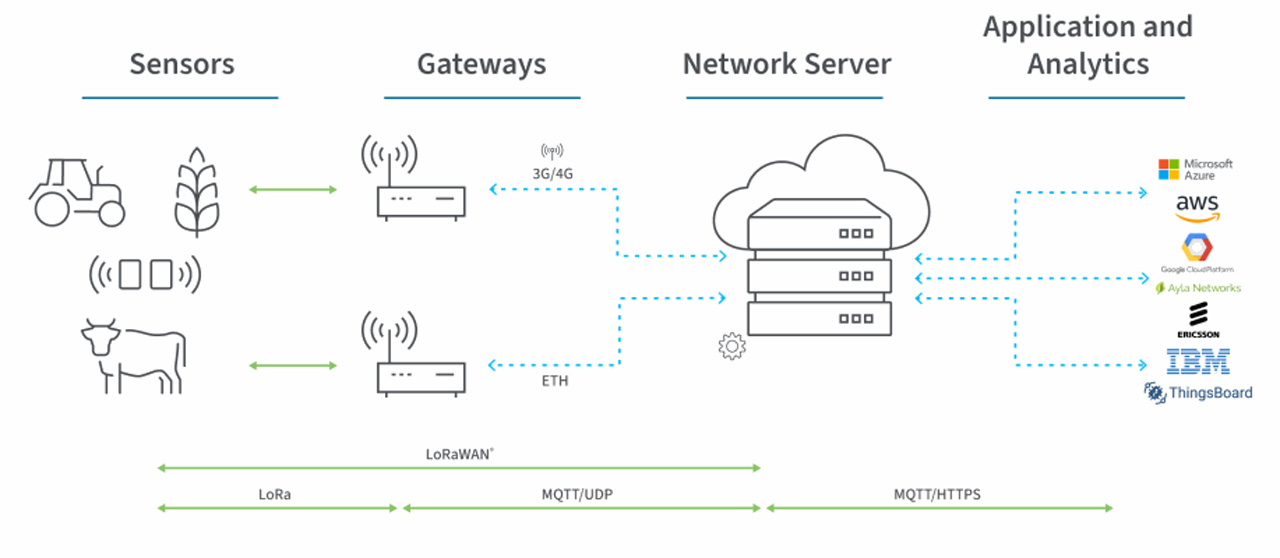
When designing an IoT solution that can be deployed at a customer’s site, it is important to consider the potential obstacles during deployment. One of the most overlooked items is the complexity of network security policies.
Connecting IoT systems to enterprise networks can significantly extend deployment time, cost and operational complexity. LoRaWAN systems with as little as a single LoRaWAN gateway for an entire campus can be deployed semi-autonomously, using cellular (LTE) backhaul directly to your IoT solution provider’s cloud application, so the system does not need to join the customer’s enterprise network.
3. Lower Ownership Cost
LoRaWAN uses a star topology, and a single LoRaWAN gateway can connect thousands of end devices. This topology using a powered gateway enables battery-powered sensors to operate significantly longer than mesh topologies, where every sensor acts as both a device and a relay.
Unlike typical mesh networks where the gateway is simply a standard sensor radio connected to the Internet, LoRaWAN gateways are purpose-built, multi-channel receivers that can receive on multiple channels and spreading factors at the same time, giving them far more capacity than a single sensor radio. This higher capacity allows a LoRaWAN network to support more devices and use cases simultaneously than many other technologies, including networks that support much higher data rates like Wi-Fi or Bluetooth.
The economics of LoRaWAN improves as the number of devices increases per site. Utilizing more than 10 devices on a single LoRaWAN gateway can provide a better connectivity ROI than using cellular modems in each device. This also allows LoRaWAN to address use cases of extreme volume or complexity that may not be technically or economically feasible using other solutions such as cellular, Bluetooth or Wi-Fi.
Cellular costs grow linearly with the number of connected devices, since each device typically needs its own modem and data plan, and dense clusters of devices in one location can strain local cellular capacity. Bluetooth and Wi-Fi have technical limitations on density, power consumption and range, which leads to more frequent battery changes and many more gateways or access points. This makes both options less cost-effective for higher densities of sensors as well as complex enterprise and industrial locations that may need enhanced range and/or interference immunity.
4. Advanced Implementation of Monitor/Alert Capabilities
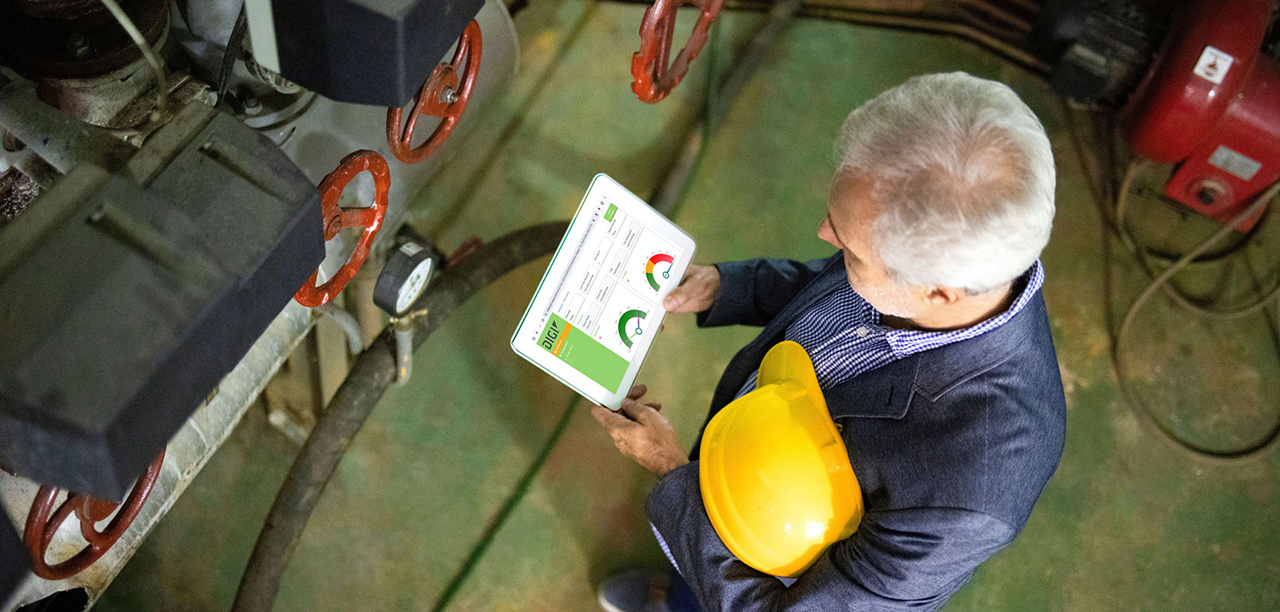
Another key advantage of LoRaWAN is the ability to support devices in different device classes, such as Class A battery-powered sensors and Class C mains-powered devices that listen continuously, on the same gateways. This provides support for heterogeneous use cases where battery-powered sensors send data and alerts, and powered devices such as warning lights and displays receive notifications.
For example, battery-powered gas detectors on an industrial site can send alerts to a monitoring application that notifies staff and updates powered warning lights, helping keep workers informed in hazardous locations. Digi’s end-to-end LoRaWAN solution built on the Digi X-ON cloud platform provides advanced configuration capabilities for remote monitoring and alerting.
Frequently Asked Questions About LoRaWAN for IoT
What is LoRaWAN, and why should product managers consider it for IoT?
LoRaWAN is a low-power, wide-area network (LPWAN) technology for IoT, with about 150 million devices deployed worldwide and growth of roughly 25% per year, according to the LoRa Alliance. Beyond long range and low power, it offers strong interference immunity, simpler deployment, and lower ownership cost at scale. Together these address common IoT challenges around connectivity, security policies, harsh radio environments, and deployment and maintenance costs.
How does LoRaWAN compare to cellular for IoT deployments?
Cellular typically needs a modem and data plan for every device, so costs grow linearly with device count. With LoRaWAN, one gateway can serve thousands of end devices. Using more than 10 devices on a single LoRaWAN gateway can deliver a better connectivity ROI than putting a cellular modem in each device. Dense clusters of devices in one location can also strain local cellular capacity.
Is LoRaWAN better than Wi-Fi or Bluetooth for industrial IoT?
For many industrial use cases, yes. Wi-Fi and Bluetooth have technical limits on density, power consumption and range. That means more frequent battery changes and many more gateways or access points. LoRaWAN’s purpose-built, multi-channel gateways can receive on multiple channels and spreading factors at once. This lets one network support more devices and use cases, even compared with higher-data-rate technologies.
Does LoRaWAN work in noisy RF environments, basements, and inside buildings?
Yes. LoRa can operate below the noise floor, so what looks like interference can still be a recoverable signal, both within LoRaWAN channels and in adjacent bands. Because networks can be private, gateways can go where coverage is needed instead of relying on carrier coverage. This makes LoRaWAN a strong fit for in-building spaces, basements and smart building deployments.
Do I need to connect LoRaWAN devices to my customer’s enterprise network?
Not necessarily. Connecting IoT systems to enterprise networks can significantly extend deployment time, cost and complexity because of network security policies. A LoRaWAN deployment can be as small as one gateway for an entire campus. It can use LTE backhaul directly to your IoT solution provider’s cloud application, so the system doesn’t need to join the customer’s network.
How many devices can a single LoRaWAN gateway support?
A single LoRaWAN gateway can connect thousands of end devices through its star topology. Actual capacity depends on your device count, message frequency and RF environment, so validate your design with a LoRaWAN specialist.
What is the difference between LoRaWAN Class A and Class C devices?
Class A devices are battery-powered sensors that send data and alerts. Class C devices are mains-powered and listen continuously, so they can receive notifications right away. Both classes can run on the same gateways. For example, battery-powered gas detectors can send alerts to a monitoring application that notifies staff and updates powered warning lights.
Why does a star topology help battery life?
In a star topology, sensors talk directly to a powered gateway. In mesh networks, every sensor also acts as a relay, which drains batteries faster. Offloading that work to the gateway lets battery-powered sensors operate significantly longer.
What is the Digi XBee LR?
The Digi XBee LR is a pre-certified LoRaWAN module that supports device classes A and C. It is pre-activated on the Digi X-ON cloud platform. It brings LoRaWAN to manufacturers and industrial enterprises that already use the XBee form factor and APIs.
What LoRaWAN products and services does Digi offer?
Digi offers a full suite: modules (Digi XBee LR), gateways (Digi HX15 Gateway for LoRaWAN), and the Digi X-ON cloud platform with a LoRaWAN network server (LNS) and an advanced cloud application engine. Digi’s LoRaWAN professional services engineers can also help with solution development. Contact Digi to discuss your project.