One thing that every police, fire or emergency medical officer understands is that every second counts when people’s lives are at stake. Luckily, most emergency vehicles have onboard computers, routing, and communications networks for coordinating with dispatch centers and hospitals. They communicate through priority access public safety networks like FirstNet®, Verizon FrontLine and T-Mobile T-Priority. But many emergency response teams still struggle with emergency communications vehicle technology — especially managing the complexity, the cost, and the challenges involved in integrating multiple technologies while ensuring performance and reliability.
That’s where Digi can help. In this blog post, we explore key challenges and strategies for creating secure, always-on emergency vehicle communications first-responders require.
Challenges Facing Emergency Communications Vehicle Technology
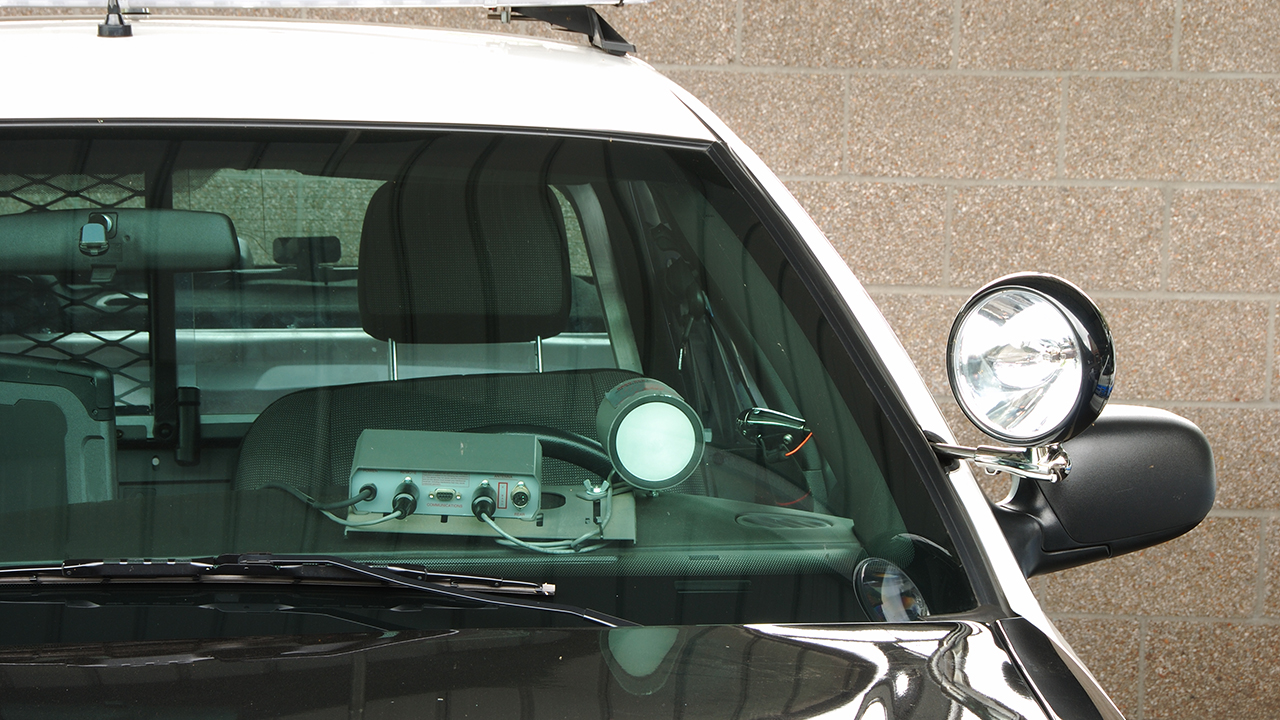
Emergency vehicles have never been better equipped for improving situational awareness. Some vehicles contain many smart devices such as tablets, cell phones and laptops. Video streaming cameras and GPS systems help first responders react more quickly and safely. But more devices are not always better. Add associated data plans and a VPN for each device and costs escalate while bandwidth bogs down. When departments buy lower priced equipment to stay within budget, performance usually suffers. Finally, managing standalone devices creates complexity for IT.
Key Challenges
- Lean budgets — Sometimes, agencies must decide between purchasing technology or vehicles
- Too many devices — Many devices with separate logins can distract first responders
- Unreliable bandwidth and network quality — Emergency officers who lose network connectivity while responding to a call may not only lose precious time but may also risk their own safety
- Trouble communicating across agencies — Communication networks don’t always allow first responders to communicate with each other across agencies
A Complete Solution for Emergency Responder Vehicle Connectivity
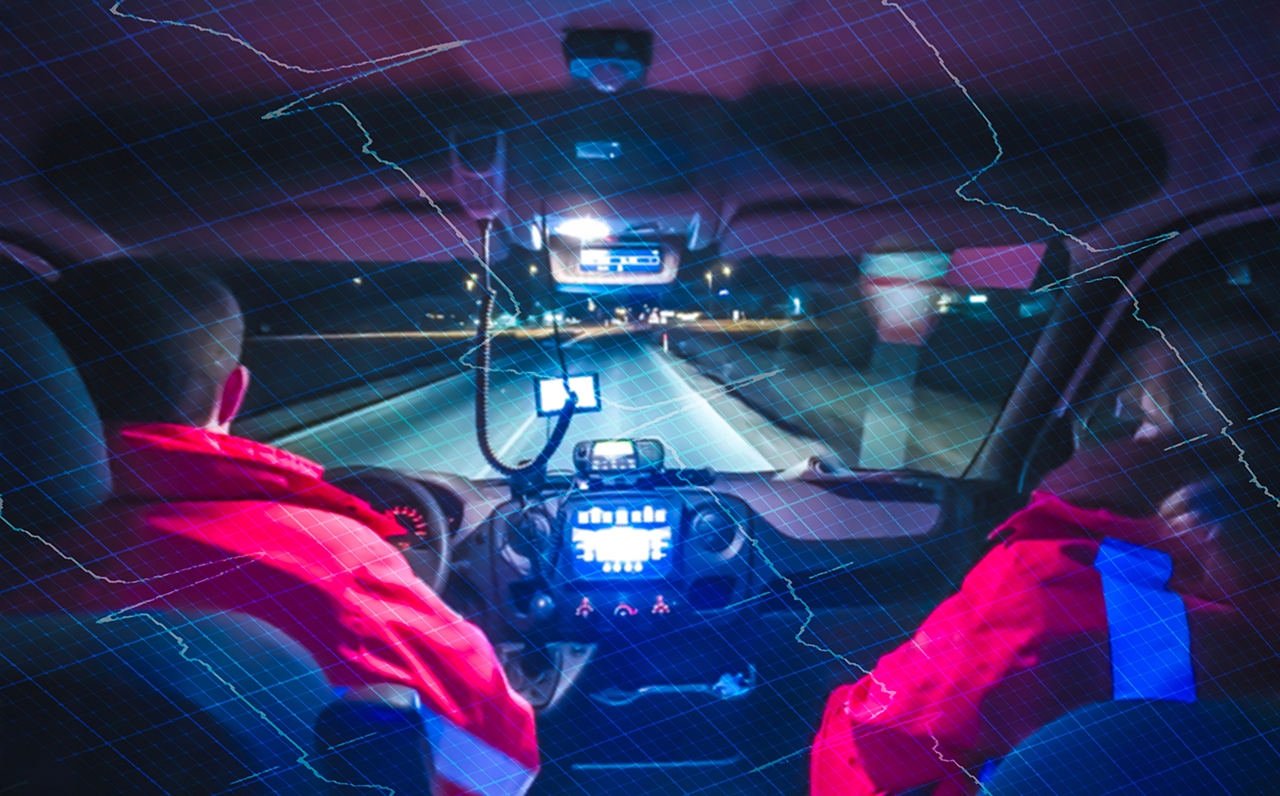
Imagine reducing emergency response times by 35 percent and criminal incidents by up to 40 percent. That is the promise of smart technologies according to a McKinsey report. But, getting devices to connect in emergency vehicles is only part of the puzzle. The real opportunity is to build a complete solution for emergency vehicles. It starts with the network.
Critical Networks for First Responders
Digi SAFE solutions support all first responder networks, including FirstNet®, Verizon Frontline and T-Mobile T-Priority. These dedicated networks ensure first responders — as well as critical infrastructure systems, transportation and public safety teams — can continue communicating and providing services during large-scale emergencies.
In early October 2022, Hurricane Ian slammed the Florida Gulf Coast, and the FirstNet team was ready. The storm created widespread communications outages across the region. Thanks to FirstNet, first responders such as sheriffs, firefighters and search and rescue teams were able to communicate with each other as they conducted search and rescue missions.
Digi Cellular Devices for Emergency Response
Digi continues to grow and enhance its line of solutions for the critical needs of police, fire, and EMS departments of all sizes. In other words, Digi’s TX routers are purpose-built for mission critical mobile applications. Our emergency vehicle communications technology can operate during extreme events such as Hurricane Ian. The Digi TX line of routers apply specifically to transportation applications.
These routers include the latest-generation GNSS dead reckoning technology for more accurate location information than is possible with standard GPS. We offer cost-effective solutions that work great for smaller agencies. But we also provide rugged, high-performing routers ideal for SWAT cars and armored vehicles. Now, let’s think about hardware management and security.
Managing Always-on Connectivity for Police and Other First Responders
Lean budgets. Too many devices. Unreliable bandwidth. Lack of interagency communication. Digi built a secure, end-to-end solution for public safety professionals to solve these issues. We call it Digi SAFE. Digi SAFE includes state-of-the-art software to ensure the security and performance of the network. Digi SAFE integrated hardware can withstand extreme conditions. Our solution is easy to use and priced for widespread deployment by police and fire departments of all sizes.
Here is how it works.
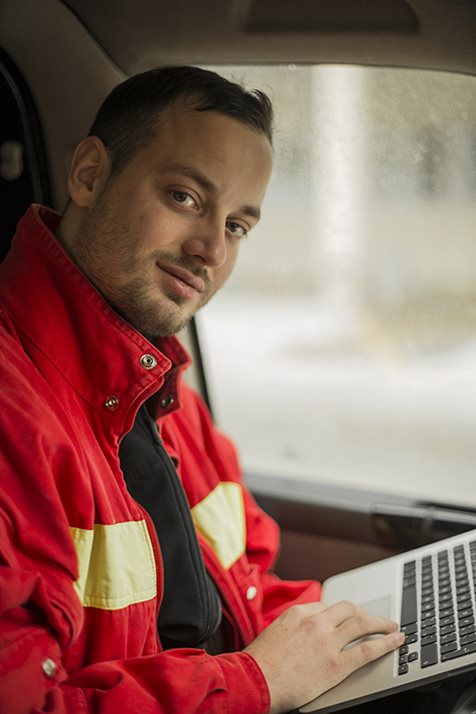 First, Digi SAFE integrates sophisticated software and high-performance hardware that connects to priority cellular connectivity for major U.S. first responder networks. These include FirstNet®, Verizon FrontLine and T-Mobile T-Priority and other national and international public cellular networks.
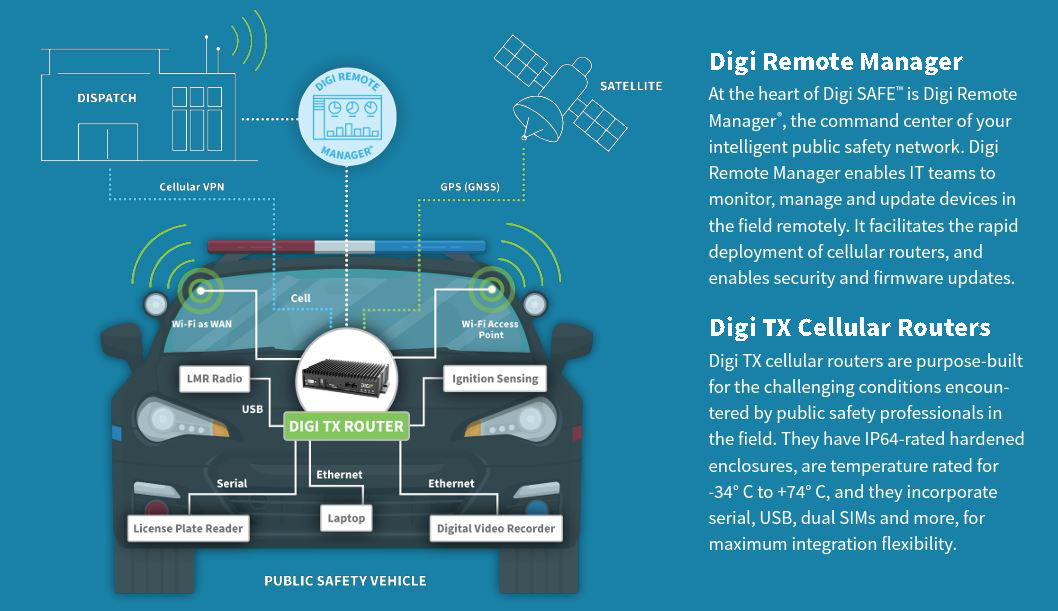
The Digi communications hub provides wired and wireless connectivity in the emergency vehicle. It also distributes accurate location data to other systems in the vehicle and to dispatch. The hub produces a Vehicle Area Network through which other devices can connect. Best of all, Digi’s hub uses open ITxPT standards to reduce complexity and cost.
Mobile VPN software provides secure always-on connectivity. It uses session persistence and low data overhead on the vehicle’s communication hub and on an officer's smartphone. Session persistence allows applications to stay connected so officers can focus on their jobs.
Digi Remote Manager (DRM) ties everything together. It is the command center for an intelligent public safety network. The DRM platform provides location information and enables the IT team to easily track, manage and update all Digi connected devices. Its alerting and over-the-air updating capabilities increase efficiency and reduce IT costs.
Three Levels of Security
Security is core to the Digi SAFE solution. Digi SAFE protects real-time communication and confidential data. It uses three interlocking rings of security.
- Digi TrustFence — A security framework that integrates device security, device identity and data privacy capabilities
- FIPS 140-3 validation — Digi SAFE includes Digi TX cellular routers, which meet the strict Federal Information Processing Standard 140-3 (FIPS 140-3) for cryptographic modules
- CJIS-compliant Mobile VPN — Digi SAFE includes a mobile VPN solution from Radio IP. Radio IP is a trusted solution provider with decades of experience.
Why Digi SAFE
Digi SAFE integrates sophisticated software and hardware in one complete solution. We designed it to address common emergency responder pain points. Best of all, it is easy to get started and any sized emergency response agency can deploy it.
Digi SAFE is:
- Reliable and always connected — Supports the full range of in-vehicle devices found in many police vehicles. It increases uptime and improves situational awareness.
- Purpose-built for public safety - State-of-the-art software ensures network security and performance. Ruggedized hardware built specifically to withstand extreme environmental conditions.
- Easy to integrate — Easy to use, deploy, scale and integrate—by design.
- Cost-effective — Designed for widespread deployment, volume pricing options are available.
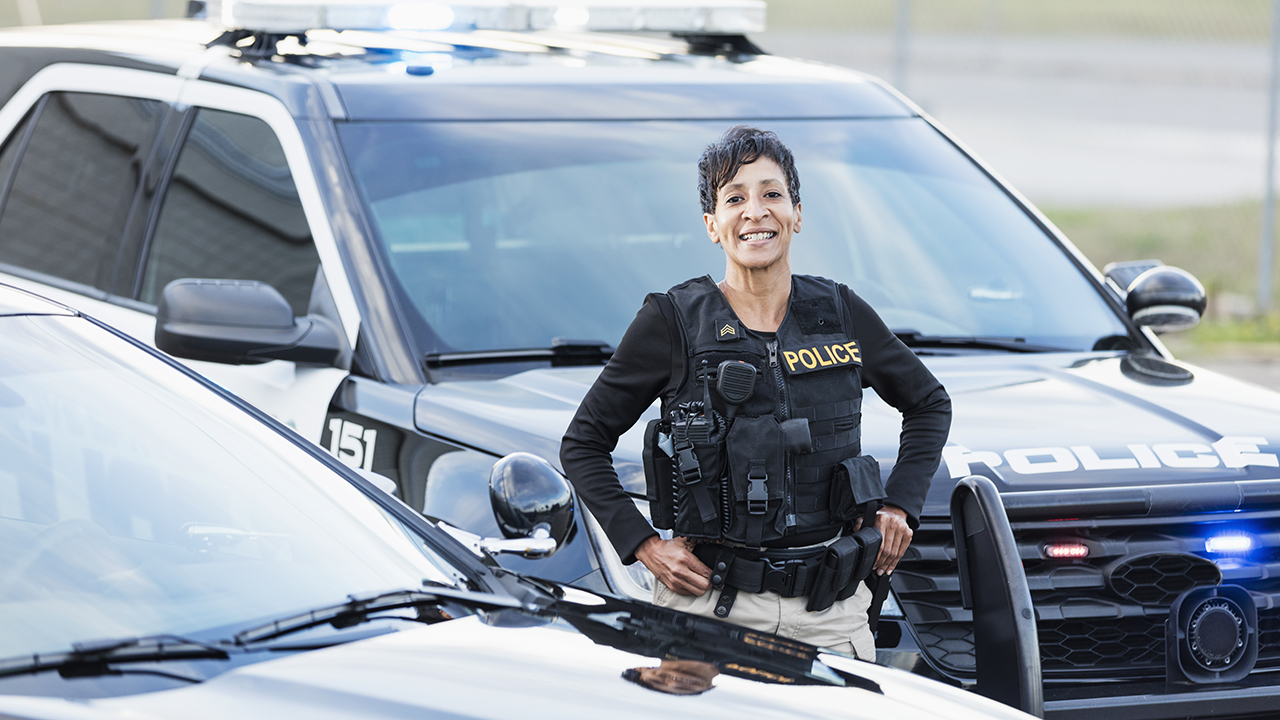
Emergency communications vehicle technology is ubiquitous. And it promises to significantly improve situational awareness and response times. But deployment and management are still too complex. An officer in the field should be able to easily use the platform as much as dispatch, the station, and the IT staff.
Digi studied emergency vehicle technology pain points and then built an elegant solution. Our integrated solution is always on, always connected and always secure. It is also easy for your IT team to deploy and manage. We’ll provide everything you need to get started. Take the next step to learn how we can become your emergency communications vehicle technology provider.
Frequently Asked Questions About Emergency Communications Vehicle Technology
What is emergency vehicle communications technology?
Emergency vehicle communications technology refers to the integrated systems that enable police, fire, and EMS vehicles to stay connected to dispatch, other agencies, and critical data sources in real time. These systems include cellular routers, mobile VPNs, onboard networks, and connected devices such as laptops, cameras, and sensors.
Modern solutions combine hardware and software into a single platform to reduce complexity, improve reliability, and ensure secure communications in the field.
How do Digi TX solutions improve connectivity in law enforcement vehicles?
Digi TX solutions act as a centralized communications hub inside emergency vehicles, connecting multiple devices through a secure and managed network. Instead of relying on separate connections for each device, agencies can consolidate connectivity into a single, high-performance system.
This reduces network congestion, lowers costs, and improves performance while supporting real-time applications like video streaming, GPS tracking, and database access.
Why is 5G important for police and emergency response vehicles?
5G is critical for modern public safety operations because it delivers:
- Faster data speeds for real-time communication
- Ultra-low latency for instant data transfer
- Greater reliability in high-demand situations
- Support for more connected devices per vehicle
These capabilities enable officers to stream live video, access databases instantly, and maintain situational awareness without delays — especially during emergencies where every second counts.
What networks do emergency vehicles use for reliable communication in the U.S.?
In the United States, first responders rely on priority public safety networks such as:
- FirstNet®
- Verizon Frontline
- T-Mobile T-Priority
These networks are designed to provide priority access and maintain connectivity during large-scale emergencies, even when commercial networks are congested or unavailable.
What are the biggest challenges in emergency vehicle connectivity?
Common challenges faced by public safety agencies include:
- Limited budgets for technology investments
- Too many disconnected devices in vehicles
- Unreliable bandwidth and network performance
- Difficulty communicating across agencies
- Complex IT management and maintenance
These challenges can reduce efficiency and impact response times if not addressed with an integrated solution.
How do integrated solutions like Digi SAFE address these challenges?
Integrated solutions such as Digi SAFE combine hardware, software, and network access into one platform. This approach:
- Simplifies deployment and management
- Reduces costs by consolidating systems
- Ensures always-on, secure connectivity
- Enables seamless communication across agencies
By creating a unified in-vehicle network, agencies can improve both operational efficiency and officer safety.
How does 5G improve reliability for first responders?
Reliability is one of the most important factors in emergency communications. 5G improves reliability by:
- Reducing latency to near real-time levels
- Maintaining stable connections for critical applications
- Supporting high device density without performance loss
- Enabling priority network access for first responders
This ensures that officers can maintain communication even in high-pressure or disaster scenarios.
What types of devices are connected in modern police vehicles?
Today’s emergency vehicles function as mobile data centers, supporting devices such as:
- Laptops and mobile data terminals
- Body cameras and dash cameras
- License plate recognition systems
- Smartphones and tablets
- GPS and telematics systems
A centralized connectivity solution ensures all these devices work together efficiently without overwhelming the network.
How do Digi transportation routers support location tracking and navigation?
Digi TX routers include advanced GNSS and dead reckoning capabilities, which provide more accurate location data than standard GPS alone. This is especially important in environments where GPS signals may be weak or obstructed, such as urban areas or tunnels.
How is data secured in emergency vehicle communication systems?
Security is critical for law enforcement communications. Modern solutions include:
- Encrypted data transmission
- CJIS-compliant mobile VPNs
- Device identity and authentication frameworks
- Compliance with federal standards such as FIPS 140-3
These layered security measures help protect sensitive data and ensure secure communication between officers, dispatch, and other agencies.
How does centralized management improve emergency fleet operations?
Platforms like Digi Remote Manager allow IT teams to:
- Monitor connectivity and device health in real time
- Deploy updates over the air
- Track vehicle locations
- Receive alerts and troubleshoot issues remotely
This reduces operational costs and ensures that fleets remain connected and functional at all times.
How can better connectivity improve emergency response times?
Improved connectivity in emergency vehicles allows first responders to:
- Receive real-time updates from dispatch
- Access critical data instantly
- Navigate more efficiently using live information
- Share video and situational data with other units
According to industry research, connected technologies can significantly reduce response times and improve overall public safety outcomes.
Why are scalable solutions important for public safety agencies?
Agencies need solutions that can grow with their operations. Scalable connectivity platforms allow departments of all sizes to:
- Start with essential capabilities
- Expand as needs evolve
- Integrate new technologies like AI and IoT
This ensures long-term value and future readiness without requiring complete system overhauls.
Next Steps
Editorial note: This blog post was originally published in December of 2022 and was updated in April of 2026.