It is no surprise that IoT has emerged as the future of smart living and environmental sustainability. Technology innovation has the potential to help our global society transition to better environmental stewardship. Multiple industries are progressively investing in Internet of Things environmental sustainability initiatives to improve quality of life while safeguarding natural resources.
The challenge? Digital advancements have improved our lifestyles and our connectivity but have also increased the carbon footprint.
Research shows that data centers are responsible for 2%-5% of greenhouse gas emissions globally, and only 28% of surveyed global IT decision makers consider environmental issues in choosing data center technology. These issues have brought the need for a sustainable economy into focus.
In this article we examine how IoT can help the environment, and will pave the way for reduced global emissions and a circular economy.
Jump to:
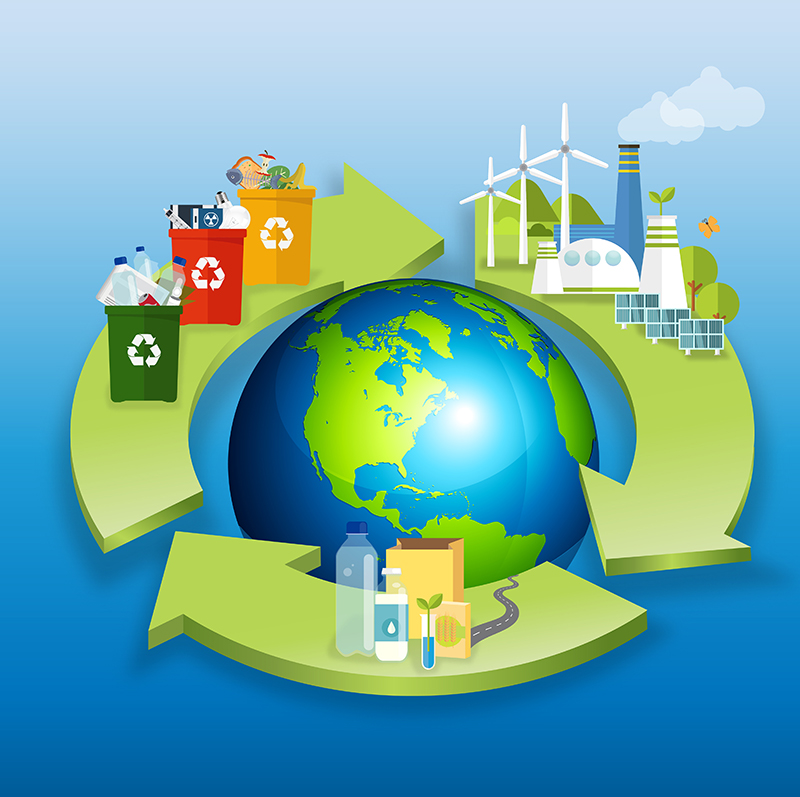 The circular economy is an emerging economic system that addresses global environmental issues with sustainable practices — specifically, those that eliminate waste and landfill. For a circular economy definition think of a collection systems and processes that promote sharing, reusing, repairing, refurbishing and recycling of materials. The circular economy paradigm integrates best practices to reduce the use of disposables and keep materials and resources in productive use for as long as possible across all consumer, industry and manufacturing processes that involve use of renewable and non-renewable resources.
These efforts are critical in the movement to reverse the damage of the non-sustainable linear economy where industries and individuals rapidly use and dispose of products and materials.
IoT has become the driving force behind the adoption of circular economy principles. Be it automating devices for self-monitoring or improving designs for recycling, companies leverage IoT technology for transitioning to a circular economy and reducing our carbon footprint.
 The IoT is a system of interconnected physical devices such as sensors, radios and routers that collect and exchange data wirelessly. Organizations across many vertical industries use IoT technology to optimize their operations to reduce environmental impact and make more sustainable decisions. See our IoT Fun Facts blog to learn how this technology is impacting applications across Industry 4.0, healthcare, smart cities and the green economy.
Smart technology supports environmental sustainability through insights and automation, leading to optimized use of natural resources, minimized waste, renewable energy like wind and solar, and more sustainable cities. All these factors also enhance the circular economy. According to the World Economic Forum report on Internet of Things Guidelines for Sustainability, around 85% of IoT deployments are addressing sustainable development goals. IoT innovation is truly a game-changer for the advancement of a sustainable environment.
The Environmental Impact of Digital Devices
 Sustainability is about optimizing our use of resources and reducing emissions. Businesses today are embracing energy-efficient practices to enhance their operations while reducing the environmental impact of digital devices in three ways:
- Reducing the impact of heat-producing devices through energy efficiency and heat mitigation.
- Offsetting their impact through environmentally sound practices, including use of clean energy, tree planting and increased development of heat sinks that reduce carbon emissions.
- Deploying the IoT and green technology in renewable energy and environmental stewardship projects across industries to eliminate or offset emissions with a net zero goal.
See our article, Can 5G Help the Environment, to learn how 5G, IoT and artificial intelligence are supporting the shift to sustainable solutions that lower our carbon footprint.
How Does IoT Support a Circular Economy?
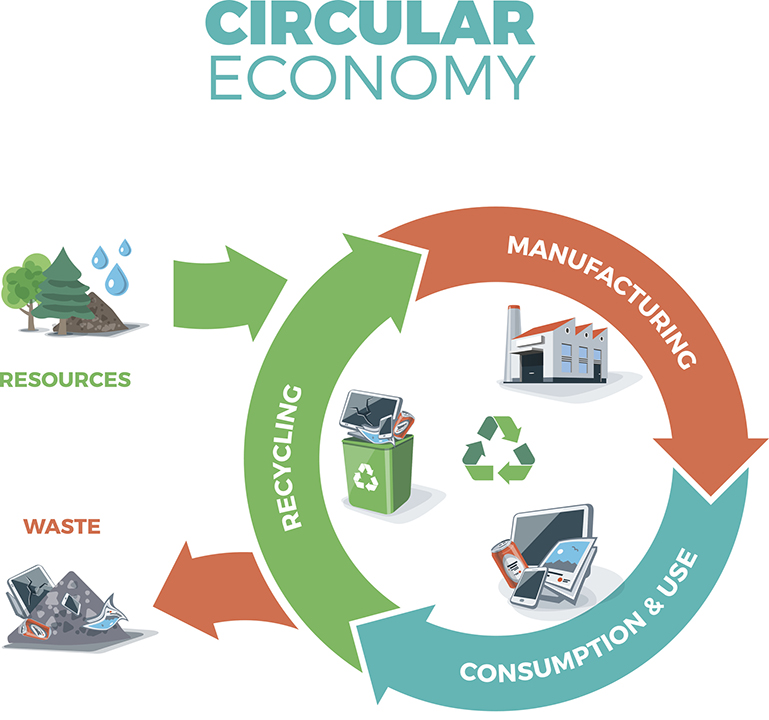 IoT devices with connected sensors can detect industrial emissions, and support manufacturing automation and proactive management of renewable and non-renewable resources. These processes enable organizations to eliminate unexpected failures, reduce truck rolls, increase operational efficiency and improve the sustainability of smart technology.
Similarly, the data garnered by sensors helps to manage waste, automate and enhance materials recycling and drive reuse strategies in support of the circular economy.
Let’s look at three circular economy principles driven by the IoT.
Rid Design of Waste and Pollution
 This circular economy principle asks industries to rethink their supply chain processes to avoid waste and emissions, and for tech innovation to drive the sustainability of materials use, from plastics to electronics to vehicle tires. To minimize waste, products can be designed to last longer and be refurbished for reuse. IoT-enabled systems can optimize the entire product cycle from material sourcing to dismantling and reusing products to reduce waste.
Of course, Internet of Things environmental applications extend beyond industry, and include smart home and smart building technology, better practices like use of efficient HVAC systems, and even social benefits of IoT. Today, consumers see airports, restaurants and homeowners associations converting to smarter, more efficient devices and practices, which fuels a “green" mindset and buy-in.
IoT technology supports waste reduction and circular economy sustainability in three ways:
- Automating processes to reduce waste and reduce emissions.
- Using sensors to detect gas, water and industrial leaks that waste resources or emit pollutants.
- Collecting data and using AI and machine learning to produce algorithms for smarter resource management.
Recycle Products and Materials to Keep Them in Use
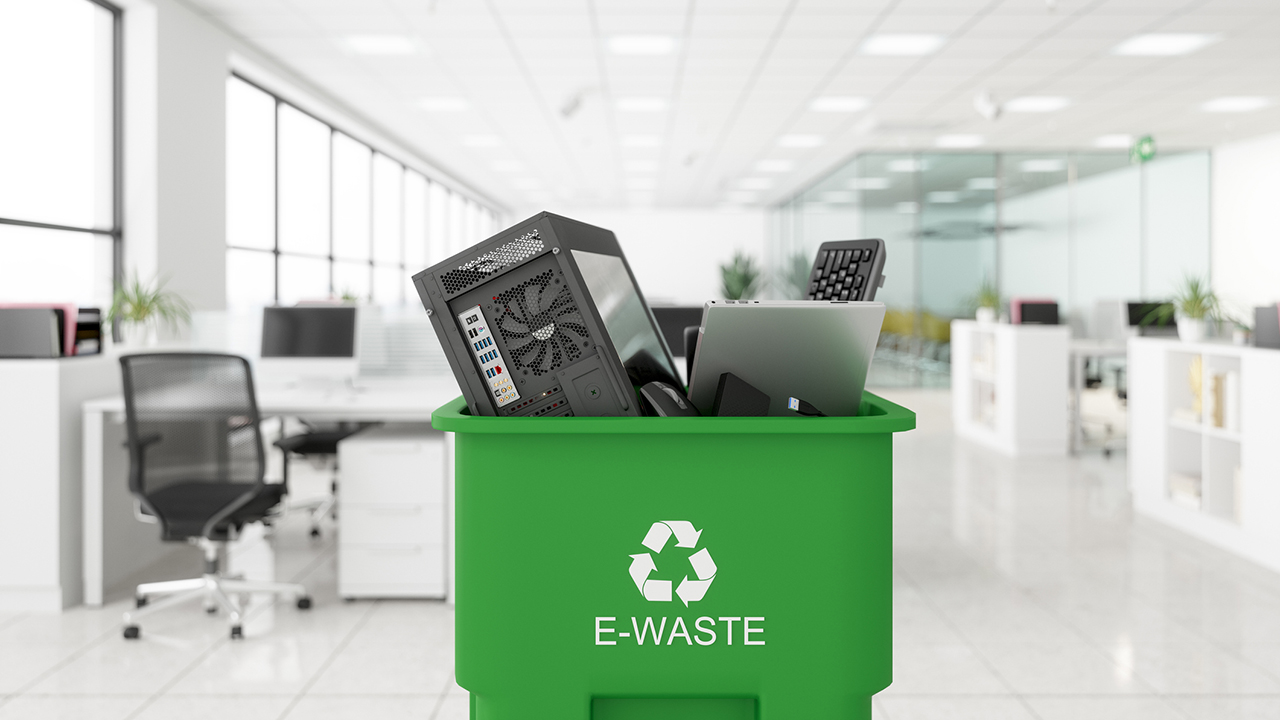 IoT can help reduce waste with intelligent devices and management systems that help recover, restore and recycle products and minimize trash.
IoT-enabled waste and recycling supports smarter resource use in several ways:
- Automation and AI can be deployed in industrial sorting and recycling systems to identify re-usable components and materials.
- Smart bin systems help consumers to properly sort their recycling to reduce waste and provide data that helps innovators enhance these systems.
- Trash and recycling sensors notify waste management when bins are full for efficient collection, and advanced GPS mapping optimizes truck routes.
As an example, a smart trash bin developed by BigBelly Solar reduces the resources needed to collect trash and recyclables, with sensors and connectivity. Trash is compacted so that each bin can contain more, and pick-up services are only routed when needed, reducing the use of fossil fuels.
Natural Systems Regeneration
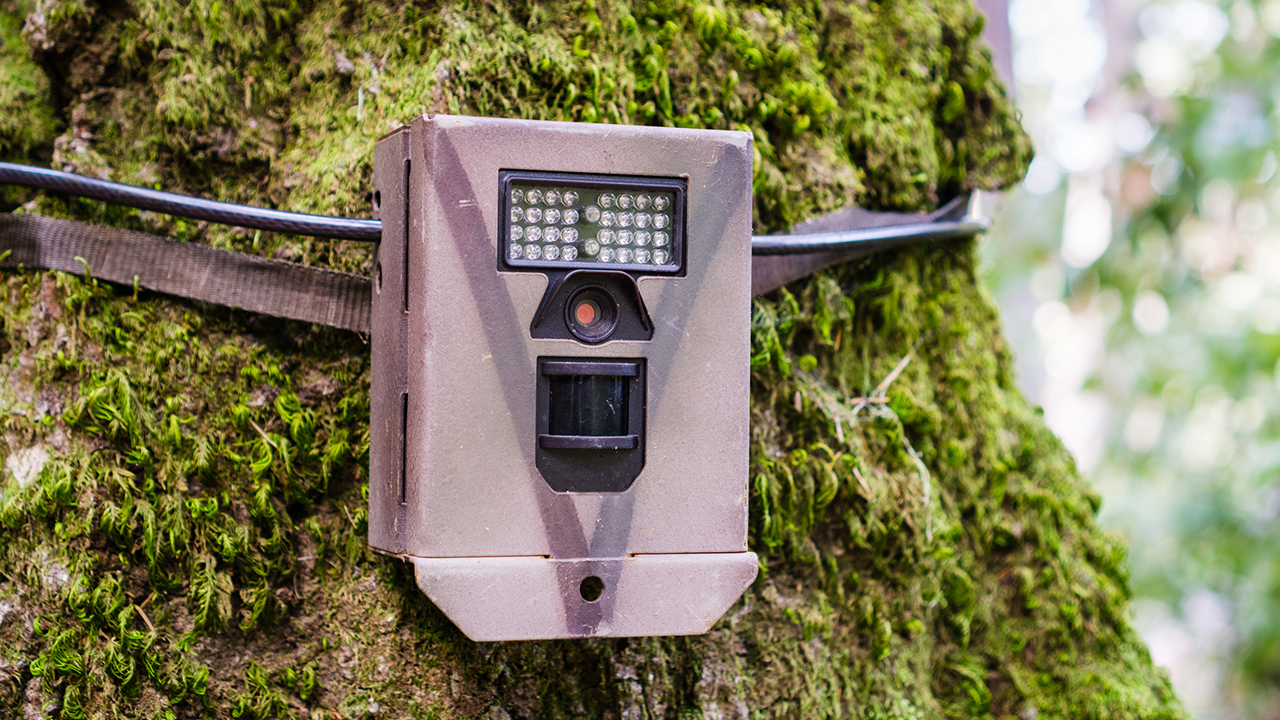 IoT is integrated into a range of initiatives to regenerate natural resources, supporting initiatives from global tree planting to the health of bees and wildlife, to critical habitat and wetland redevelopment initiatives.
Here are a few examples of IoT in natural resource regeneration:
- IoT sensors and automation are at work in green tech solutions including renewable energy. For example, connected systems monitor wind direction, and turn wind turbine blades and solar panels to optimize efficiency.
- Tree sensors can help monitor “eco-physiological/biological parameters,” such as water content, tree growth and the quantity of foliage, and provide data to cloud systems accessible by researchers and tree planting programs.
- Wireless sensor networks in habitat monitoring enable habitat research and restoration organizations to monitor the health of habitats to improve outcomes on delicate ecosystems and habitats such as sea bird nesting sites.
Let’s look at some additional IoT environmental impact and sustainability examples.
Smart Agriculture and Water Management
 Smart agriculture and Internet of Things water management projects optimize resource use in farming with the use of sensors and smart devices.
- JAIN Irrigation, Inc. develops IoT irrigation solutions to address water usage concerns of famers, homeowners associations and golf courses. JAIN systems use metrics like soil composition, crop type and weather conditions to determine upcoming water requirements and optimize water usage.
- WiseConn developed DropControl to help farmers maximize their harvests and optimize irrigation by precisely monitoring soil moisture, wells, valves and weather stations, resulting in up to 30% water savings.
- Ranch Systems’ solutions use wireless sensors and controllers to monitor conditions and launch processes to efficiently apply water and fertilizer, control pumps and engines, and send frost and heat alerts. Together, these optimize operations, reduce water use and limit the time employees spend driving across acreage in fuel-burning vehicles.
Clean Energy Production
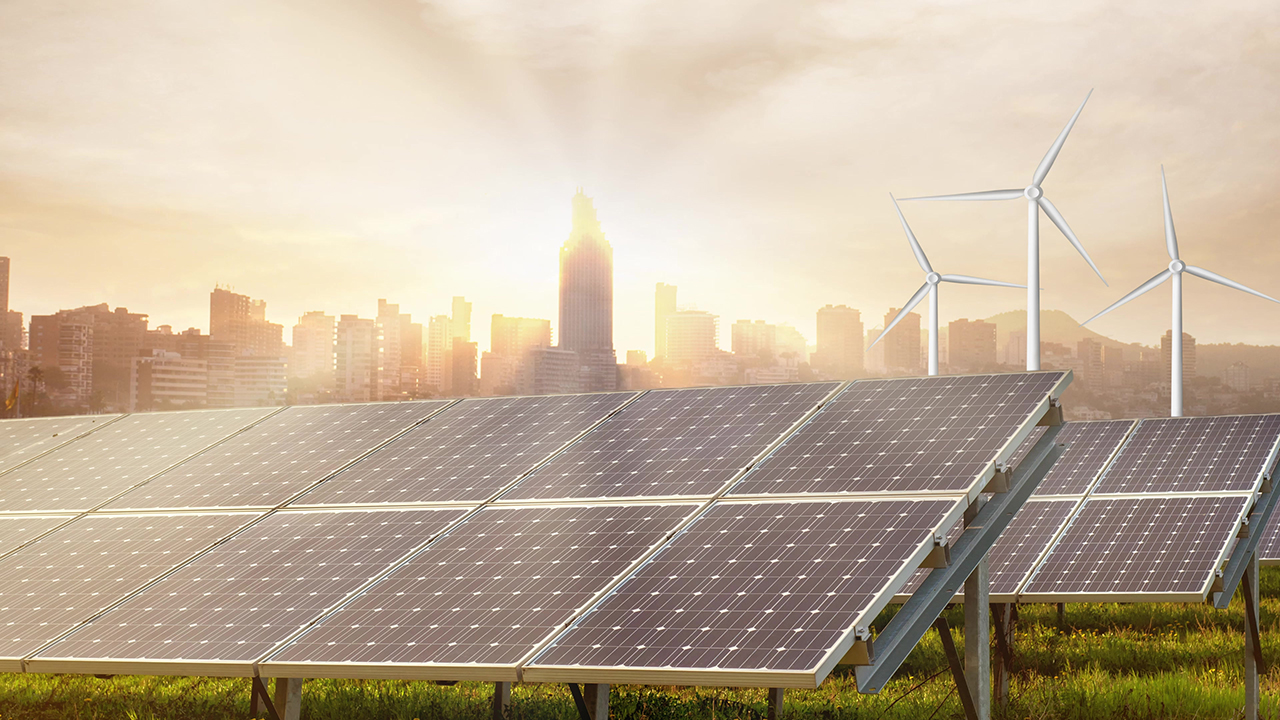 Clean energy and renewable energy production focus on green technologies like wind, solar and hydro power. Many businesses have emerged as IoT innovators, developing smart methodologies for renewable energy production and efficiency.
Here are a few projects demonstrating the impact of technology in sustainable development:
- Nextracker provides world-class clean energy solutions such as solar trackers to optimize solar use and boost power production, In addition to solar trackers, the company supports utility-scale projects with advanced data monitoring and analytics.
- Devergy is an energy services company in Tanzania that provides affordable and reliable energy to low-income people in rural villages not connected to the power grid.
- New Sun Road develops data-driven solutions for renewable energy-based power systems using IoT, which can then be used to provide clean energy.
Energy Use Reduction
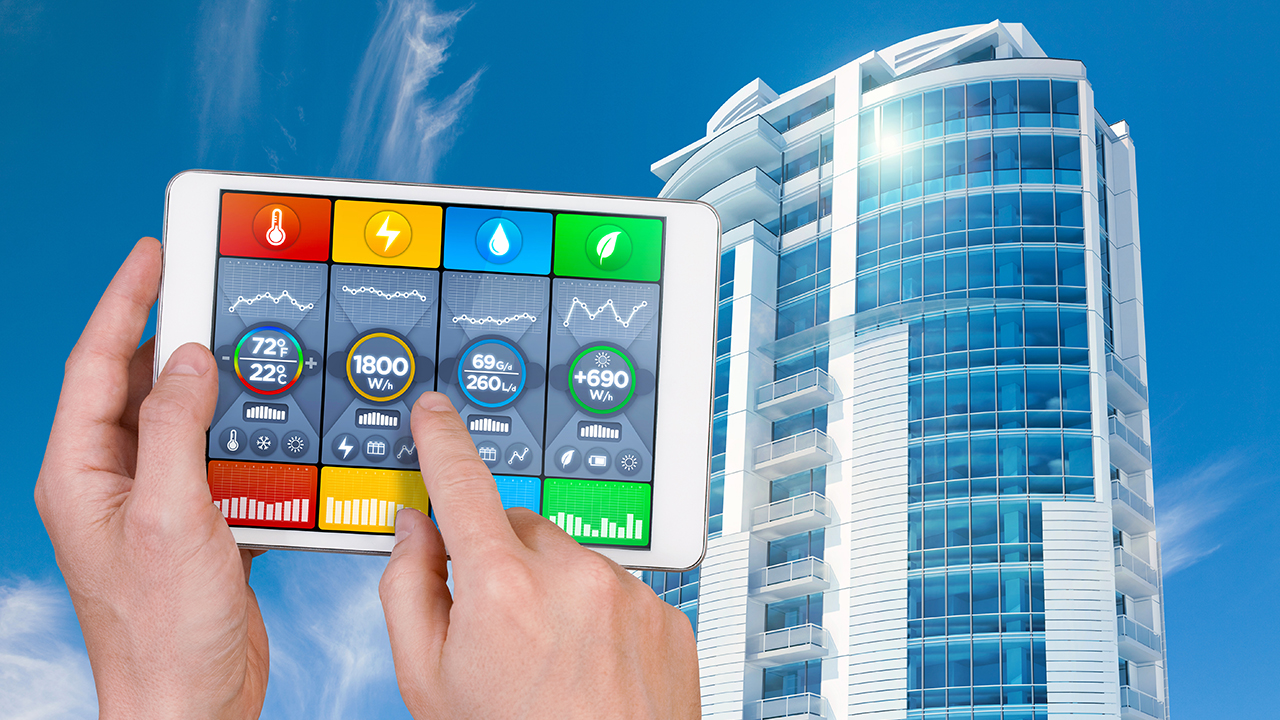 Optimizing energy use in homes, businesses and transit systems, and using energy-efficient smart devices, can dramatically improve energy efficiency and sustainability. For example, multiple studies on smart home environmental impact demonstrate that automation — from use of thermostats to light sensors — can reduce carbon footprint, especially as these systems improve in efficiency.
Here are three companies that work with Digi to leverage IoT for energy use reduction:
- E-GEAR of Hawaii developed an innovative Energy Management Controller to help homeowners, business owners and utilities optimize use of energy captured from photovoltaic cells and other alternative-energy sources.
- Reborn Electric of Santiago, Chile converts diesel-engine buses to zero-emission electric power vehicles, which helps to dramatically reduce air pollution in the city while extending the service life of the vehicles.
- Infinitum Electric of Texas built a smarter, more efficient HVAC motor. With 53% of the world’s energy consumed by traditional electric motors, Infinitum aims to reinvent electrification with new PCB stator technology for more environmentally responsible electric motors and generators.
Infrastructure
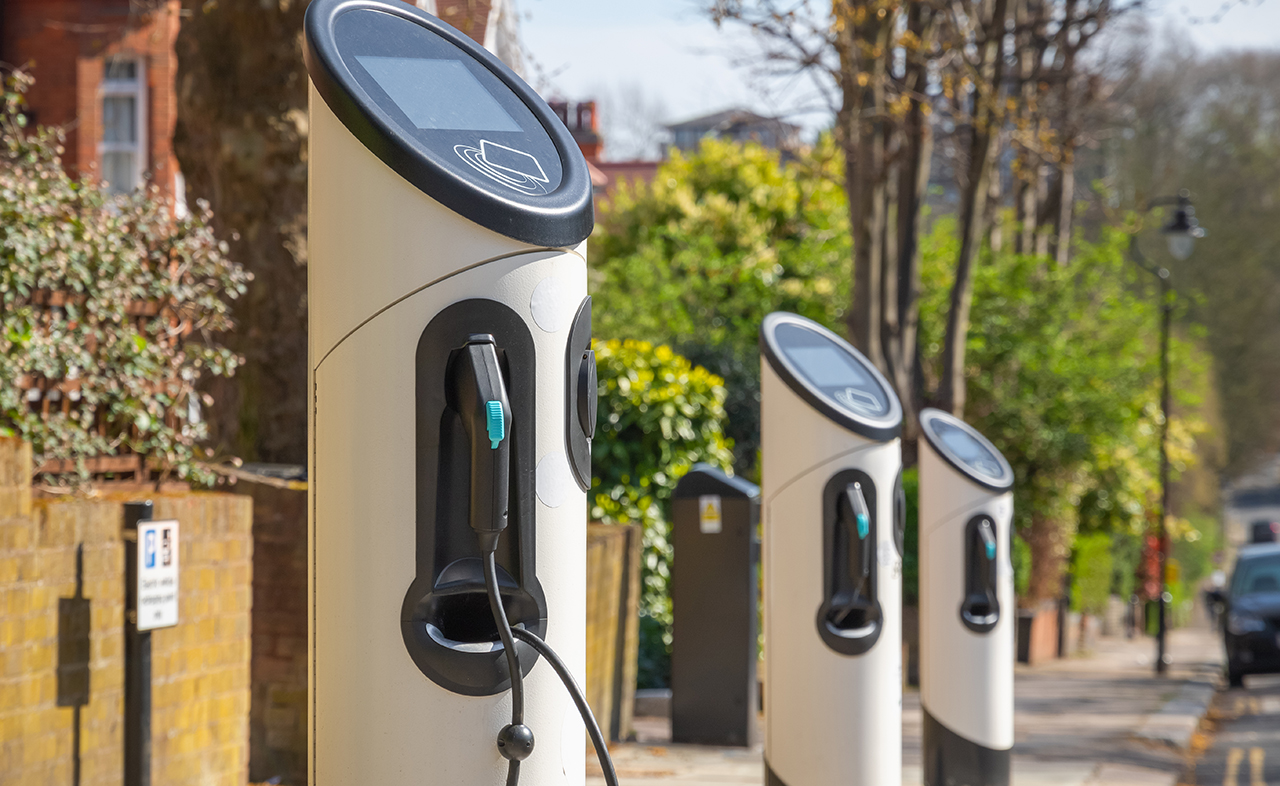 IoT enables smart infrastructures and sustainable cities in many ways, including smart city lighting, water use management and infrastructure for electric vehicle charging. Here are three such examples of smart infrastructure projects:
- AddEnergie of Quebec, Canada develops, manufactures and operates electric vehicle charging for market segments such as smart cities and the public sector. The company provides the charging infrastructure for the Electric Circuit and the VERnetwork™, the two largest charging networks in Canada.
- Brown and Caldwell of California helps municipalities, private industry, and government agencies overcome water-related environmental challenges. Their data-driven infrastructure solutions for water and wastewater management measure compounds for optimal treatment and lower environmental impact.
- Enlight of Portugal develops smart city devices including street light controllers, sensors and meters. Enlight’s street lighting solutions provide photo-sensors to measure dawn/dusk light (or adverse weather) and dim or raise lights for optimal energy efficiency.
Industrial IoT Solutions and Applications
Connectivity and embedded solutions to meet the needs of diverse industries
Download PDF
 As we’ve seen from the examples, global enterprises and a vast range of industries are using IoT technologies to deploy automation and resource management projects. Together these initiatives improve energy efficiency, reduce resource use and support the circular economy. For example:
- Data collected by IoT sensors and cameras provides analytics for predictive maintenance to prevent equipment failures before they happen, improving longevity of products and parts.
- IoT-enabled manufacturing processes today support products designed for recycling and reuse, and make it possible to connect the global marketplace for re-usable materials.
- Innovation in IoT, AI and automation will ultimately solve the problems of plastics, disposables and inefficient recycling through technology-driven improvements in sorting, composting and reuse.
Imagine when one day, every bottle or carton you purchase is made from recycled or compostable materials, every computer part is refurbished, and the next phase for each product we use is a new use instead of a trash bin. We must actively innovate and drive toward that goal to preserve our planet, and rid our oceans and natural landscapes of plastics.
Download Digi’s IoT-Enabled and Green Technology Brief Today
IoT is pivotal for a sustainable environment and the circular economy. This is why we are witnessing a huge shift towards efficient practices and reduced environmental impact through green technology applications.
Get our IoT-Enabled Green Tech Guide to learn more.
Digi can support your sustainability goals with a broad portfolio of IoT products and services for connectivity, embedded design and network management. Contact us today to start the conversation.
How IoT Supports Sustainability and the Circular Economy
Why a circular economy matter for sustainability?
A circular economy is designed to eliminate waste and landfill by keeping products and materials in use longer through sharing, reusing, repairing, refurbishing, and recycling. It matters because it helps reverse the harm caused by the traditional “take-make-dispose” linear economy.
How does IoT support sustainability in simple terms?
The Internet of Things (IoT) uses connected devices — like sensors, radios, and routers — to collect and exchange data. Organizations use those insights and automation to optimize resource use, reduce waste, and lower environmental impact, enabling more sustainable operations and smarter decisions.
How does IoT enable a circular economy?
IoT helps power circular systems by using connected sensors to:
-
Detect emissions and leaks
-
Improve manufacturing automation
-
Enable proactive maintenance to prevent failures
-
Reduce unnecessary service trips (“truck rolls”)
-
Improve waste management and materials recycling
-
Support reuse strategies with better asset visibility
In short: IoT provides the real-time data and automation needed to keep resources in productive use longer and reduce emissions.
What does “IoT for sustainability” mean?
IoT for sustainability refers to using connected sensors, devices, and systems to measure, manage, and reduce environmental impact. Instead of relying on estimates, IoT provides real-time data—such as energy use, waste levels, emissions indicators, equipment efficiency, and water consumption—so organizations can take targeted action to improve resource use and reduce waste.
How is the circular economy different from the traditional linear economy?
A linear economy follows the pattern: take → make → dispose. A circular economy aims to eliminate waste and landfill by keeping materials in circulation longer through sharing, reuse, repair, refurbishment, and recycling. The circular model reduces dependence on raw extraction and helps minimize pollution across product lifecycles
Why is IoT important for circular economy outcomes?
Circular strategies depend on visibility: knowing where assets are, how they’re used, when they fail, and what condition they’re in. IoT enables that visibility by connecting physical products to digital systems—making it possible to:
-
Extend asset life through predictive maintenance
-
Improve reuse and refurbishment decisions
-
Reduce waste by optimizing operations
-
Increase recycling efficiency by improving sorting and collection logistics
What are the core ways IoT reduces environmental impact?
IoT typically reduces environmental impact through five mechanisms:
-
Measurement – capturing real-world operational data
-
Optimization – improving how energy, water, and materials are used
-
Automation – triggering actions without manual intervention
-
Prediction – identifying issues before failures happen
-
Verification – tracking outcomes and proving sustainability gains over time
These capabilities help organizations move from sustainability goals to measurable improvements.
How does IoT help “design out waste” in products and operations?
“IoT-enabled design out waste” means using connected insights to reduce waste before it happens, such as:
-
Detecting leaks (gas, water, industrial) early
-
Optimizing manufacturing and supply chain processes
-
Improving product durability and serviceability
-
Supporting lifecycle visibility from sourcing to end-of-life
When waste is identified at the source, fewer resources are consumed and fewer emissions are generated.
How does IoT make recycling and materials recovery more effective?
IoT enhances recycling by improving collection efficiency, sorting accuracy, and system-wide coordination. Common IoT-driven improvements include:
-
Smart bin sensors that alert haulers only when bins are full
-
Route optimization to reduce fuel and truck emissions
-
Data-driven consumer sorting improvements
-
Industrial recycling automation supported by sensors, AI, and tracking
This helps keep materials in use longer and reduces landfill dependence.
What is “asset lifecycle intelligence,” and why does it matter?
Asset lifecycle intelligence is the ability to track an asset’s condition, usage patterns, location, and maintenance history over time. It matters because circular outcomes require knowing whether an asset should be:
-
Maintained and kept in service longer
-
Redeployed to a new application
-
Refurbished or repaired
-
Broken down for component reuse or recycling
IoT provides the data foundation for these decisions at scale.
How does IoT support regenerative sustainability (beyond reducing waste)?
Sustainability isn’t only about reducing harm — it also includes supporting restoration and regeneration. IoT supports regenerative outcomes by enabling continuous monitoring of:
-
Renewable energy performance and environmental conditions
-
Tree growth and ecosystem indicators
-
Habitats, wetlands, and biodiversity systems
This helps organizations and researchers respond faster and improve restoration outcomes with evidence-based actions.
Can IoT reduce emissions even if the devices themselves consume energy?
Yes, IoT can have a net positive environmental benefit because it enables larger reductions in:
However, sustainability benefits are strongest when organizations also prioritize energy-efficient devices, optimized data processing, and clean energy strategies, since digital infrastructure contributes to emissions too.
What’s the role of predictive maintenance in sustainable and circular operations?
Predictive maintenance uses IoT sensor data to detect patterns that indicate future failure — allowing maintenance to happen only when needed instead of on fixed schedules. Sustainability benefits include:
-
Longer equipment life (less replacement and manufacturing demand)
-
Reduced downtime and wasted energy from inefficient systems
-
Fewer emergency truck rolls and unnecessary part replacement
How does IoT improve sustainability reporting and compliance?
Sustainability reporting often depends on consistent, measurable evidence. IoT helps by providing:
-
Automated data capture for resource use and performance
-
Continuous monitoring for anomalies (like leaks or inefficiency)
-
Verification data that proves sustainability outcomes over time
This makes reporting more reliable and reduces the burden of manual data collection.
What is the single best way to explain IoT’s value to the circular economy?
IoT turns physical systems into measurable systems.
When organizations can measure how resources are used in real time, they can:
-
Prevent waste
-
Keep materials in productive use longer
-
Improve recycling and recovery
-
Support regenerative initiatives with better data
Together, these outcomes support less material being sent to landfill, reduction in the use of fossil fuels, and reduced emissions.
IoT empowers sustainability and the circular economy by delivering real-time visibility and automation that reduces waste and emissions, extends asset life, improves recycling and reuse, and supports regenerative environmental initiatives.
Next Steps
Editorial note: This blog post was first published in November of 2021 and updated in January of 2026.